great gods

New Year’s Day: back in Thessaloniki, I opened the local bottle of red I had bought on the mountain, and drank it. Then I went out, tensing my shoulders in the sub-zero night, and found what seemed to be the only restaurant open, a vast high-ceilinged space scattered with empty tables, where I drank a bottle of white and got personal service from the stoically cheerful waitress. I kept my coat on. I drank far too much, and had to reconstitute myself on January 2nd, in brittle sunshine at the out-of-town bus station, by breaking all the rules and scoffing a gyros (doner to the more famous souvlaki’s shish).

The bus rolled eastwards across Macedonia, the sun glinting on the Gulf, and into the Thracian plain along the Via Egnatia, where, over 2000 years ago, Octavian marched his troops after Actium, heading around by land for the final showdown with Anthony. At Alexandroupoli (this lonely one among the many named, not for Alexander the Great, but for a 20th century Greek king) I had to hammer on the door of the museum of iconography to gain access; the curator was a cheerful thirty-something beard dressed in jumpers and a woolly hat against the under-funded heating systems. After my tour, we fell to talking; he explained for me that the reason everything was closed in Thessaloniki was that the government could no longer afford to employ people to staff the sites. He complained bitterly about his country’s politicians, their venality and their deceptions; he seemed surprised when I pointed out to him that the Greeks were not alone in that, and that in, say, the UK, if you voted for any politician what you would get was a politician who looked after the interests of his class ahead of anything else.

“But look at Turkey!”, he exclaimed; “they seem to make it work!”

This wound ran deep; soon we were talking of 1453, the end of Byzantium, the loss of Hagia Sofia. He was, it turned out, not in fact a curator, but a teacher seconded to organize interactive learning experiences at the museum for local schoolkids bussed in to learn about their history. I wondered how long this would survive the cuts; the question didn’t seem to have occurred to him, but was he bluffing?

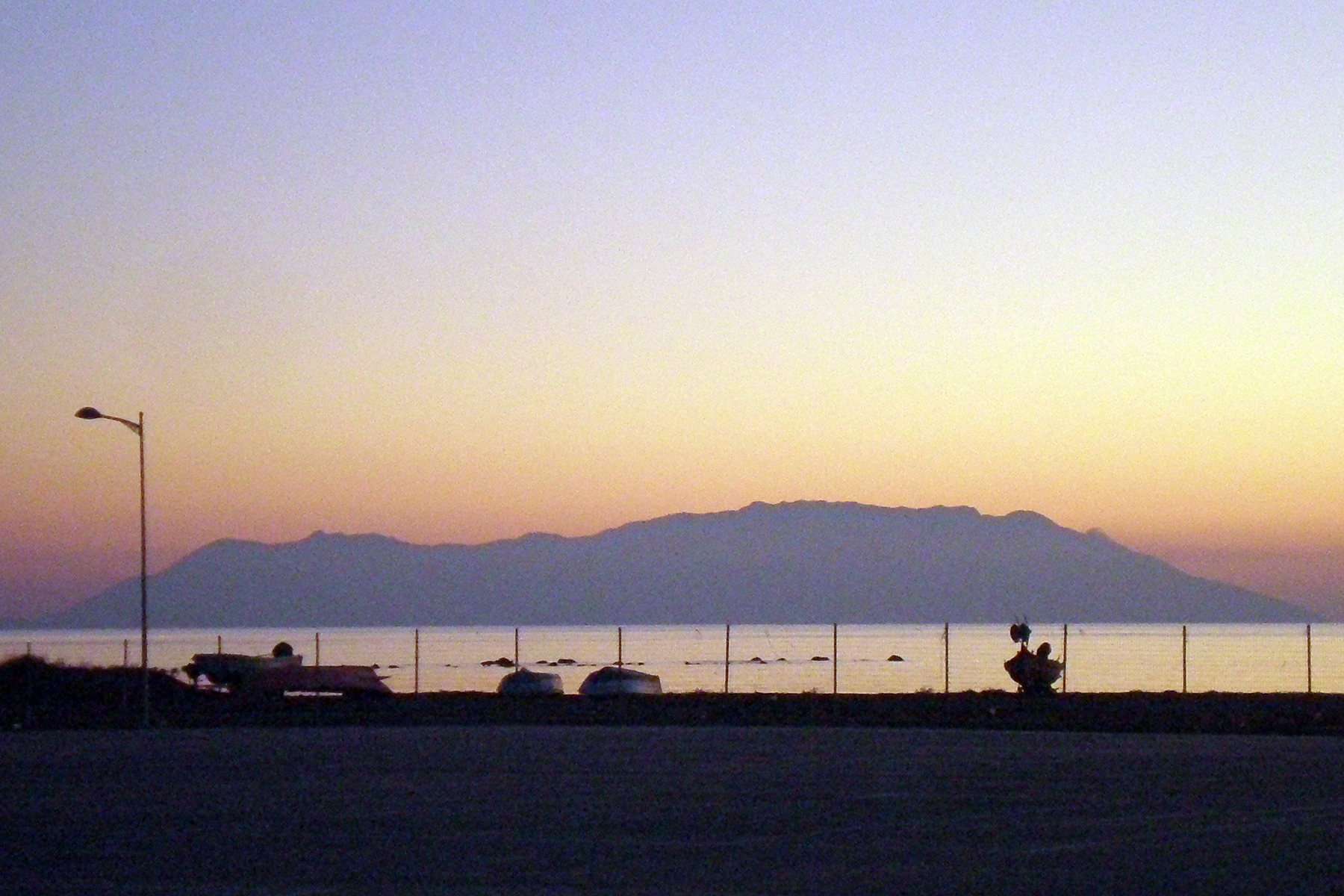
Samothraki from Alexandroupoli

Samothraki seen from Alexandroupoli

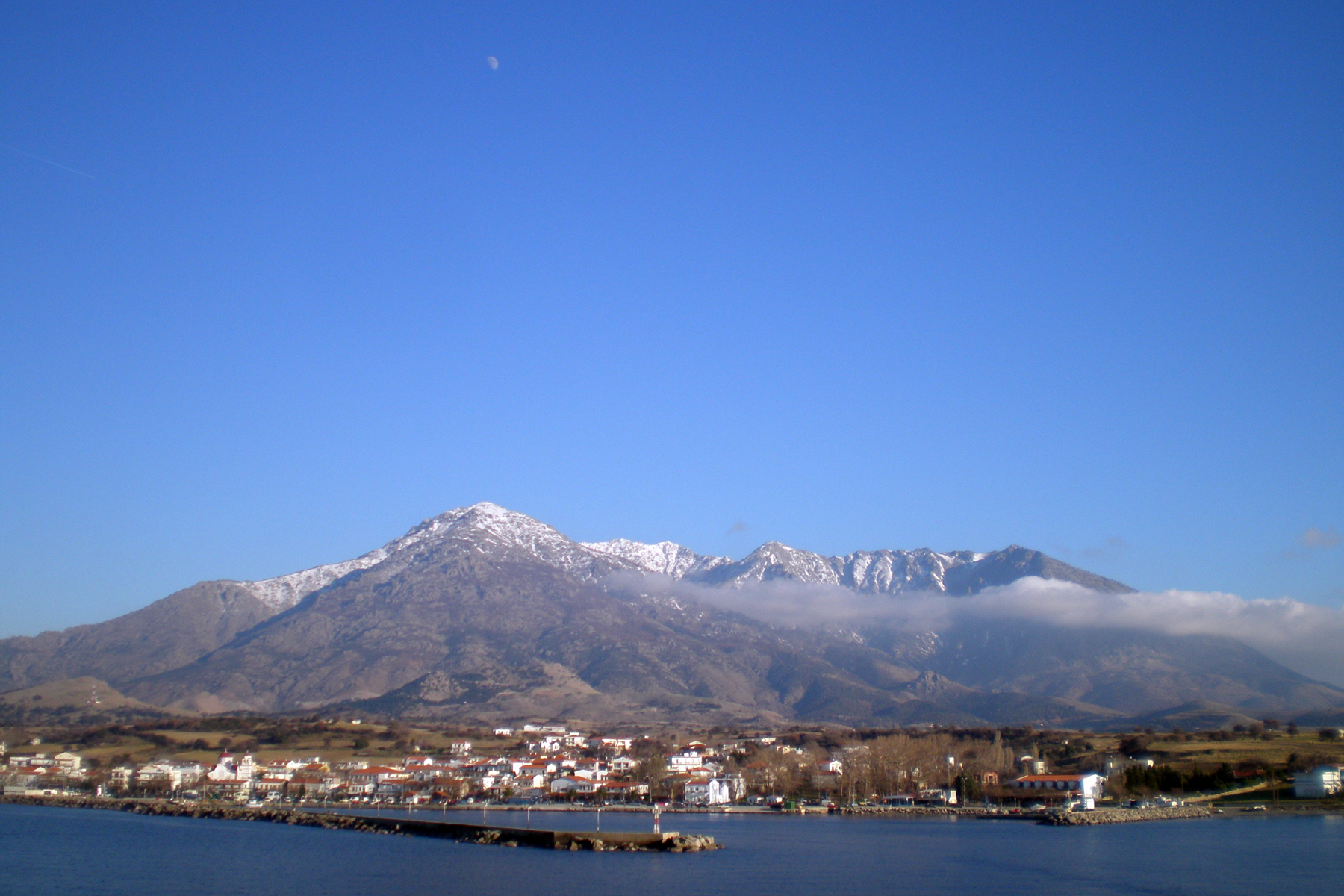
From Alexandroupoli I took the boat to Samothraki, a couple of hours off the coast. The island was near-deserted; the view from my hotel room was 30 metres to the Mediterranean, on whose floor, through a metre of water, I could see every detail of every pebble magnified.

Samothraki harbour

Samothraki harbour

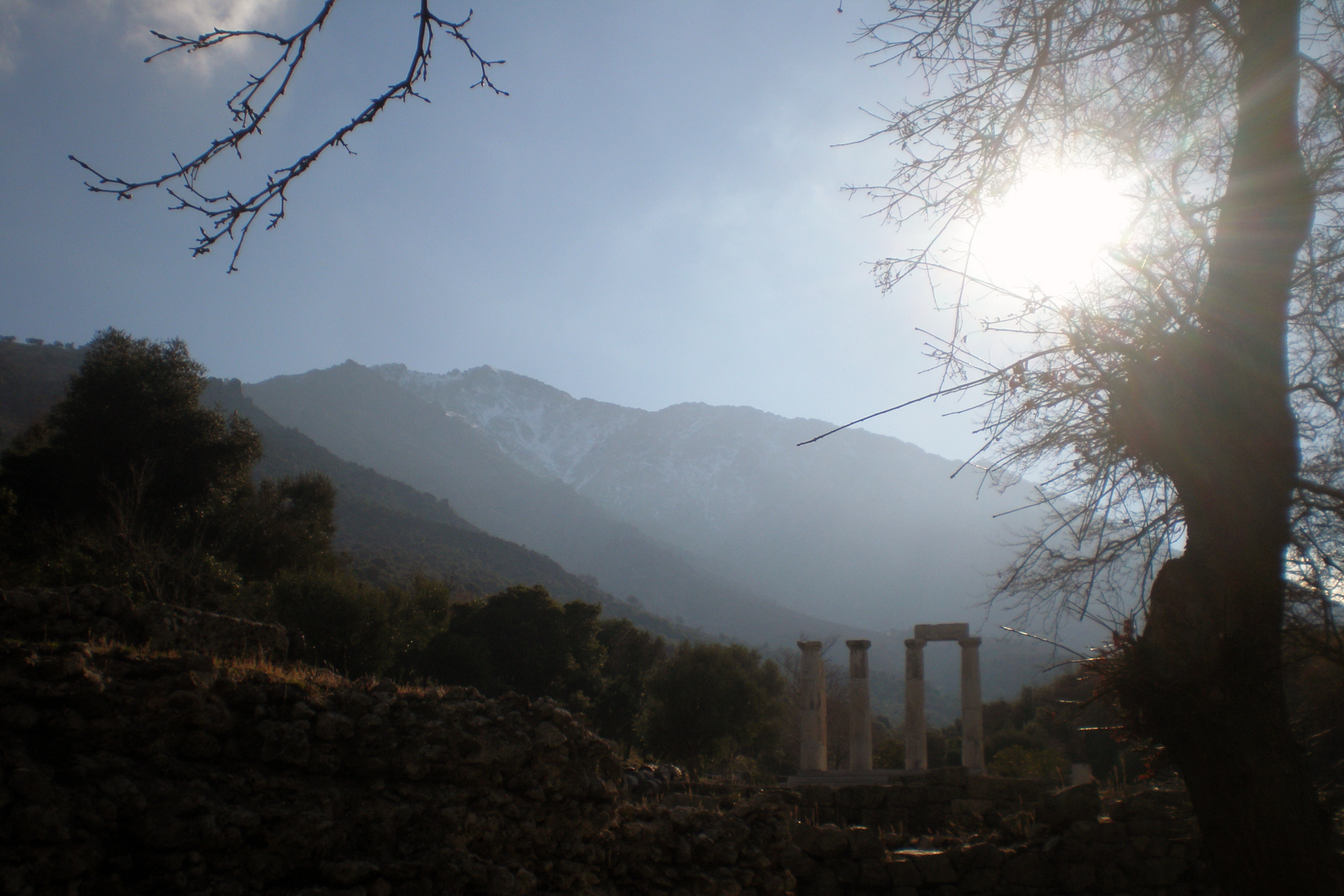
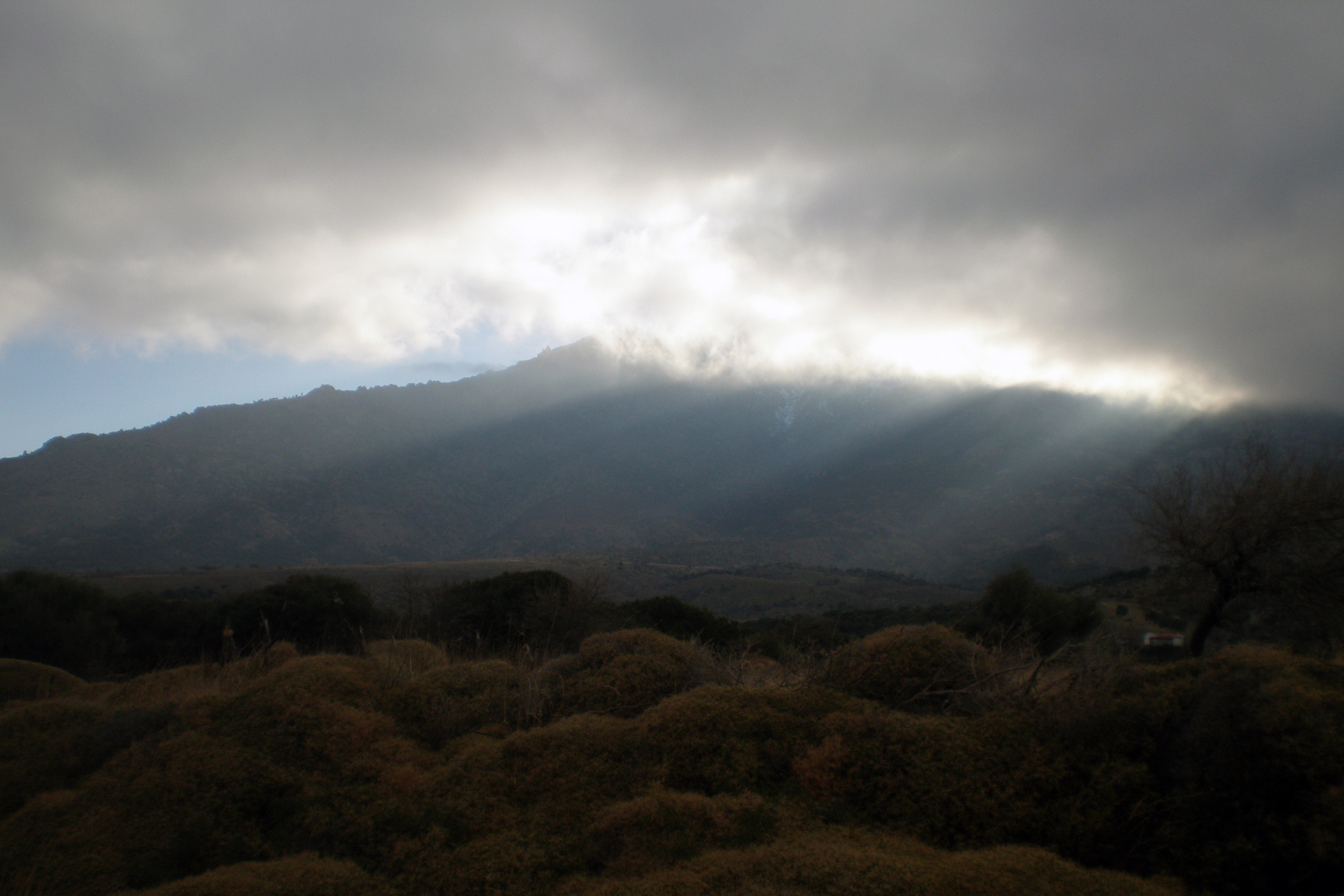
I went to the Sanctuary of the Great Gods, a 3000-year-old site where the ancients (from as far away as Egypt) were initiated into spiritual mysteries. As ever, the Greek spirit of place: a low valley with a vocal brook under a snow-capped peak.

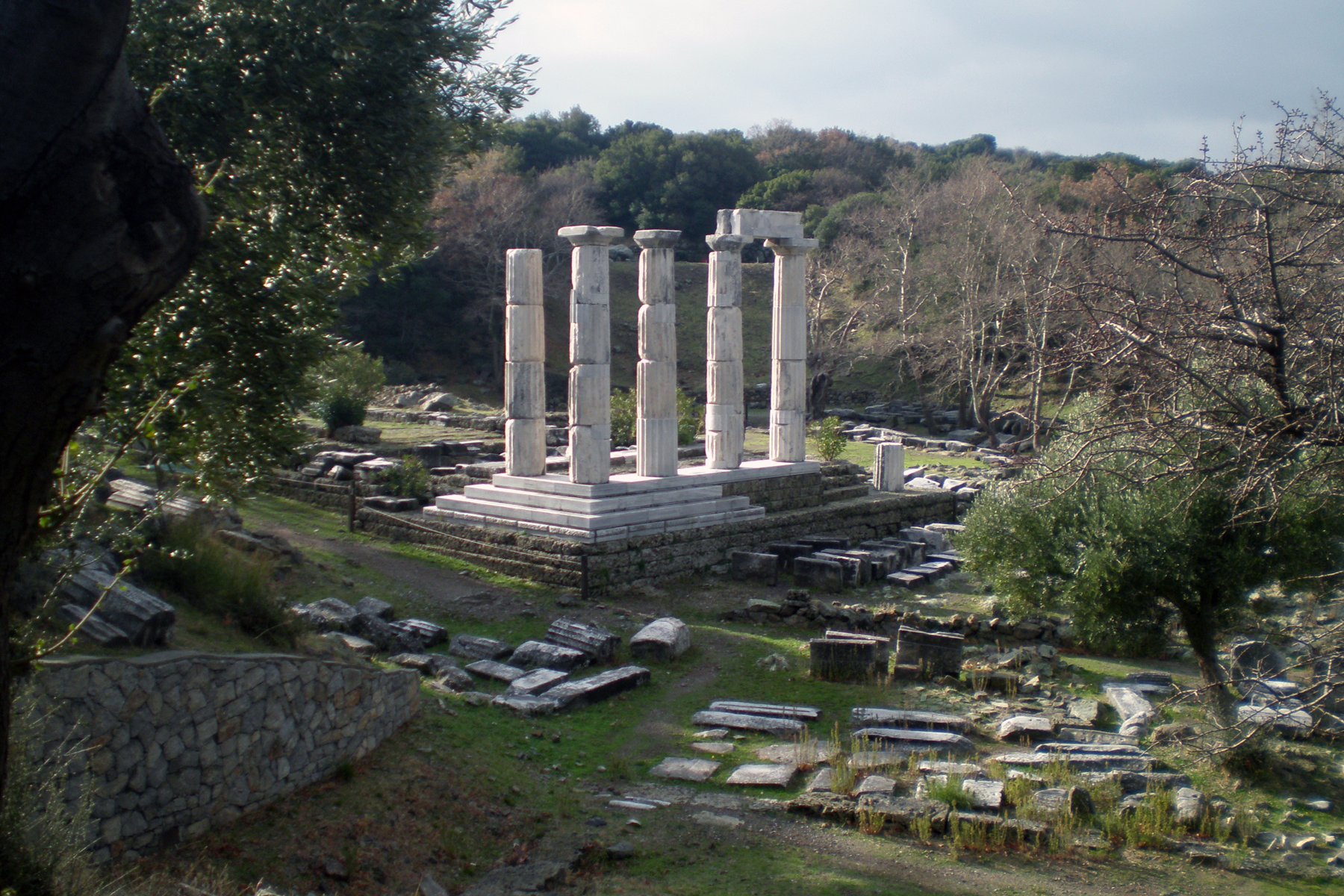
The Sanctuary of the Great Gods at Samothraki

The Sanctuary of the Great Gods at Samothraki

There was a museum, perversely (since Monday is the day everything is normally shut) open only on Mondays. The site itself was deserted, save for a man with a shovel, digging a trench; we nodded at each other. The guidebook described it as “well-labelled”; not any more. All the explanatory signs had been removed, though the stanchions that once held them in place remained; why? What economy could be derived from this? The only sign that remained was one announcing that a renovation project, 2007-2013, was being funded jointly by Greece and the European Union, to the tune of €760,000; what happened to the money?

Maybe gone the same way as the Great Gods themselves. Revered as powerful enough that pharoahs and kings devoted and donated to them, they were worshipped for 1300 years or more, until the Christians took over in the 4th century and they were banned. Other than the crumbling bones of their sanctuary, there is no sign of them now. Where did they go? Did they succumb to the young Nazarene with the beard and the book, and his compellingly simple message – I am that I am – and simply disappear? Or did they migrate, to be reborn in a different place and form?

Samothraki

Samothraki

Posted in anybody up there?, road | Tagged , , , , , , , , , | Leave a comment

Falling Off The Edge

A book by Alex Perry, foreign correspondent with Time Magazine, published in 2008. It’s an account (sometimes self-promoting, but then considering the extremes to which he has gone in the service of his trade, it’s not hard to forgive him that) of his experiences, mingled with his reflections on globalization, in which his central thesis is that, since globalization is stacked in favor of the rich and is fundamentally an exercise in making them more so by whatever means, this means that on a global scale most people are impoverished, and it’s no wonder that they fight back. Thus (writing before the Arab Spring or the Occupy movement) he connects Islamic terrorists, Nepal’s Maoists, Indian Naxalites, rebelling Chinese workers, Indonesian pirates and black South African racists into one disparate set of reactions unified by their motive – to strike back at perceived oppressors – and treated not in terms of moral judgement but simply as an inevitable phenomenon arising in response to gross unfairness and material inequality. It’s a good argument, though he may be pushing it a bit far in the final chapter when he characterizes war as an inevitable component of, and indeed catalyst for, progress (assuming progress is what is happening, a proposition he has cast doubt on as far back as his introduction, where he sympathetically describes a stone-age tribesman from the Andaman Islands who chose to go back into the jungle rather than accept the life of modernity that was being offered him). It’s the argument from human nature: like the poor, the greedy and the rapacious will always be with us, and so will those who fight back against them, asymmetrically. Who knows, maybe it’s true, and the best we can hope for if we are not among the greedy and rapacious is to be lucky enough to live a life of relative peace, good health, freedom, prosperity and opportunity, rather than being among the grinding poor.

After all this, the last line of the book quotes the Dalai Lama: “The future? Not bad.” Is this where religion makes the difference?

Posted in misery for the many, freedom for the few, read | Tagged , , , , | Leave a comment

old religion, new year

now the rain came pouring down; it was cold, my shoe was letting in water, and I had no place to stay. Regretting that I hadn’t taken the ferry back to the world, I sheltered in the doorway of one of Karyes’ three shops. There I met two Germans, who had walked the previous day from Karyes to Vatopedi – several hours in itself – and had made matters more strenuous by losing the track, and having to beat their way through thickets to regain it.  One of them had felt so beaten up that he had skipped the 3 a.m. service.

“I did the same at Simonopetra,” I confessed. “As far as I could tell, they didn’t mind much.”

“Oh, they minded at Vatopedi,” said the German who had stayed in bed. “My friend here went, and they kept saying to him ‘where is your friend? When will he be coming?’

Across the way, there was a series of minivans. One of them was going to Vatopedi.

“I don’t have a reservation,” I said.

“Well, let’s see what happens when you get to the boundary of their property,” said a chubby, helpful young Rumanian monk on his way to the dentist in another monastery. “Maybe they will let you in?”

At the red-and-white barrier to the Vatopedi lands, the guard looked me up and down, then disappeared to make a phone call. He let me in.

At Vatopedi too there was a tall glass of water, a short glass of ouzo, and huge sticky chunks of Turkish delight as a greeting. I was reminded to book ahead next time, and placed in a twin room with a retired Greek merchant marine officer, Evangelos.

“You know what?”, he said: “The Greeks don’t want to work at the hard jobs. On all the boats now they have been replaced by Filipinos.” I wondered about the cost of living in the Philippines.

As it was Saturday night, there was a change of schedule from the usual: instead of one service at 3 a.m., there were two: one at 8 p.m. (until midnight), and one at 6 a.m. (until 9 a.m.) For this, for some reason, I was wearily grateful. Of course first of all, there was vespers: Evangelos guided me to the church, did all his kissing-the-icons stuff, and led me into the nave, where he encouraged me to sit in the further forward of two rows that fronted on to the open area in front of the sanctuary screen: a ringside seat for the action to come. Mindful of my uncertainty about when to sit and when to stand, I demurred, and sat a row back so I could take my cues.

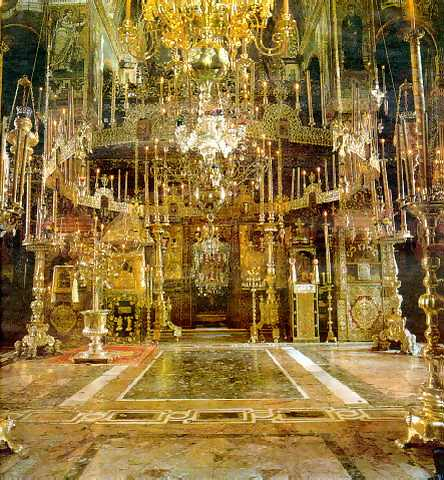
The church in front of me was an exercise in splendour: above a floor of variegated marble there hung a veritable firework display of gold chandeliers and candelabras, backed by the shimmering gold of the rood screen, with its icons of Jesus and Mary and the saints.

http://www.ouranoupoli.com/athos/church.html

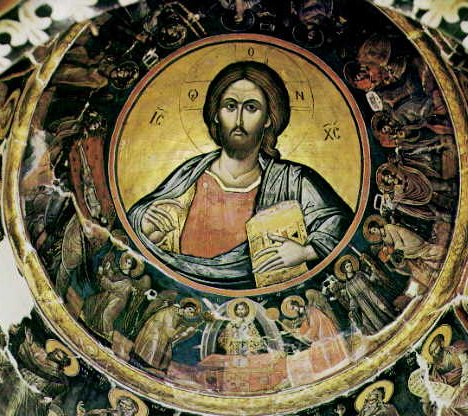
Above all, at the apex of the dome, there towered a mighty icon of the pantocrator:

http://www.ouranoupoli.com/athos/church.html

The service began with the usual kyrie eleison; for an hour or more, there was chanting and chasing across the church to kiss the icons, and lighting of lamps and waving of incense. I stood and sat, and sat and stood, and crossed myself as necessary; when it was over I filed out and, led by Evangelos, into the refectory.

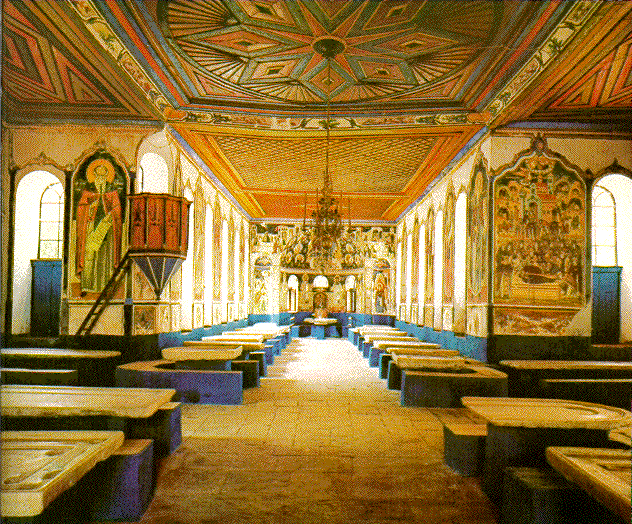
http://slavic.lss.wisc.edu/~kornblatt/easternorthodox/byzantine/byzantinepage.htm

This was cruciform, considerably larger than the one at Simonopetra, and jammed to the gills, mostly with monks. There must have been more than 100. The fare was similar to Simonopetra, though with the addition of giant tomatoes. I was crammed in with Evangelos and about eight other people at a tiny u-shaped table. Serving the meal in the cramped space was a festival of silent cooperation, while a monk in the pulpit read an edifying text in Greek. More time was allotted here than at Simonopetra to eat, and I had my fill. When it was done, everybody stood, and the chief monks filed out first.

Waiting for me in the courtyard was Father Matthew, an elderly grey-bearded monk from Wisconsin. He led me back into the church for the ceremony of the veneration of the relics, or at least to explain this to me. In front of the sanctuary screen there now stood a long table, on which there were a series of caskets which had apparently been brought out from somewhere secure; in front of them, a line of laymen bent to cross themselves and kiss the boxes. Each one, explained Father Matthew, contained a relic.

“To people with a conventional western point of view, it seems crazy to venerate some old bones or pieces of cloth. But for us, as we believe that in Christ the spiritual achieved its perfect physical manifestation, so the flesh participates in the spirit, and the physical remains of a particularly holy person, or objects that were around that person, still make the spirit of that person manifest in the world.”

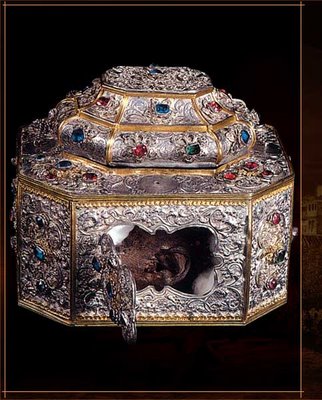
There were pieces of the true cross, and the reed from which water was offered to Christ on the cross; a shawl of the Virgin Mary which had been taken to Moscow and apparently worked a series of implausible miracles there; and finally – the one that brought me closest to simultaneous gag and guffaw – in a silver, jewel-encrusted casket, the head of  the fifth century Patriarch of Constantinople St. John Chrysostom, with a small door open in one side to enable a close-up view of his ear:

http://www.johnsanidopoulos.com/2010/01/translation-of-relics-of-st-john.html

When I got over this, I asked Father Matthew: “What do you do?”

“Well sure, we study”, he responded. “But mostly, we pray.”

Back in the dormitory, Evangelos showed me the coffee machine, in preparation for the 8 p.m. service: the last four hours of 2011. Then he led me back to the church, making sure we were there early enough for me to reclaim the seat I had had earlier. By now it was pitch dark, and the candles glowed dimly in clouds of gold. Crowds of monks and laymen trooped in and did the circuit of the icons, crossing themselves and kissing; monks scampered hither and thither, their beards flowing, lighting oil lamps, the shuffle of their shoes on the marble floors. The chanting began. I stood for ages. Monks in the left apse sang for a timeless stretch; a monk scurried across from them to the right side, and those began to chant in turn. Thus the plainsong switched from right to left and back and back again; priests within the sanctuary brought out icons and caskets, to which the faithful circulated; monks crossed themselves to right and left, some turning elegantly, some whirling between the compass points. It became clear to me that, apart from certain obvious passages where a crescendo was reached, it was pretty much up to each individual to choose when to sit and when to stand; the layman next to me sat down and failed to rise for a couple of hours, by which time I had realised that he was asleep with his head in his hands crushed on the seat in front.

This gave me plenty of time to ruminate. On the correlation between monking and tallness: is it coincidence that there is a disproportionate number of longfellas in beards and black robes, or is there something about being tall that makes young men want to withdraw from the world? A sense of social awkwardness? A loftier perspective? On the similarities between this dark ancient mystery cult preserved in living 4th century amber, and other world religions: the spinning clarity of the dervishes; the still, glowing iconography of the Tibetans; the vivid and multifarious god/saints of the Hindus; the plainsong and genuflection of the Catholics; the narrow undulations of the Muslim call to prayer? All religions are one, but all religions are different? On the intense hold on the public imagination that this mystifying extravaganza retains, and its apparent connection with the diehard skinhead history-shackled nationalists of the Balkans. So the thoughts spiralled in and out of my mind in the dark glowing trance of the passing hours, while my feet and back ached, and slowly, slowly, I found myself taken out of time and all became one in the golden smoke – or was I falling asleep? Religious experience as attrition…

Finally, they wrapped it up. Ten past twelve, the dead of night, and the beginning of the year – 2012, though nobody remarked upon it. With rites to resume at 6 a.m., I forced myself to shower and shave, and packed my bags ahead of time; I knew I wouldn’t be able to handle it in the morning. By 1 a.m. I was in bed, Evangelos snoring; four-and-a-bit hours sleep. Then the trudge back down to the opening doors, the kissing of the icons, the whirling and the chanting, the swinging of incense and the parading of the faithful: three more hours. From about half way the light inched in through the windows, till at length the lamps – or most of them – were extinguished, and the panoply lingered into the spreading grey morning like a smoky ethereal memory of the passion of the night before. It was, at great length, the celebration of the host; in the course of this, through the doors of the inner sanctuary, momentarily, I noticed the ageing, St. George-ish red-and-white clad celebrant hesitate, and one of the youngbeards guide him humbly to the next stage of the ceremony. This seemed odd; but then he emerged into the centre of the church with the host and the wine, and there followed a whirling orgy of censer-rattling and genuflection, and the presentation and consumption of the same flat cake I had seen at Simonopetra. This was the climax; the service was over. But strangely the monks did not all disperse; the ageing greybeard came over to near where I was, and a crowd of monks gathered around him, laughing and joking and asking him questions.

“This was in fact the abbot of one of the other monasteries on the mountain, officiating with us as a guest,” explained Father Matthew. “You may have heard that our own abbot was arrested on Christmas Day in connection with a land scandal, and placed in custody. He was described as a threat to the state and a flight risk! Even if these charges were true, which they are not, he would never run away! It’s absurd. But the abbot of one of the other monasteries has come to preside as a gesture of solidarity with us.”

“So what did you think of it all?”, he asked.

“Well, it was quite an amazing show”, I replied.

“It would be surprising if it wasn’t! After all, this is what we do!” I laughed; these words were almost exactly the same that George Clinton had used about p-funk at La Grande Arche de La Defense, six months ago.

Breakfast in the refectory, all crammed together again; wine was served in tin flasks. As I broke for the jeep back to the port, Father Matthew intercepted me and handed me a handwritten slip with some recommended reading. One piece was an interview with an orthodox monk: “don’t pay attention to the interviewer”, advised Father Matthew, “he has New Age tendencies.” The ride back to Dafni was on rough roads, skilfully and speedily negotiated; the ferry was cold, slow and rattly, but it got us there, the distant headlands hanging in the mist of the winter afternoon. The sea rode up us into the harbour; the boat pulled into the dock at Ouranopoli, and its passengers made up the ramp to the area where the bus would depart for Thessaloniki. A couple of shops were open; the middle-aged ice-cream lady came out of her store and looked around to see what was going on; shabby-looking laymen sat on their bags; a tall monk paced back and forth in his black cloak; a woman waited in her knee-length coat and long high-heeled boots, her brown hair tumbling down her back; small cars pulled away; a thin sunshine broke across the square.

“Hell,” I thought,  “I like the world!”

Posted in anybody up there?, road | Tagged , , , , , , | Leave a comment

built upon the rock

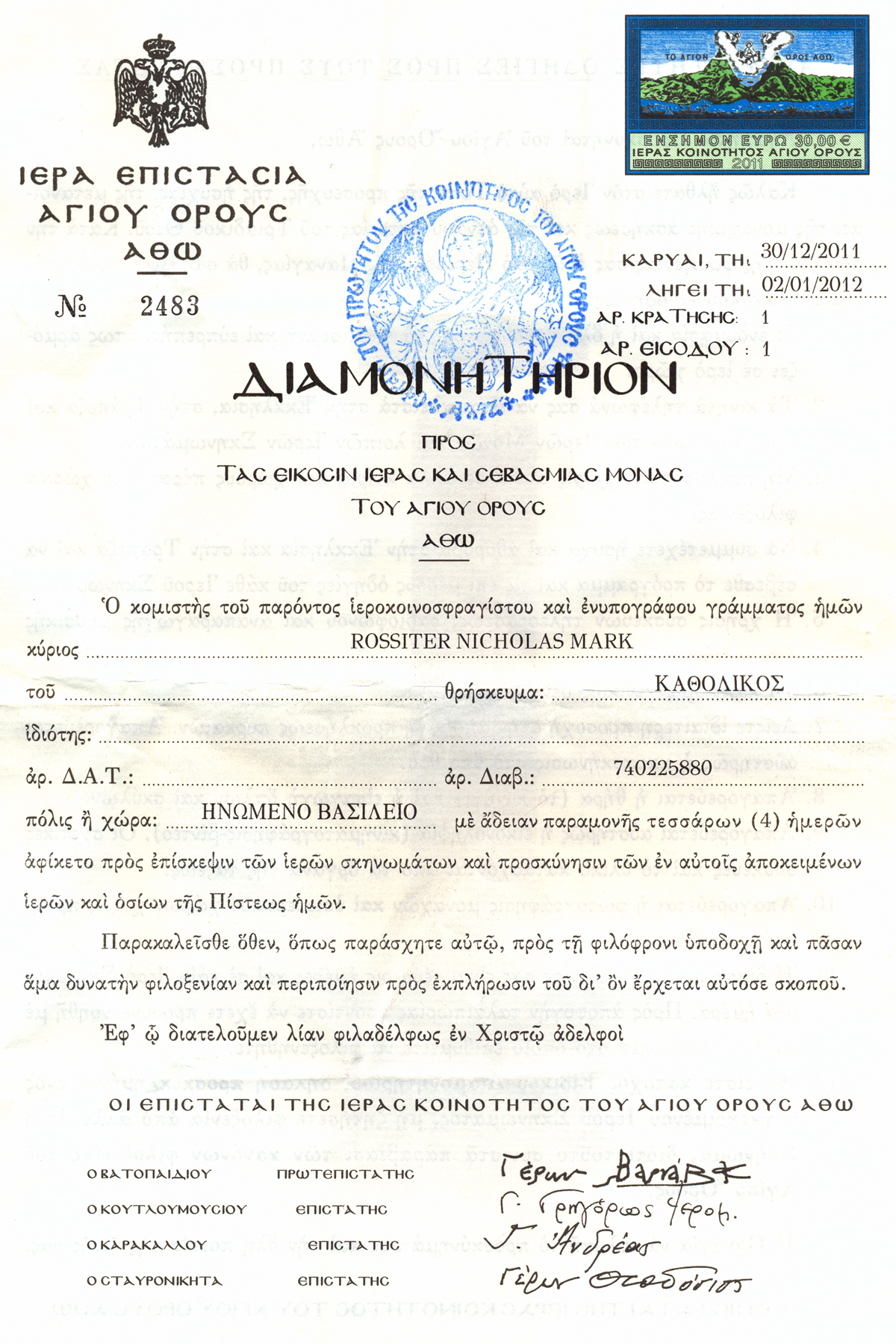
Equipped with my €30 visa from the religious authorities, I took the fast boat from Ouranoupolis to Dafni, the port of Mount Athos (though that makes it sound grander than it is – there are about six buildings). Since Athos, the Holy Mountain of Orthodox Christianity, bans women, everybody on the boat and on the dock at Dafni was male (which raises interesting questions about the orientation or otherwise of all the ancillary staff – customs officials, shopkeepers, bus drivers, gatekeepers and so on who live and work on the mountain).

As I was leaving the boat the sole other pilgrim (for want of a better word) on board hailed me and asked where I was going. I told him that I was planning to walk south from Dafni along the coast via the monastery of Simonopetra (where I knew I couldn’t stay, as my fax several weeks earlier requesting to do so had been answered with a polite negative) to Dionysiou (to which a phone call had established that I didn’t need to book, as there would be plenty of space at this time of year). My fellow pilgrim stared at me in astonishment:

“You want to walk? It will take four hours!”

“That’s OK”, I replied, “I like walking.”

“Oh!” he said – “good luck!”, and strode away.

I bought a map from one of the shopkeepers, whose fair-sized store was crammed on the right-hand side with religious books and paraphernalia, and on the left-hand side with booze, and asked him for directions to the track to Simonopetra. He gaped at me too, and said, presumably in the same combi-European tongue as the old lady with the bent finger in Thessaloniki:

“dos oress!”

I figure nobody walks around here then. And there I was thinking this was basically a walking holiday with maybe the odd Orthodox service thrown in. I was about to find out different.

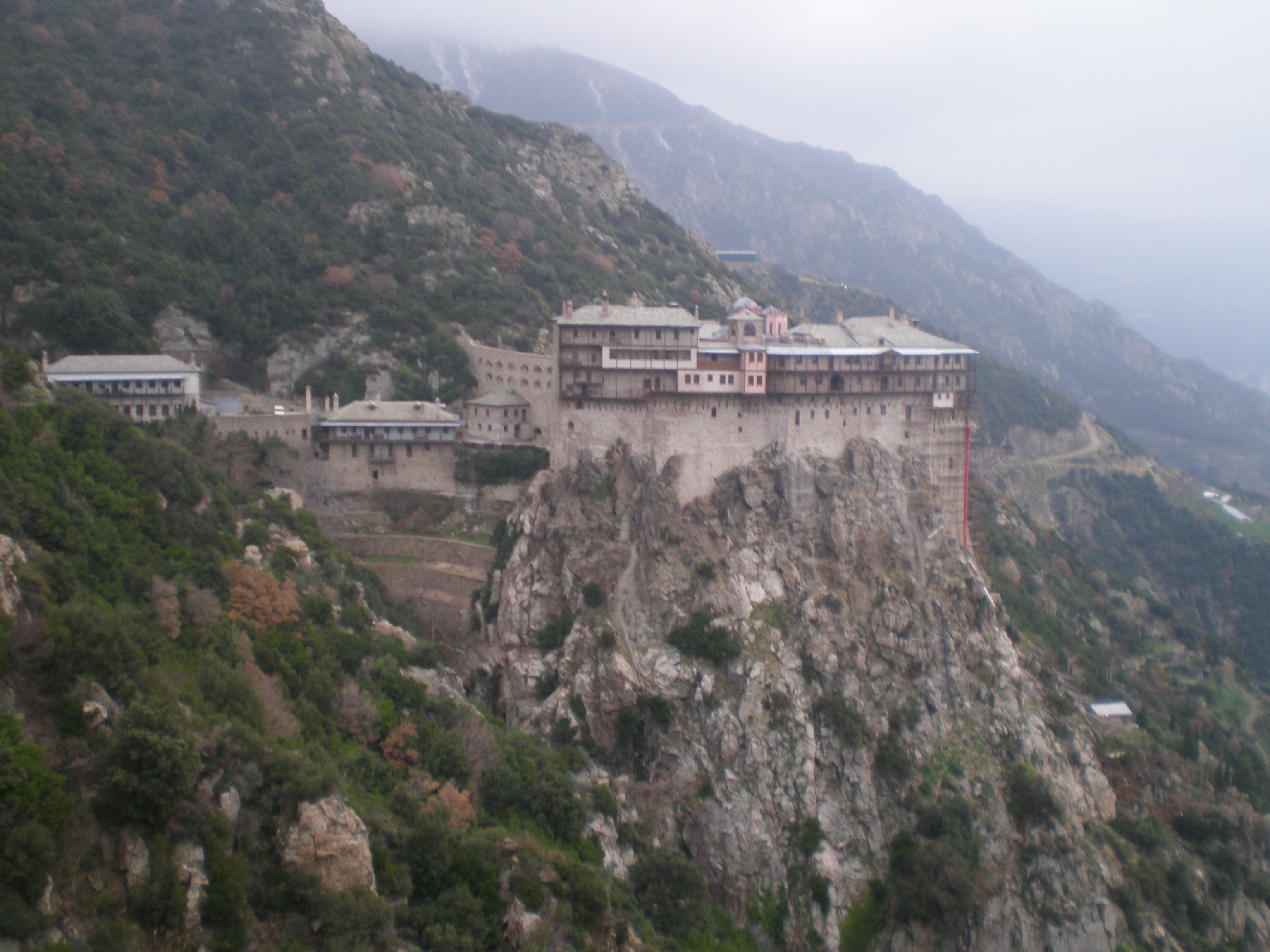
In the event it took less than dos oress to walk to Simonopetra, even with the delay accorded by a group of five large riderless horses, including one apparently alpha male stallion, that blocked the track, eyeing me with suspicion; I approached them step by sidelong step with my hand outstretched and edged past gingerly as they stepped forward to investigate, backing away with the same nervous benediction as I had come with. They took a couple of steps to follow me, then appeared satisfied and contented themselves with staring at my retreating figure. There was plenty of switchback climbing among tumbling forests, scrubby bushland and brooks racing down from high falls; but beyond a certain point it was all downhill until a final short rise at the top of which I rounded a corner, and saw this:
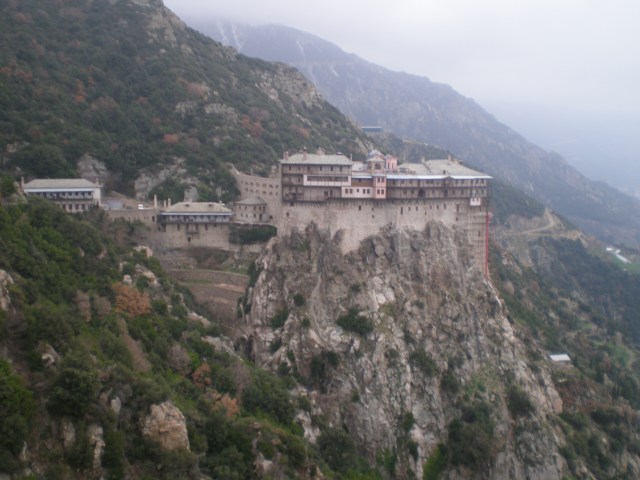
The monastery of Simon Peter, like the church founded by the saint to whom it is dedicated, was built upon a rock. And what a rock.

Since I was passing, I thought I would look at the church within, and began to climb an arched, covered stone stairway that ascended towards the heart of the monastery. As I was going up, a tall, bespectacled, bare-headed monk, thirty-something with a helpful, scholarly face, plaited brown hair falling onto his neck, and a bushy beard to match, was descending in his black robe; seeing me, he asked in what I took to be German-accented English whether I was looking for the guest house.

“No,” I replied, “I know I can’t stay, you’re full tonight” and told him about the fax.

“Well, you never know, we sometimes have cancellations,” he said; “let me take you down there.”

The guest house master looked me up and down, and said, in fluent English:

“The reason we said no is not because we are full, it’s because we are preparing for our annual festival next week.” (I later figured out that their annual festival was Christmas; although the date was December 30th in the rest of the world, which uses the Gregorian calendar, here on Athos they use the older Julian calendar, which was abandoned everywhere else by the early years of the 20th century, and runs about two weeks behind.) “But since there’s only one of you…”

In the vestibule, lined with aerial views of Agia Sofia (the 6th century Byzantine Emperor Justinian’s giant church in Istanbul – sorry, Constantinople – and the mothership of Orthodoxy) there was a huge guest register, which I was asked to fill out; as I did so, I looked back through several pages, each with several dozen lines, and mine was the only entry in Roman script. While I waited, I was served with a tray on which there stood a large glass of water, a small glass of ouzo, and three rough-hewn slabs of sticky, icing-sugar-coated Turkish delight. Finally, an older monk approached, with a long, thin greying beard, and guided me to my room, a six-bed dorm occupied by one young Greek man languishing under a brown blanket. The monk gestured around the room:

“All these beds are yours,” he quipped.

“And now?” I asked.

“Vespers is at 3.30. It will last maybe an hour. After that, there is a meal. Maybe afterwards, you will have the chance to talk to the monks.”

I went to Vespers, up the stairs I had started on before, round a corner and out onto a wooden balcony attached to the side of the building and hanging with an almost miraculous absence of anxiety above several hundred metres of pure space (you can see it in the photo above if you look between the pink building and the archway to its right). Here I encountered an elderly monk with a long grey beard, a skewed neck, and a twinkle in his eye. He caught me eyeing the sizable bell which hung from a rafter of this balcony, and made a gesture implying that I should ring it.

“Ding ding – hello!” he burst out, and collapsed in laughter.

I was not at all tempted to ring the bell, but stood nervously instead in an open vestibule in front of a locked door, judging that I was in the right place by the presence of the young Greek with whom I was sharing my dorm. Eventually a monk opened it, and I followed them into a small antechamber, hung on either side of the central archway into the church with a couple of large icons. The leading monk and the young Greek crossed themselves profusely in front of each icon, and then bent to kiss its glass before proceeding to the next one, where they performed the same operation. Finding myself overcome with a fret about the sanitary aspects of this, I contented myself with crossing in front of the icons (well, I could remember how to do that) and bowing slightly.

Rather than entering the church itself through the main, central archway, the young Greek had gone through a smaller doorway at the left hand side, and was now slouched next to this doorway in the farthest back of a row of four wood-panelled cubicle-seats that ran along the left-hand wall of the church, behind a low screen separating this rearward section from the apse of the church. As the monks streamed in in their black robes, three other young men in civvies had positioned themselves in the equivalent rearward corner of the church on the right-hand side. Not knowing what to do or where to sit, and having no guidance, I stuffed myself into the second cubicle along the back wall from the left-hand rear corner door, and remained standing. Monks whirled in, moving forward and sideways to cross themselves and kiss the variety of icons on display, before seating themselves in the apses, or in the case of a couple of elderly grey-bearded gents, collapsing into seats in the corner near me, forward of the young Greek layman. At this point, right before the service started, the old monk with the skewed eye strolled up to me and cracked what I took to be a joke, in Greek; since I had no idea what he was saying – was he making fun of me for not ringing the bell? – I had no choice but to raise my hands in the air and shrug. He chuckled deeply and walked away.

The action started with a Kyrie Eleison. Or rather with a kyriekyriekyriekyriekyriekyriekyriekyriekyriekyriekyriekyrieeleison, a kyriekyriekyriekyriekyriekyriekyriekyriekyriekyriekyriekyrieeleison, and then several more kyriekyriekyriekyriekyriekyriekyriekyriekyriekyriekyriekyrieeleisons, delivered at breakneck pace in extended virtuoso performance by a monk in one of the apses. Then the chanting proper began, ages and stages of call and response in plainsong and harmonies from apse to apse, interrupted only by flurries of black-robed monks genuflecting and crossing themselves in front of various icons positioned around the tiny church. Of this particular service I don’t remember a great deal, largely because it was a major stresser, induced by the fact that I didn’t know what the hell I was supposed to be doing. Was I in the right seat, or had I committed some colossal layman’s faux pas and was positioned where some crucial monk-official was supposed to be? When was I supposed to sit, and when to stand? There didn’t seem to be any discernible pattern among either laymen or monks. It just all went on and on and on, for an hour or more (little did I know), until one of the priests strode forward from the sanctuary bearing a metre-wide cake, a shallow cone no more than five centimeters high at its centre and covered with what appeared to be icing sugar. Incense was shaken, he intoned a ritual blessing over it, and then abruptly disappeared, still bearing it, through the main doorway and out of the church. Suddenly, everybody stood up and followed him. I brought up a sheepish rear, finding myself back in the antechamber and standing in a queue, for I knew not what, with the monks in the lead, and behind them the group in civvies.

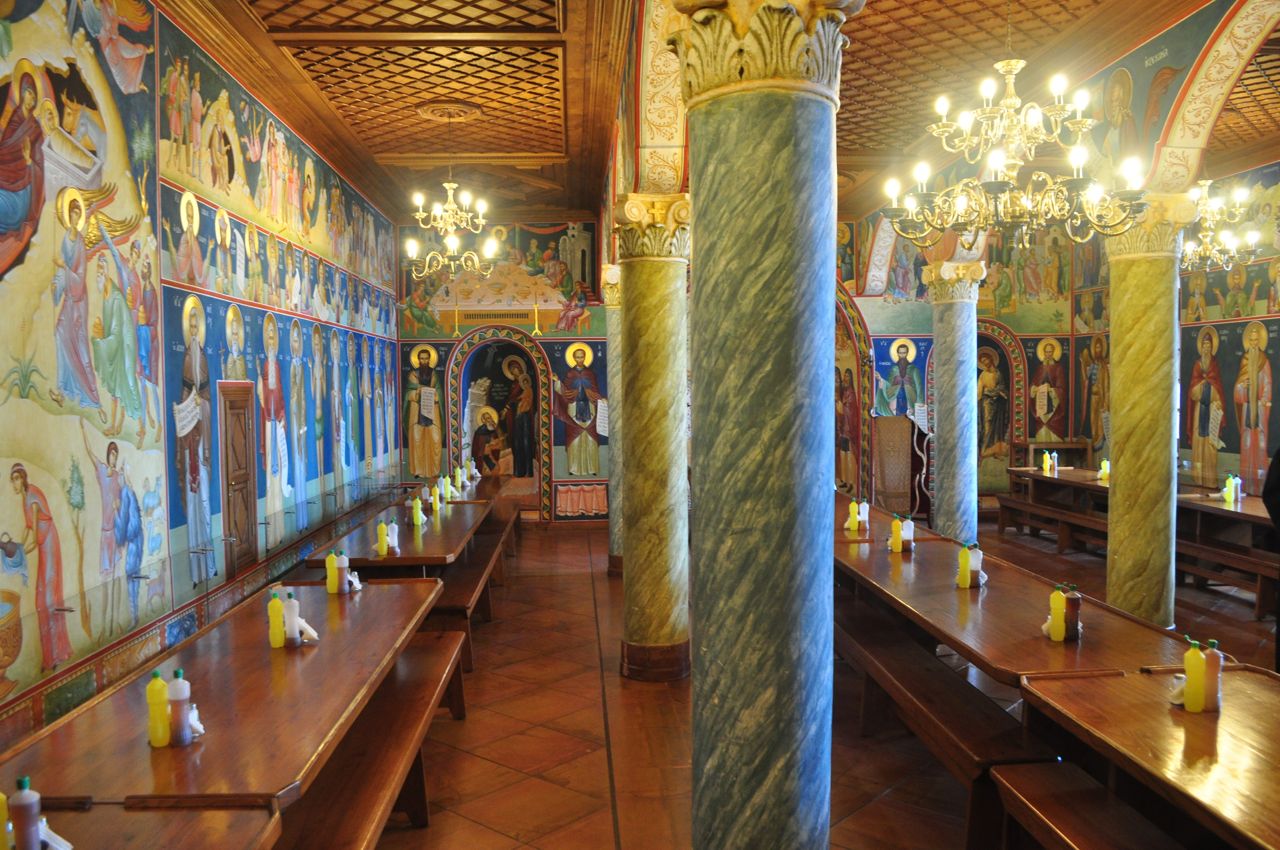
The line shuffled forward; it turned out that the big cake had been cut, and everybody in their turn was being gifted a crumbly handful in a paper napkin. I bowed, and dutifully took my piece (it later turned out that I shouldn’t have done. This ritual is a gesture of friendship at the end of the service for those who have not taken communion, and since no communion had been offered at this service, everybody received the crumbly cake. However, non-Orthodox, who do not understand the background or meaning of the ritual, are not supposed to participate.) Once in possession of the napkin, it was a few short strides into the dining hall:
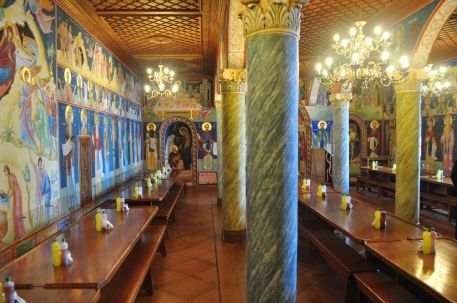
http://darkwing.uoregon.edu/~klesh/Athos11/SimonopetraTrap.jpg

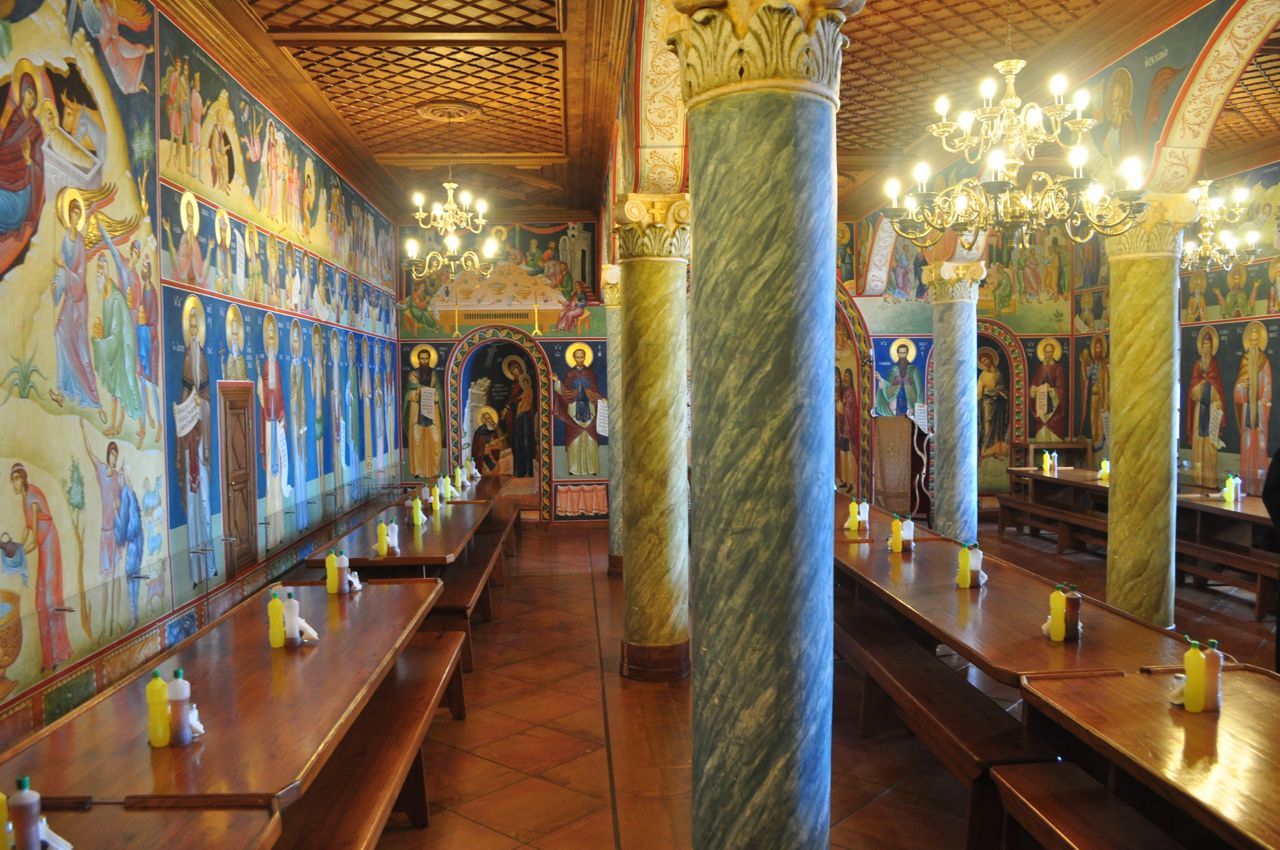
Here, amid the splendour of painted saints, I was seated at a table towards the rear, alone apart from the young Greek layman; the monks were seated further forward on the other side, while the plainclothes crowd occupied the table behind them. A spoken blessing served as the starting gun, after which the only sound was the hurried clink of metal cutlery on metal plates. There was bread to be broken, green beans in sauce on one plate and diced onions on another, a tray of fabulously lush and wrinkled black olives, a large metal jug and metal cup for water, and smaller counterparts for red wine. I plunged in, but my technique was inefficient; before I was barely half way full, the cacophony of clinking from around the hall began to subside, and to fade, and then became silence. Not wishing to be the lone clinker, I settled my fork on the table, and waited. A bell rang, and everyone stood.

As the monks were shuffling out, one of the plainclothes approached and told me I should return to my dorm. There was a Chinese monk, he said, Father Isaias, who boarded in the building where the dorm was; he could speak English, and would answer any questions. But back in the dorm, there was only another young man in civvies, who told me that Father Isaias was away. The next service, he said, would be at three in the morning.

At 2.30 in the morning, the young Greek layman’s alarm went off on his mobile. He ignored it. At 3.00, the thunderstorm began, cracking out across the surrounding hills and sending sheets of rain spraying off the balconies. It went on until 4.00, as I drifted serenely in and out of consciousness. At 4.30, the layman arose and left the room. I went back to sleep. At 6.15, I dragged myself out of bed and pulled my clothes on. It was chucking it down as I crossed the courtyard and climbed the steps. The church door was locked; too late.

At 9.00 there was another chance. An hour of icon-kissing and black monk flurries, notable for the leading role in chanting taken by a young plainclothes, and this time with a communion at the end. As if to forestall any danger that I might try to take part in this, I suddenly found in front of me Father Isaias, instantly recognizable by his Chinese beard; just like in the old paintings, there was almost nothing on his chin, but long wispy moustaches descended to either side of his mouth. Nothing was said, but I had the feeling that my absence from the service in the middle of the night had been noted. He escorted me to the dining hall, where breakfast was served (or was it lunch? It was exactly the same as last evening’s meal, except that green peas replaced green beans, and there was no wine). This time there were more monks, and there was a reading; the cutlery clinked out more slowly, and there was time to get my fill.

Father Isaias directed me to the place where I would need to wait to get the bus back to Dafni. The bus (in fact a jeep) was driven by a thirty-something Greek monk with baggy black tracksuit trousers beneath his cape, and English good enough that his Greek passengers remarked on it.

“Where did you learn your English?” I asked. “In school?”

“No! They tried to teach me there, but I didn’t learn anything.” He paused, and laughed. “I travelled around. I was searching for something. Did you talk to any of the monks?”

“No, not really. We were supposed to talk to the Chinese monk, Father Isaias, but he wasn’t around last night.”

“He’s not Chinese! Not really, anyway – he’s Swiss. His family are all Buddhists, though. He used to work in banking in Switzerland, making loads of money. But then” – here, he smiled deeply – “well, he found the love of God, and he found his way here.”

“So where do the monks all come from – are they mostly Greek?”

“80% Greek or so, yes. Those who aren’t have to learn Greek – there’s a place in Thessaloniki where they go for six months before they come here. Not that we are saying Greek is a superior language or anything – of course it’s useful because the scriptures are written in Greek, but mostly it’s just that we have to communicate, and that’s the language we speak on the mountain.”

“So what happens after they learn Greek?”

“Well, then they come and live in a particular monastery for a couple of years as novices, and learn how to be a monk. That way they can see if it’s right for them. And if it is, then they stay.”

“So those people in plainclothes, there was one singing in the service with the monks, are they novices? They don’t wear monk’s gear, and they keep shaving, until they are actually ordained as monks?”

“That’s the way we do it at Simonopetra, yes. But every monastery is different. We are one of the most liberal and open, we welcome anyone – that way we believe that people can see for themselves and understand, and make up their minds. But some are much stricter. You are lucky that you came to us!”

“Well, yes, it was luck – I had actually been told by fax I couldn’t stay, and I was on my way to Dionysou.”

“Dionysou!”, he laughed out loud. “They’re really strict! You wouldn’t have liked it there at all!”

“Are you more in touch with the world than most places, then? Do you keep up with what’s going on out there?”

“Well I do, I pretty much keep up with what’s going on. We have a room with an internet connection – most monasteries don’t, but we do. On the other hand, there are some monks even at Simonopetra – you know, I was talking to an old Hungarian monk the other day, and he had never even heard of Osama bin Laden!” He guffawed.

“So how does the monastery run? Do you all have particular specialities?”

“Yes, we all have our own jobs – most have more than one. I clean the paths!” Here he burst out again in melodious laughter. “And I try and persuade them to do sustainable, ecological things – but they don’t listen to me.” He laughed again.

At this moment we pulled in by an array of solar panels by the track. When I pointed them out, he said:

“Oh yes – we have a whole hillside full of them up on the mountain.”

He brought the jeep to a halt, jumped out, and beckoned me to follow him. He led me into a large old building by the roadside, and left me in a small chapel decorated with pictures of the saints for a few minutes; I looked out over the chill grey choppy waters of the Aegean. When he returned, he beckoned to the door, and said:

“Right, that’s it, I’m done.”

We stepped outside, to be greeted by a bent old grey-haired man in dull, tatty clothes. They conversed for a while in Greek; the monk became increasingly agitated, in an apologetic-seeming way, while the old man appeared to be entreating him. At last, the monk waved the old man away, and we walked back to the jeep.

“What was that about?”

He started the engine. “The old man, he wanted money. They get on to the mountain, and often they have no money, no papers, nothing. Many are from what used to be Yugoslavia. Some of them are even Muslims! They come here and want us to give them money.”

“So what do you do?”

“We give them fifteen Euros, and a bed for the night. Then in the morning we tell them to move on. So they move from monastery to monastery. But I don’t have any money, and the monk who normally lives here is not here right now, so what can I do?”

He raised his hand sadly, palm upwards. We drove on, up the mountain, over broken roads, and ascended into fog and rain. We talked of travel and religion; I repeated my observation that Orthodox Christianity seemed less focussed on blood and suffering, and particularly the crucifixion, than the western varieties.

“You figured that out by yourself, without talking to the monks? That’s very good! But that’s right, you know; the crucifixion was important, but it was only a small part of his life!”

As we dropped through the mist into Karyes, the “capital” of Athos (three shops, a post office, a church, a bus stop and a few assorted houses), he turned to me, waved his hand in the air, and said:

“Vatopedi.”

“What?”

“Vatopedi. That’s the monastery you should go to tonight. They are the most liberal of all. They will explain it to you well.”

As we parted in the pouring rain, he recommended that I should read the works of Kallistos Ware.

“He writes very good books about Orthodoxy, in English. He is English, you know! He is from Oxford, Cambridge, one of those places. And we like reading him because he can say bad things about the Byzantine empire. As Greeks, we are not allowed to think anything bad about Byzantium, we are supposed to think it was perfect…”

He guffawed again. I shook his hand. As he loped back to his truck, I thought:

“That is one of the happiest men I have ever met…”
Posted in anybody up there?, road | Tagged , , , , , , | Leave a comment

hard times in Greece, and how to survive them

The Guardian had a story about a guy in Patras who has been so hard hit by Greece’s current troubles that he could no longer support his ten children and had turned four of them in for care. Sad, yes, but what on earth is anybody in Europe in the 21st century doing having ten children? Didn’t he feel he could afford a few packets of condoms? Surely in the boom times he could have secured a bank loan to splash out on a regular supply? Something of a false economy not to have done, I would say. And now he wants the state to subsidise his excessive progeny, as if they were Goldman Sachs or something? Fortunately, private philanthropy rode to the rescue, and he was bailed out by a rich type in Athens who is funding him for a new house. Just as well for him that he went to such lengths it got in the media…

That may be an extreme example, but I read somewhere that Greece’s money supply has declined by 16% in the last two years. That’s pretty incredible – of every 6 euros in their pockets, one just disappeared. No wonder there’s a grim, purgatorial aspect to the place. Start with appearance: most people are dressed either manifestly cheaply, like they just can’t afford anything that costs more then a few euros, or just plain badly. Among the young women there is a fashion for knee-length boots and skin-tight factory-faded jeans, which don’t necessarily do all of them any favors. Then most people over 30 give the impression from their lined faces and troubled demeanours that they have borne a lifetime of hardship and toil. Even the little kids look like they are in training for a lifetime of hardship and toil. Is this because of the depression, or has it always been like this?

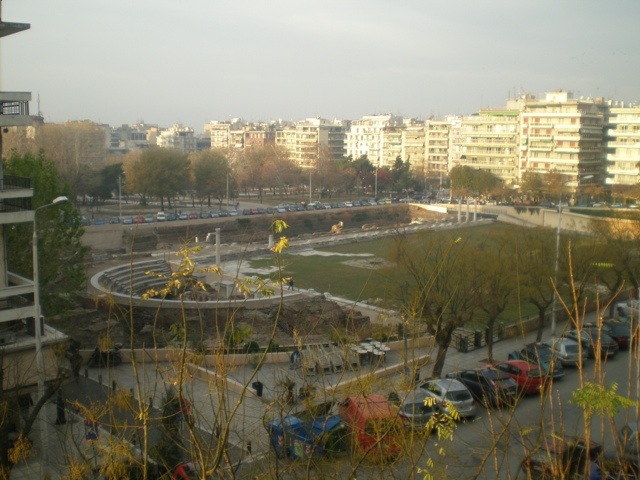
The depression is manifesting itself in the public sphere too. On the way from Athens to Thessaly, the railway was paralleled for many miles by a ghost road: all the tunnels and road beds complete, but none of the surfacing, and no work going on. In Thessaloniki, I had a great view of the Roman agora from my hotel room:

20120102-194015.jpg

But when I went down there to take a closer look, it was all locked up. Same story with the local palace of the fourth century Roman Tetrarch Galerius, except that there were two young people sitting in the ticket office, with the windows closed against the cold; when I knocked, the woman opened up to explain that the place was closed. For good? For a long time; there are works in progress. Ah. Same with the two antique Turkish baths in the city, which, according to the guidebook, had been converted into an art gallery and a concert space: both of them shuttered and padlocked. All of these places were cited by the guidebook as free; so why didn’t they whack on an entrance fee? Three euros, say, like the admission to the White Tower, which also used to be free? Maybe it’s the time of year; but then why pay two people to sit in the entrance to Galerius’ palace turning customers away?

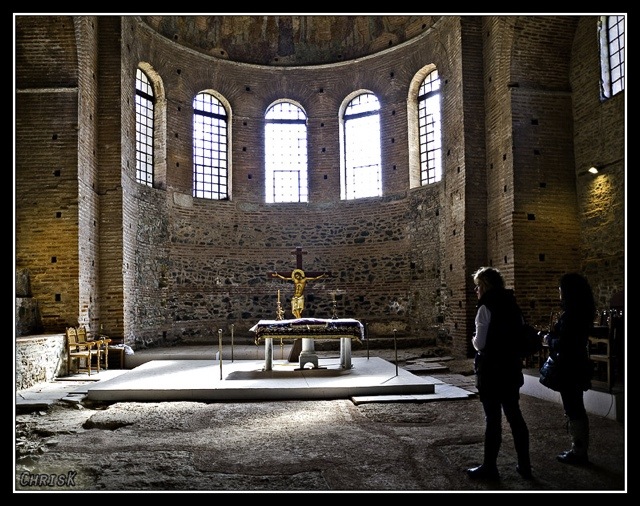
Religious spaces? A little different. Galerius’ intended mausoleum – known as the Rotunda, and converted by Constantine the Great into Thessaloniki’s first state-sanctioned church, frescoed up, then converted by the Ottomans into a mosque with a minaret, and then back again, but now a ward of the state – was open without charge. On the other hand, it was entirely jacked up on the inside with scaffolding, and most of the windows – up high – were shattered.

20120102-201644.jpghttp://www.trekearth.com/gallery/Europe/Greece/Macedonia/Thessaloniki/Thessaloniki/photo1182494.htm

Is it doing better – marginally – because the church is helping out? Certainly the straight-up churches I visited, whether giant or pocket-sized, were freely admitting visitors.

20120102-204331.jpghttp://dianepernet.typepad.com/diane/2008/09/being-a-flaneur.html

At Agios Dimitrios (above), built on the spot where the city’s patron saint, a Roman legionary, was caught preaching by Galerius’ thought police (he was subsequently speared to death), nobody turned me away; they didn’t want any money either, but I dropped them a couple of euros anyway.

20120104-185802.jpghttp://hr.wikipedia.org/wiki/Datoteka:Thessaloniki-Hagia_Nicolaos_Orphanos-_5685x3807.jpg

http://upload.wikimedia.org/wikipedia/commons/1/13/Agios_Nikolaos_Orfanos_Fresken.jpg

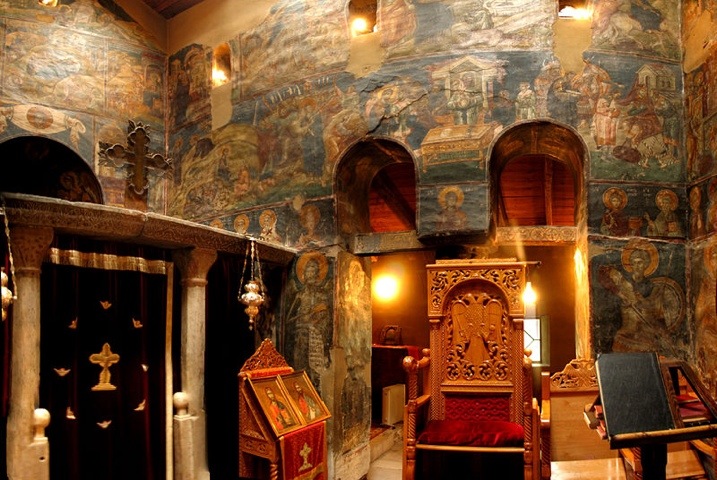
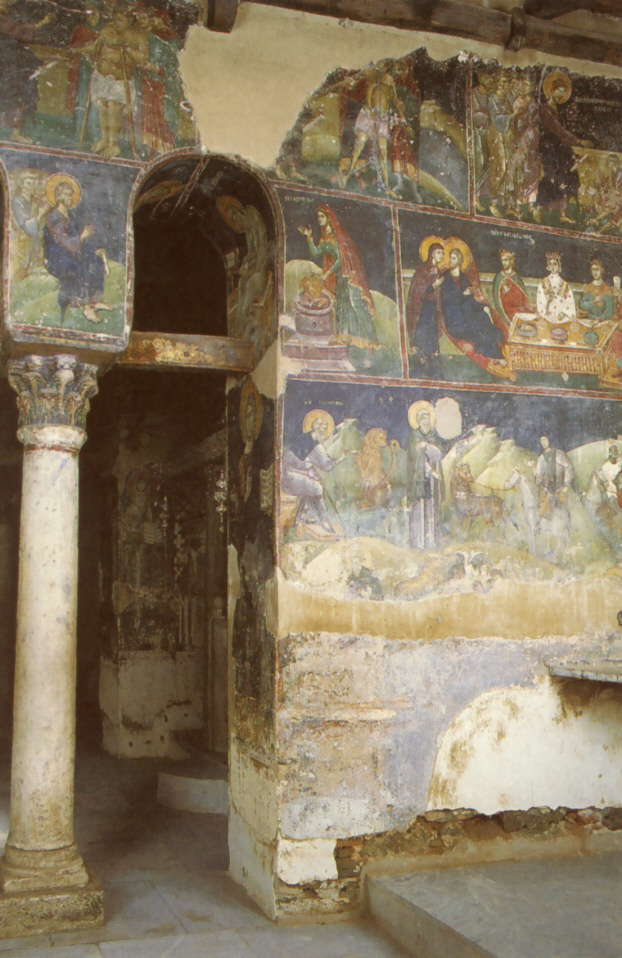
At Nikolaos Orfanos, set in a cypress-lined garden suffused with peace – It was all too easy to imagine philosophers of the fourth century discussing their trade in the sunshine here – a caretaker spotted me on the grounds, unlocked the place, and stood by while I marveled at the delicate elegance and perfect composition of the age-darkened medieval frescoes (above). Again, it was free, but I gave her a couple of euros anyway.

20120104-190408.jpghttp://www.ou.edu/class/ahi4263/byzhtml/p04-03.html

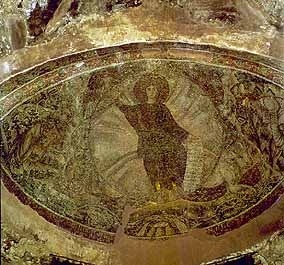
At Osios David, an even tinier church on the hill, reputed to have been built for the baptism of Galerius’ secretly Christian daughter while he was away on business, a hunched old lady with an index finger unnaturally bent beyond the final knuckle pointed to the 4th century mosaic of Christ and the evangelists (above), offering monosyllabic commentary in a mix of European languages, before charging me “oon evro”. I only had a ten, but she rummaged around in her purse with her bent finger and found eight before I let her keep the extra one.

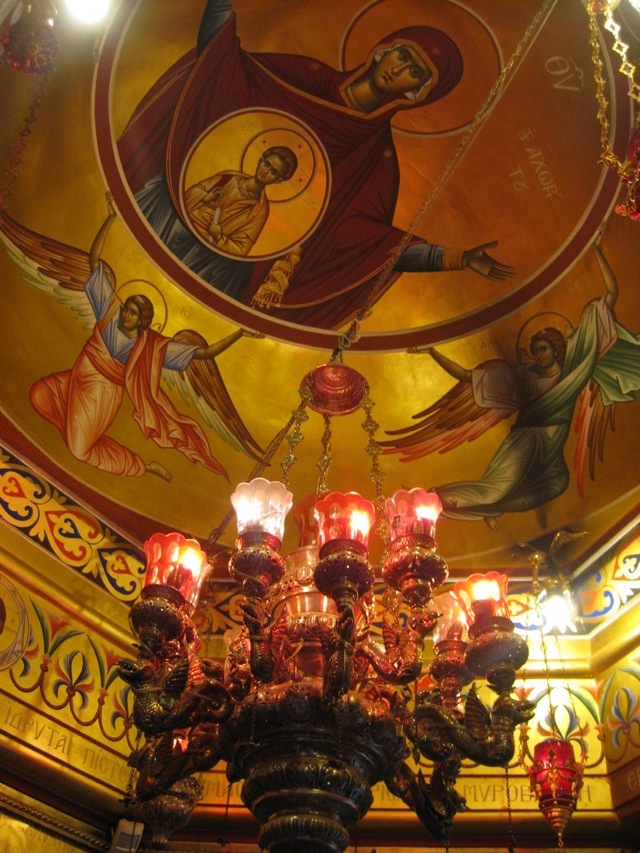
It was at the monastery of Vlaton up by Theodosius II’s fifth century city walls that I worked it out about the Orthodox faith and its art. First, it existed from very early days – the fourth century – at a level of sophistication that didn’t arrive in western Christianity until well into the middle ages, unless you count the illuminated manuscripts of the British Isles, and those were really largely pagan in character. Second, they kept it simple – a collection of clearly labelled saints and biblical scenes in familiar if not stylized poses, along with a few aspects of Christ (the pantocrator or kosmokrator being the most stunning combination of simplicity and power). Third, they overwhelmed you with otherworldly colour, especially gold. Fourth, they soft-pedaled the crucifixion; yes, there are one or two in any given church, but often hidden away from view in the sanctuary, and even those downplay the blood and gore and suffering; certainly no stations of the cross plastered all around the walls (a connection here: were there pogroms and expulsions of the Jews in south-eastern Europe, compared to the west? I don’t think so, though Russia is a different case, and this thought may break down there…)

Anyway, given this, it is no wonder that this religion holds such sway that it just carries on while the state – Caesar – goes into secular 21st century deep freeze…

Posted in anybody up there?, road | Tagged , , , , , , , , , , | Leave a comment

Meteora

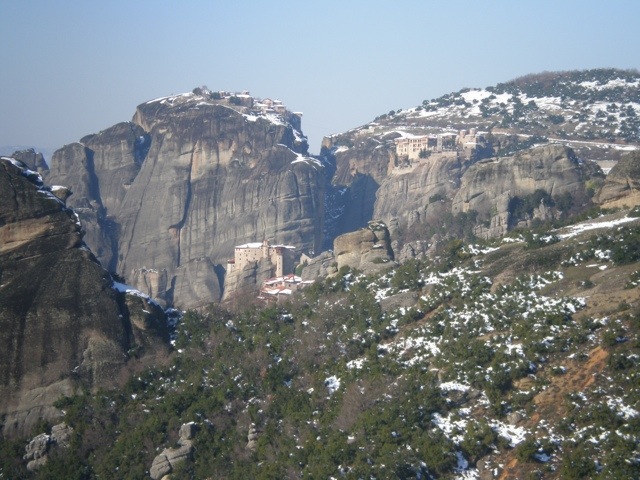
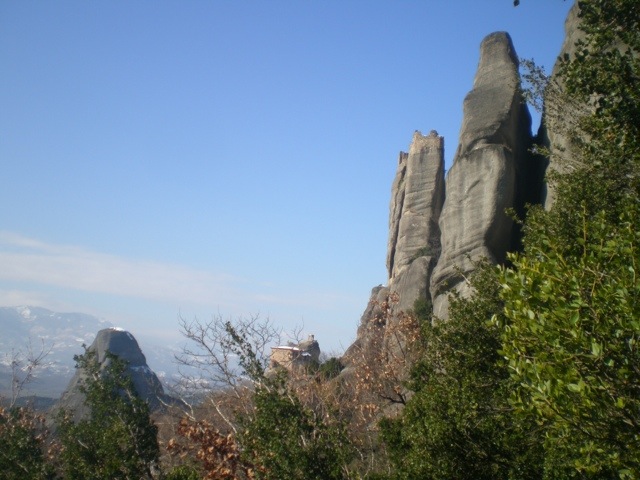
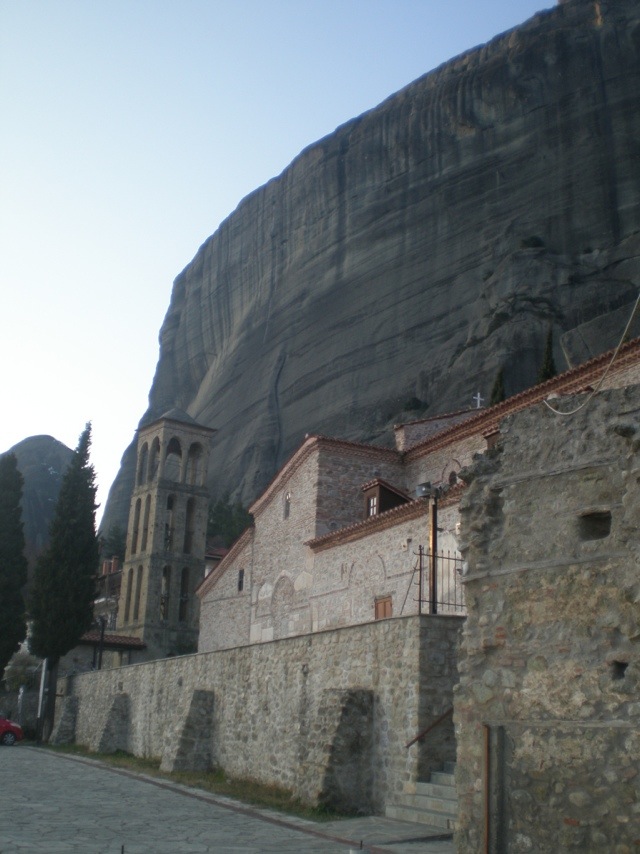
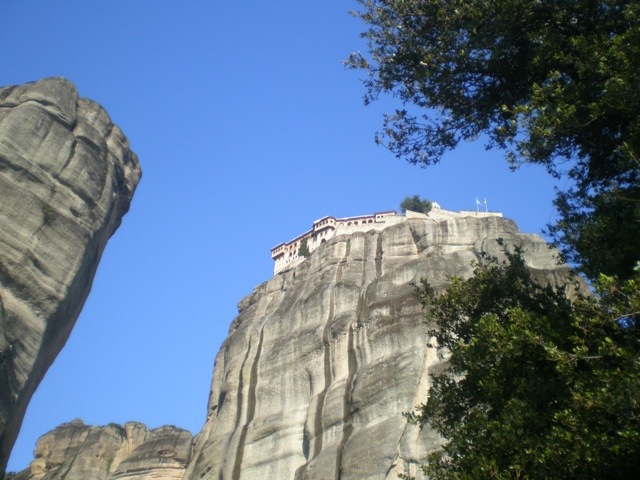
My first stop out of Athens was Meteora. This is a strange piece of geology: vast rock pinnacles rising out of the plain and flanking the local mountains. That would be enough to attract 21st century sightseers, but what augments the effect exponentially is that in Byzantine times, religious devotees clambered atop these strange rock sculptures and added complete monasteries of their own. There are three in this photo, if you can spot them:

20120102-183612.jpgAnd here is another:

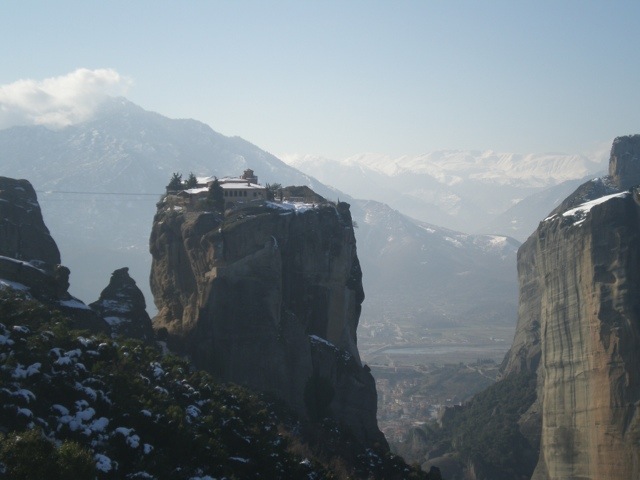
20120102-183901.jpgSo why did the monks (and the nuns – there is one nunnery) build in such isolated and inaccessible places? Well, that was a time, hundreds of years ago, when there were lots of wars, and monasteries were sometimes attacked because they had valuable things. So the monks wanted to stay as much out of the way as they could. Here, they chose places so steep (and so secure) that they used to have to haul people and provisions up in rope-suspended baskets (now they have stone staircases, and even electric lifts).

OK, but how did they get up there in the first place? You can see from the photo below that there is a ruin on the left-hand pinnacle – the only way for them to have got up there to build that would be by rock-climbing (but that would challenge the best rock-climbers of today, with modern equipment!), or by making a very long ladder, or maybe by some kind of grappling iron. Pretty incredible in any case. And then where would they have secured the line to bring up the materials to build?

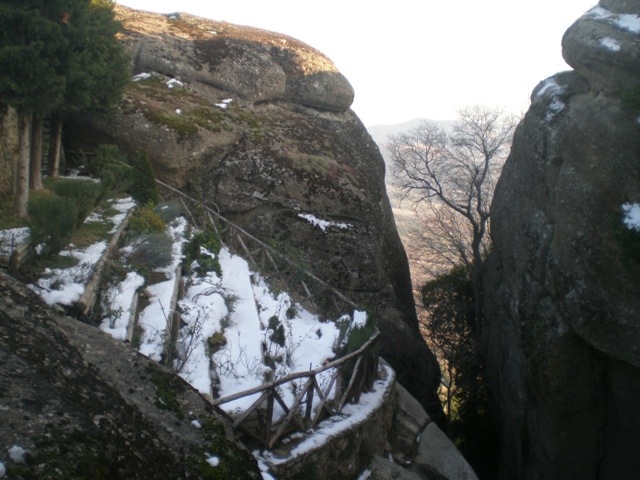
20120102-185254.jpgEven when they had successfully established their monasteries, it must have been a pretty desperate life. This is where the nuns grew their vegetables:

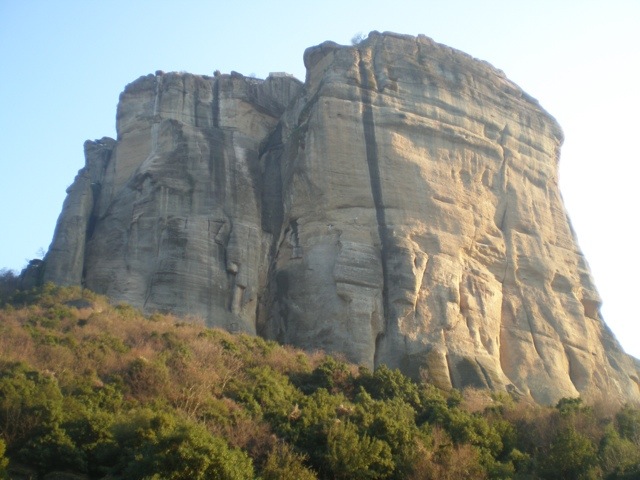
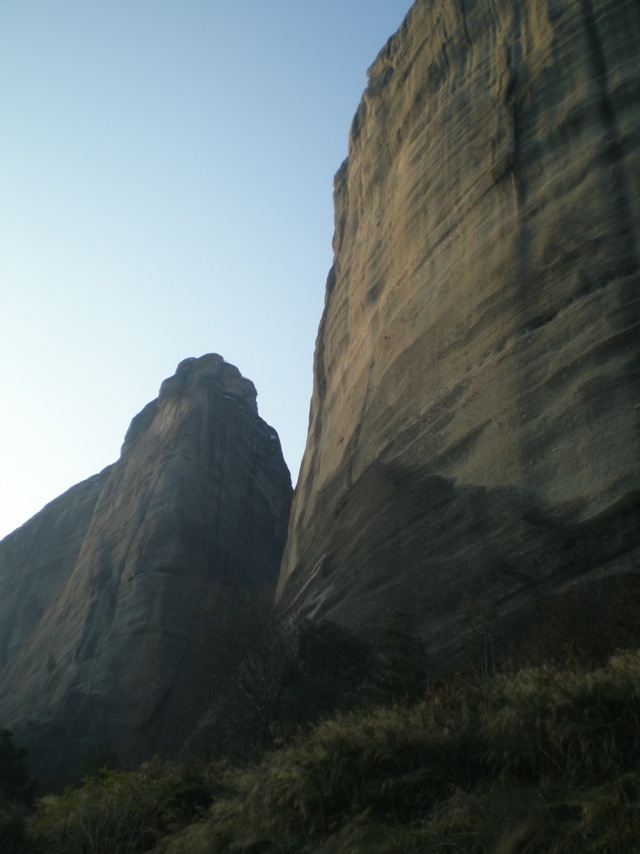
20120102-190026.jpgThe panoramas from the top are great, but perhaps even more impressive are the views from below, which really bring home not just how inaccessible these places are, but the grandeur and the scale of the rocks. To finish, here are a few more photos:

20120102-191500.jpg

20120102-191649.jpg

20120102-191740.jpg

20120102-191834.jpg

Posted in anybody up there?, road | Tagged , , , , , | Leave a comment

Crisis Economics

I just finished a book of this name by Nouriel Roubini (famous for predicting the 2008 crash) and Stephen Mihn. It’s hardly a work of art, and in places quite dreadfully written (how about this for a string of cliches: “[shareholders] don’t actually have much skin in the game. They’ve put up some of the bank’s capital, but not a whole lot of it, and while they don’t want to lose their shirts, they’re fine turning a blind eye when traders roll the dice”; or this: “When things go south, traders and shareholders don’t necessarily retreat from risk. Instead, they may share a willingness to double down and bet the farm in the hopes of righting the sinking ship.”)

But the writing style is not the point. What the book does offer is a cogent analysis of the runup to the banking crisis, placed in a long historical context, and the sensible point of view that horror stories like this are always going to happen unless you regulate the banking system properly. The prescription they offer is entitled “Glass-Steagall on steroids”, and (put simply) consists of regulation (including the proper structuring of incentives), enforcement of that regulation, and breaking up the badly run and economically dangerous monster institutions that now seem to exist just for the enrichment of those who run them, with no regard to the social cost. That sounds about right to me, though I’ll add one of my own: tax the rich, so that society is seen to be fair.

It’s dismaying that the political will to do this seems to be nowhere in sight.

Posted in misery for the many, freedom for the few, read | Tagged , , , , | Leave a comment

Athens

Arriving in Europe, the same as always: cool grey light. This time, there’s a chill, too: coat and jumper are barely sufficient to be comfortable at night, and there’s a sprinkling of snow on the higher hilltops around Athens. The downside is the dullness: everybody but everybody is dressed in black, grey, dark brown, muddy mid-brown, or blue so dark it’s almost black – including me, I have to say. I should have worn my purple Mongolian herdsman’s coat, to at least provide a splash of colour somewhere.

Last night I took a walk up to my old stamping ground from almost 22 years ago. I set off in a general direction and stumbled by accident on the very bottom of Kipselis, ascending it all the way to the Plateia. The guy in the hotel had told me it had changed a lot, but I was surprised at how much I remembered – surprised, in remembering what I did, how little I was prepared to settle for back then. I should have done better in my twenties. I had a little trouble identifying the place I used to live – it was further up from Plateia Kipselis than I had remembered it – but the street name (Filotimou) came back to me when I saw the sign. I followed it to the top of the hill, and was able to narrow the flat down to one of two adjacent basements – twenty-one-and-a-half years, perhaps to the day, since I walked out of that door and down that hill for the last time. I didn’t linger.

The fish restaurant in which, along with Ian Winter, I had watched David Platt’s thunderous last-minute volley sink Belgium in the second round of the 1990 World Cup had disappeared, so instead I turned into Fokionis Negri and watched Man U thrash Wigan 5-0 as I ate a dinner of fried sardines and boiled vegetables ( the way the Greeks boil them, that tasted better than it sounds). There were quite a few people out – this is perhaps normal for the time of year. Certainly there is no sign of trouble beyond some nonsensically juvenile graffiti (“no-one is free until all are free”) – nobody that I could see sleeping in the streets – but then I am sure there is much I am not seeing, and in any case there are degrees. An example, perhaps: the tariff on the door of my hotel room stated €100 – no doubt this was always a fiction, but it does seem a bit of a giveaway that I got it for €27.50. Then again, apart from one French family, I did seem to be the only person in the hotel…

Posted in road | Tagged , , | Leave a comment

Christmas cheer

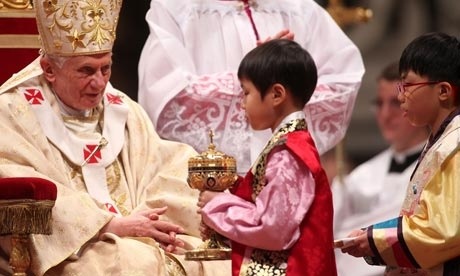
apparently the pope has been complaining about the glitter of Christmas. Perhaps he’s just jealous. But have you seen his hat?

20111227-180405.jpg

Posted in anybody up there?, misery for the many, freedom for the few | Tagged , , | Leave a comment

government of the rich, by the rich, for the rich

On the plane to Athens I read The Big Short by Michael Lewis, an account of the sub-prime debacle. It lionises the few who bet against sub-prime and won big, in the process demonstrating that many of those on the inside didn’t understand the instruments in which they were dealing, and which almost brought down – may yet, in the end, be an important step in bringing down – the entire financial system of the West. It’s a commonplace by now how outrageous it is that these people got away with ridiculous amounts of money when they should be in jail for negligence in charge of one of the vital functions of civil society – the banking system – if not for outright fraud; and yet it still has the power to shock. The guy who crashed AIG to the tune of almost 100 billion dollars, a disaster now being paid for by the taxes of average people, lives in idle luxury in a Kensington townhouse, while (according to a story in the Guardian) a young woman who briefly picked up two left shoes from a looted shop in Birmingham during the riots, and then put them down again before going home, gets ten months in jail. What’s wrong with this picture? It’s getting wronger and more blatant too – the rich have figured out that they don’t even need to pretend any more, they can get away with anything and make the poor pay. What seemed still contestable in the days of Thatcher is now pure fait accompli.

The Big Short is an interesting read, though if it adds to the detail of the picture which has been fairly clear for three years now, it doesn’t change its overall shape. It challenges, in its final few pages, the functioning of the system that can allow disasters like this to happen, though it doesn’t raise the question of why the far-sighted winners whose perspective he takes should be allowed to make so obscenely much money, even if they were right. Shouldn’t there be a limit? How much does one person need? Did they do anything positive for the functioning of a proper banking system in which capital is allocated to people with positive ideas which will be productive for society and add to the general well-being? Or were they nothing more than gamblers, even if very astute ones?

As it was, the big banks, as Lewis points out, were handed a fat gift from the taxpayer, no strings attached, to carry on just as before with their irresponsible ways and excessive bonuses; the poor subsidizing the rich, in effect. Where he doesn’t run with the ball (not that it was his aim to do so) is into territory where he asks what should be done. Three years on and, with Geithner in the Treasury and Obama a flop, the answer in responsible circles seems to be: nothing. It would be useful for someone to stand up and channel the increasing rage and cynicism of the powerless into meaningful action to punish the guilty from the last time around, moderate present excesses, and call a just and well-structured year zero followed by measures to ensure a banking system that serves its proper purpose – but heading into a year when a pusillanimous Obama seems to be the best that American politics has to offer, it doesn’t seem likely somehow. So the infrastructure will go on crumbling and the bonds of society will continue to fray…

Posted in misery for the many, freedom for the few, read | Tagged , , , , | Leave a comment