This anonymously written diary was kept between April 20th and June 22nd 1945 by a single thirty-something journalist in Berlin, and describes first-hand the utter collapse of German power in the capital of the Reich and the coming of the Soviet Red Army. One of the writer’s first observations is that “among the many defeats at the end of this war is the defeat of the male sex”; but she is referring to the beaten Germans, not to the agressively triumphant Soviets who sweep into town a week into her narrative. For all her efforts to avoid it, she is raped within hours, and repeatedly over the ensuing period, by various soldiers, on a high from their thousand-mile dash across Europe to the heartland of their defeated enemy. She comes quickly to the conclusion that the best strategy for survival is to seek protection from chance encounters by hooking and hanging onto one of the higher-ups; she is able to implement this in particular because of her limited command of Russian.
Yet while she is savvy, there is nothing cynical about her delivery; her spirit is wounded but survives still with gusto. This is not just an accomplished piece of writing and a fascinating if sobering account of a society in a state of complete breakdown, where even the basics that we most take for granted are hit and miss, and people treat each other with an odd mixture of selfless compassion and self-interested manipulation, but a touching account of her outward struggle for survival and her inner indomitability. She has a fine eye, and one of the most likable traits of the book is the descriptive power of her imagery; that, and the frankness of her vulnerability, her unstinting faith in herself, and her expression of her own vivacious humanity, in spite of the brutality she is subjected to. An essential piece of World War II reading.
so that was the summer. From east to west, Zamosc to Connemara, plucking and gorging on the fruits of the present while all the while, shadows on the backcloth, the ghost-wrestling goes on: a violent smackdown, the poison of what might have been versus the gift of what is. The shades of decades.
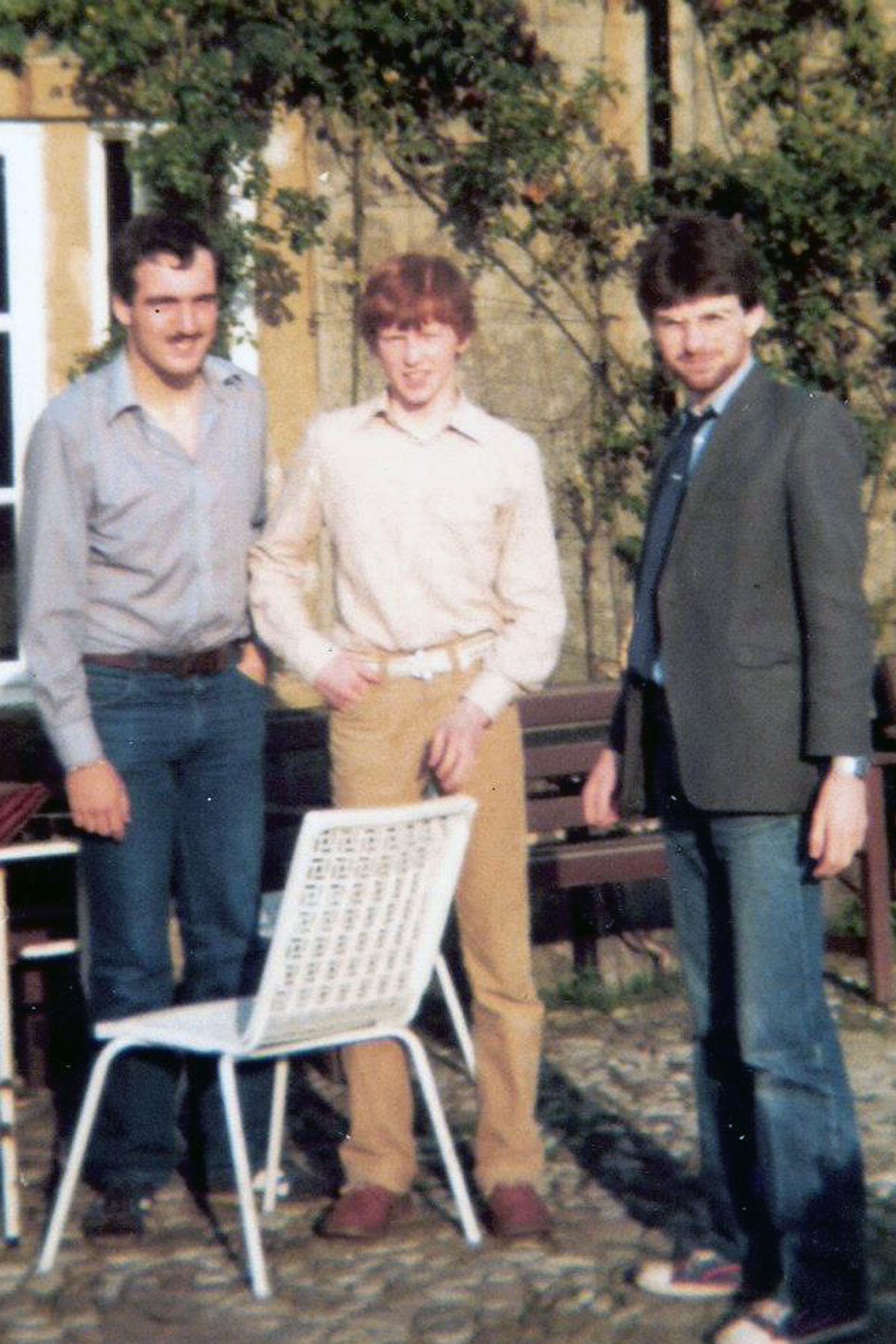
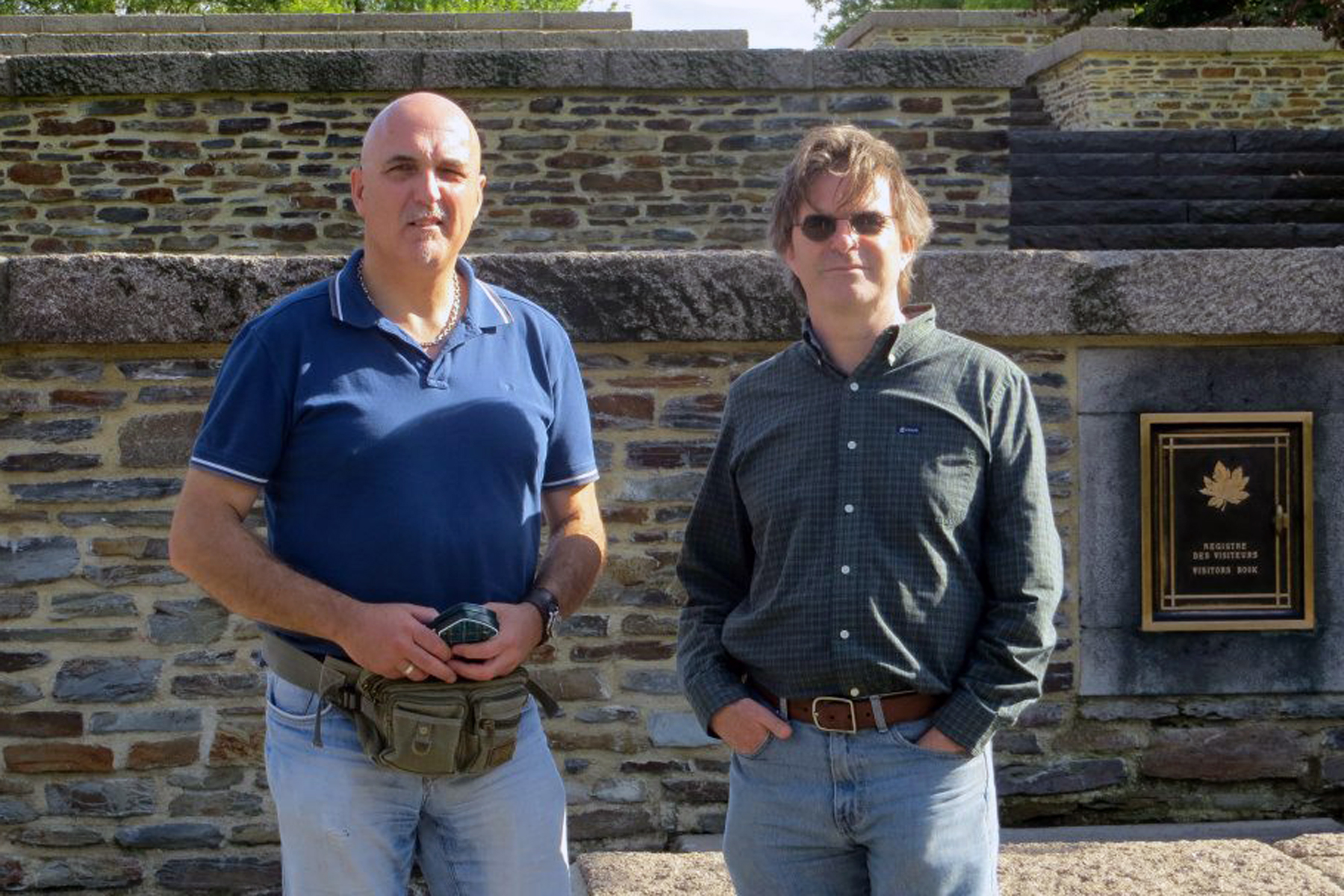
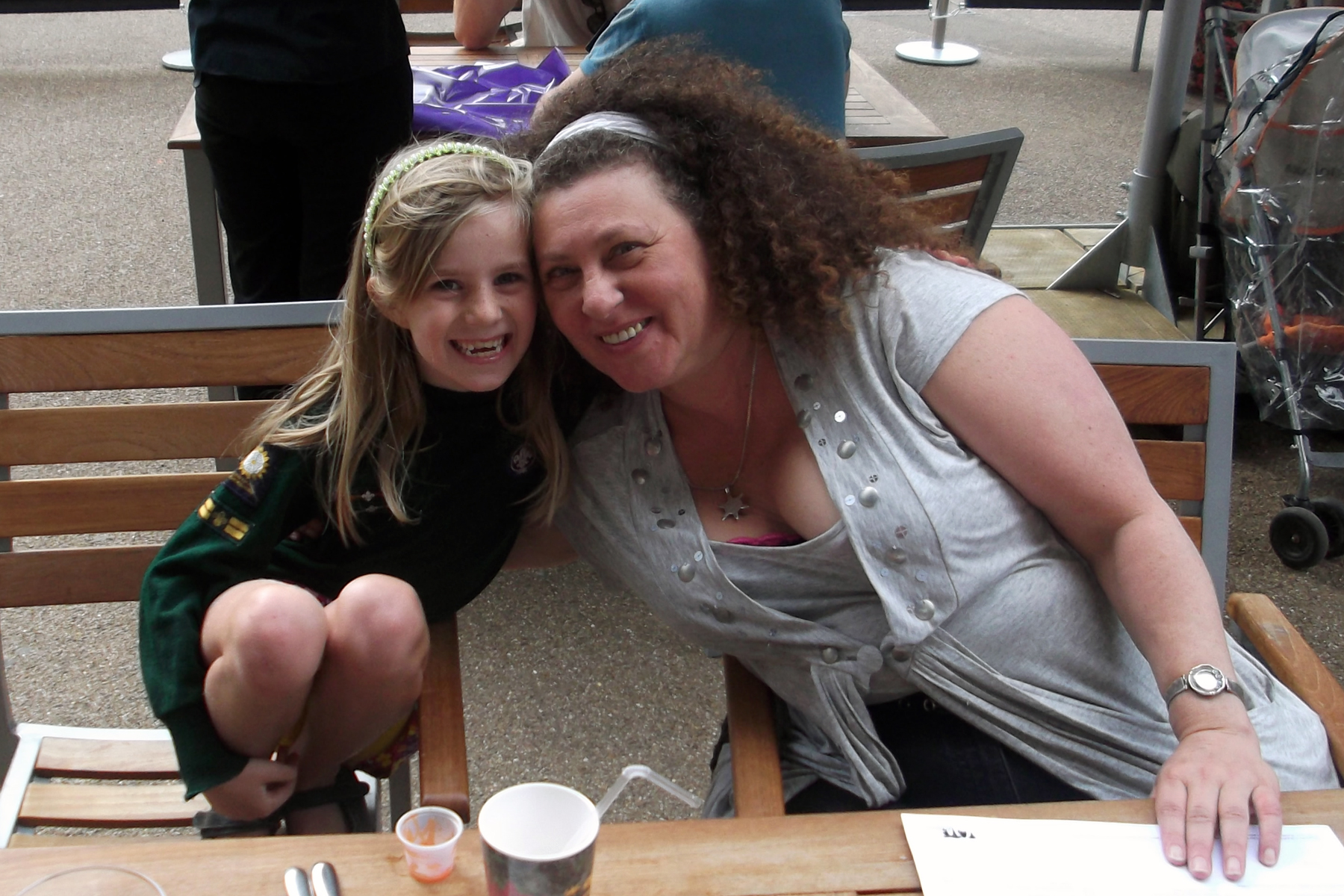
Seeing two friends known for more than thirty years, one for near forty; one for the first time in 13 years, the other in nearly 30.
with Graham Vincent and Cam McCracken, April 1981
with Graham Vincent, August 2012
with Brianne Stolper, January 1989
Kyria with Brianne Stolper, August 2012
The tracks traced since then, retraced: to be so truly blessed as I have been and yet still feel the pain of something, to the heart, resembling damnation. But all the way the angel has been walking with me. Of course he will still be there in Sharjah, though less at my side, slumbering perhaps – do even angels rest? Till the next time I take my seat with him on the aeroplane, rubbing his eyes as he sparks back up again – Istanbul maybe? Till then, week to week, we go on…
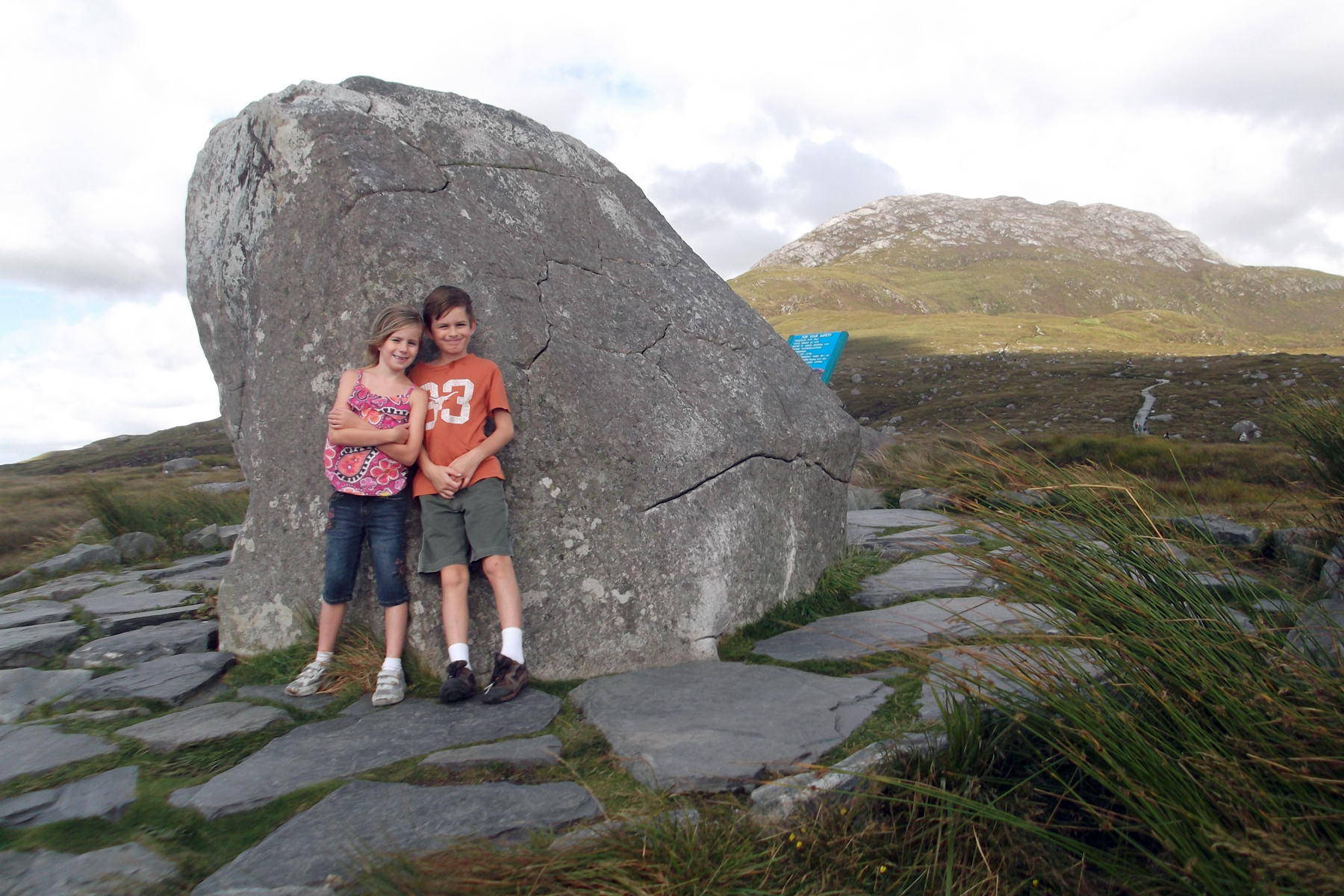
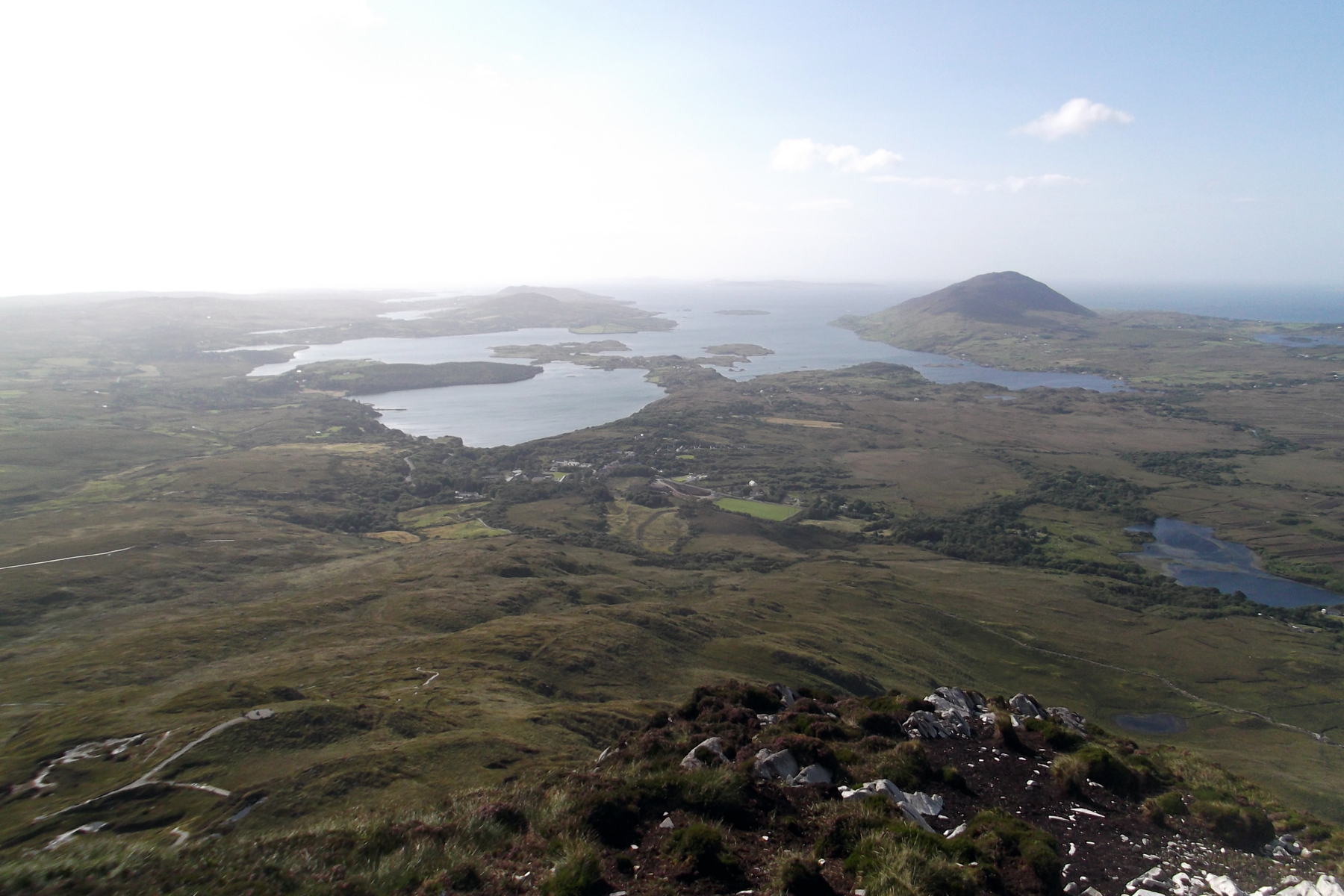
From Galway we drove west towards the opposite end of the European Union from Zamosc. At Leenane, the kids learned to card wool and we sat in an old pub at lunchtime with a pint of Guinness, a completely comfortable experience. Then we went to Connemara National Park and climbed Diamond Hill:
Just like they say, the Emerald Isle: yet not just green but sapphire blue, dun and purple heather and misty haze and blustering breezes:
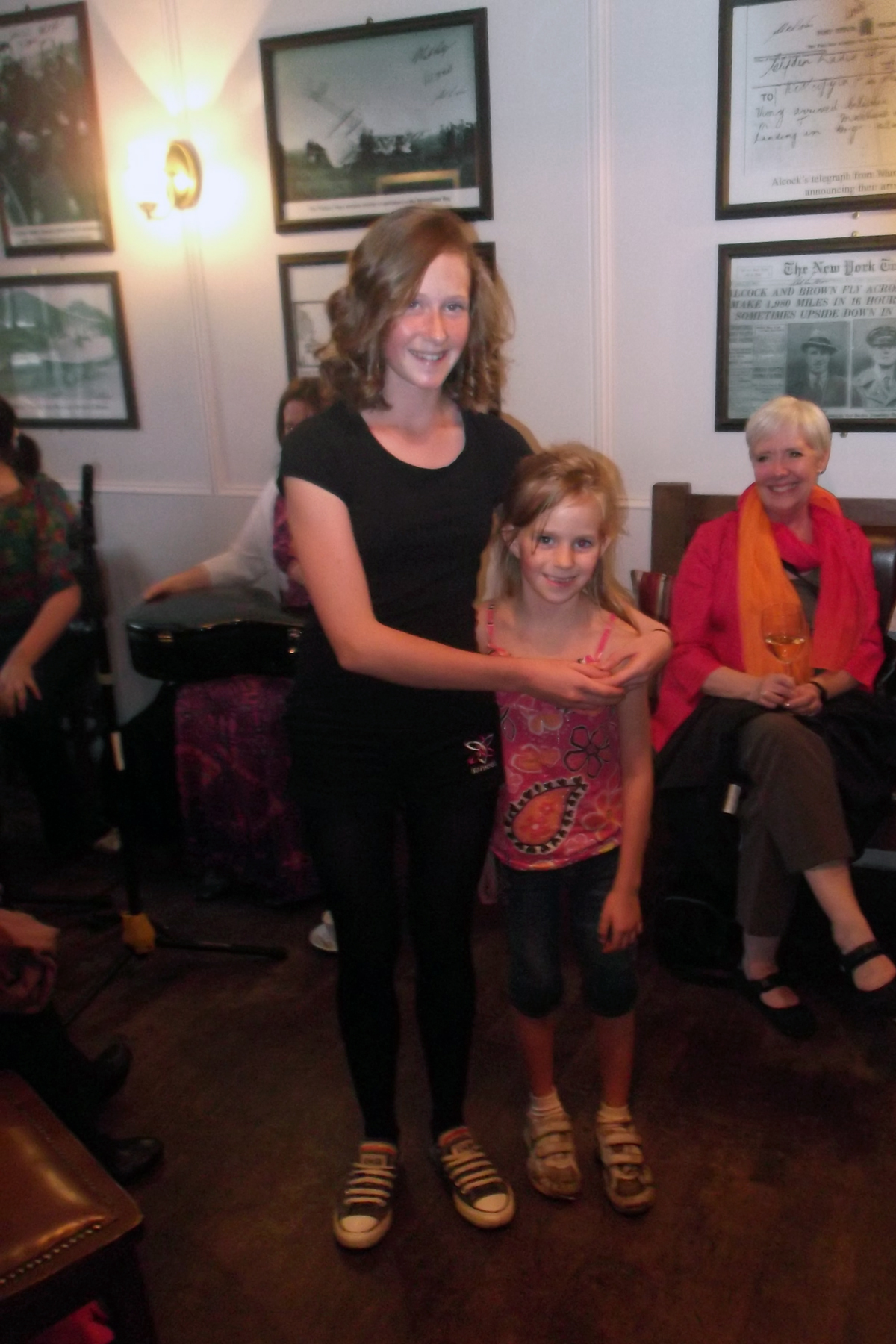
On the way back, at Clifden, we had dinner in a pub, with traditional music; Kyria was transfixed by the young Irish dancer:
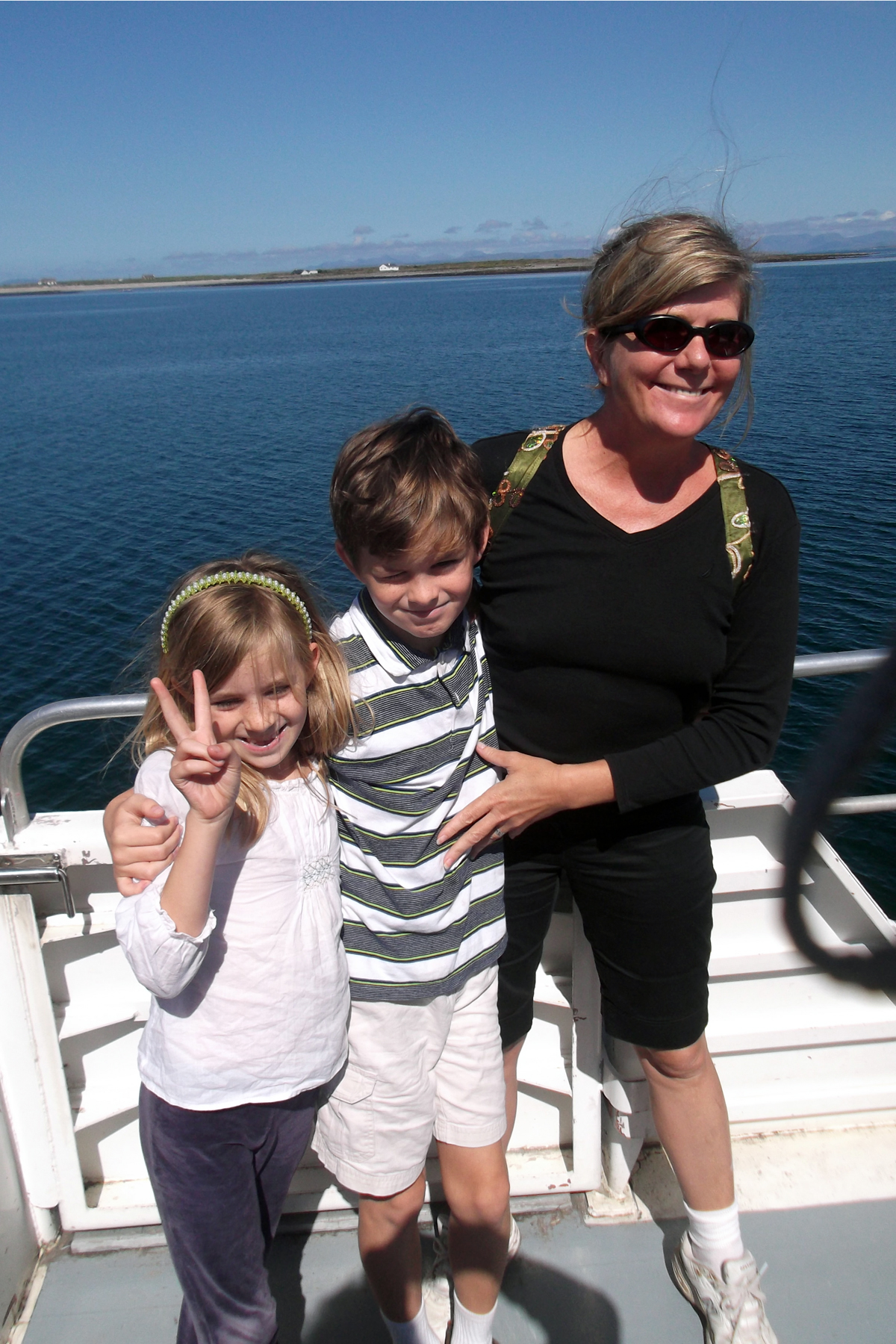
The next day we took the boat to Inishmore, one of the Aran islands:
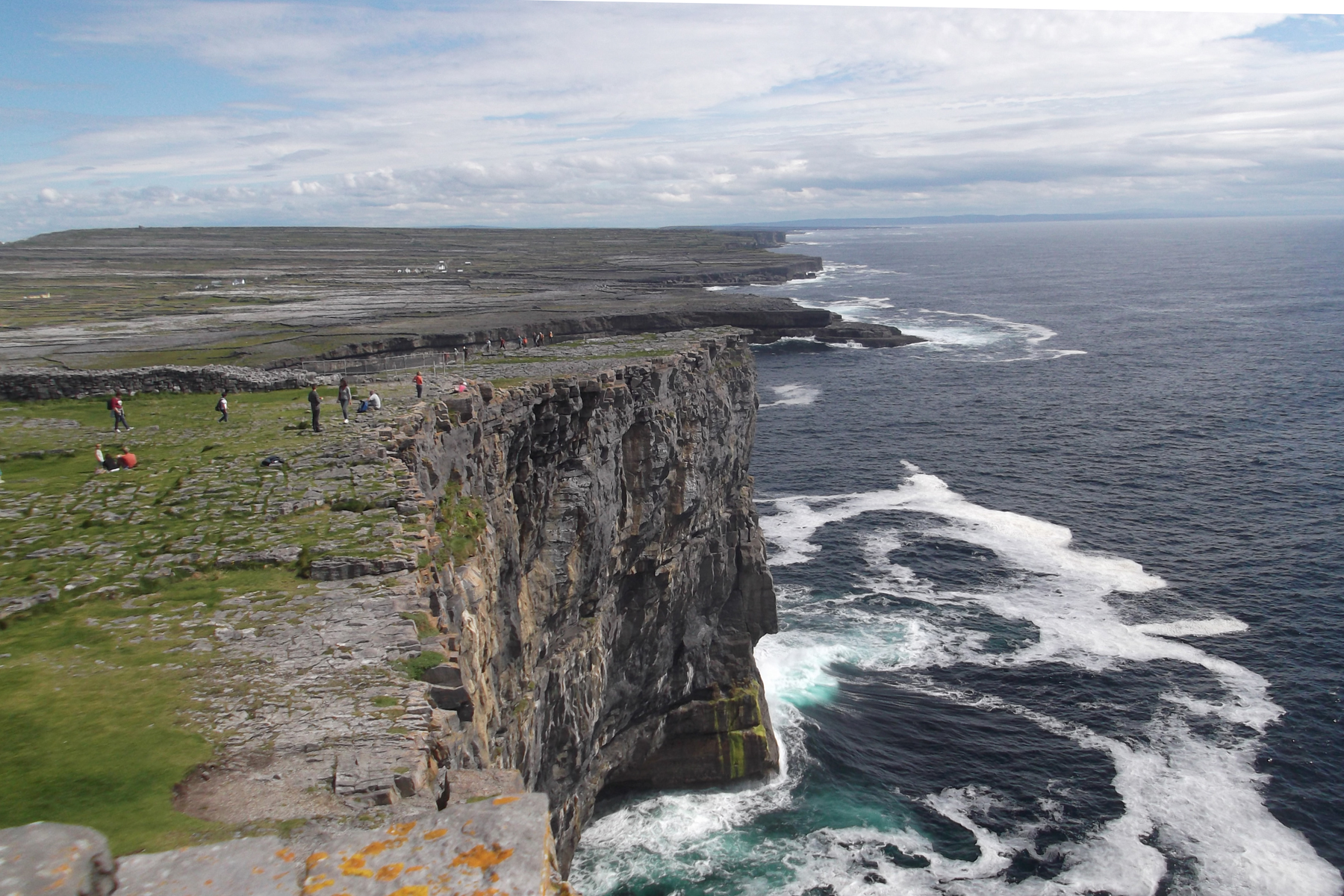
we climbed to Dun Aengus, where the iron age people built a fort atop the towering Atlantic cliffs:
This tiny island may not have had much, but you can see why they chose the spot: they would have seen attackers coming for miles and miles and miles, all the way over to Connemara and right across Galway Bay. Summer favours the place; what it must be like when the gales come in and the rain turns horizontal – it brings a shudder. By then, we’ll be long gone, in our air conditioned offices in the Gulf, a place that the people who built this could never have dreamed of…
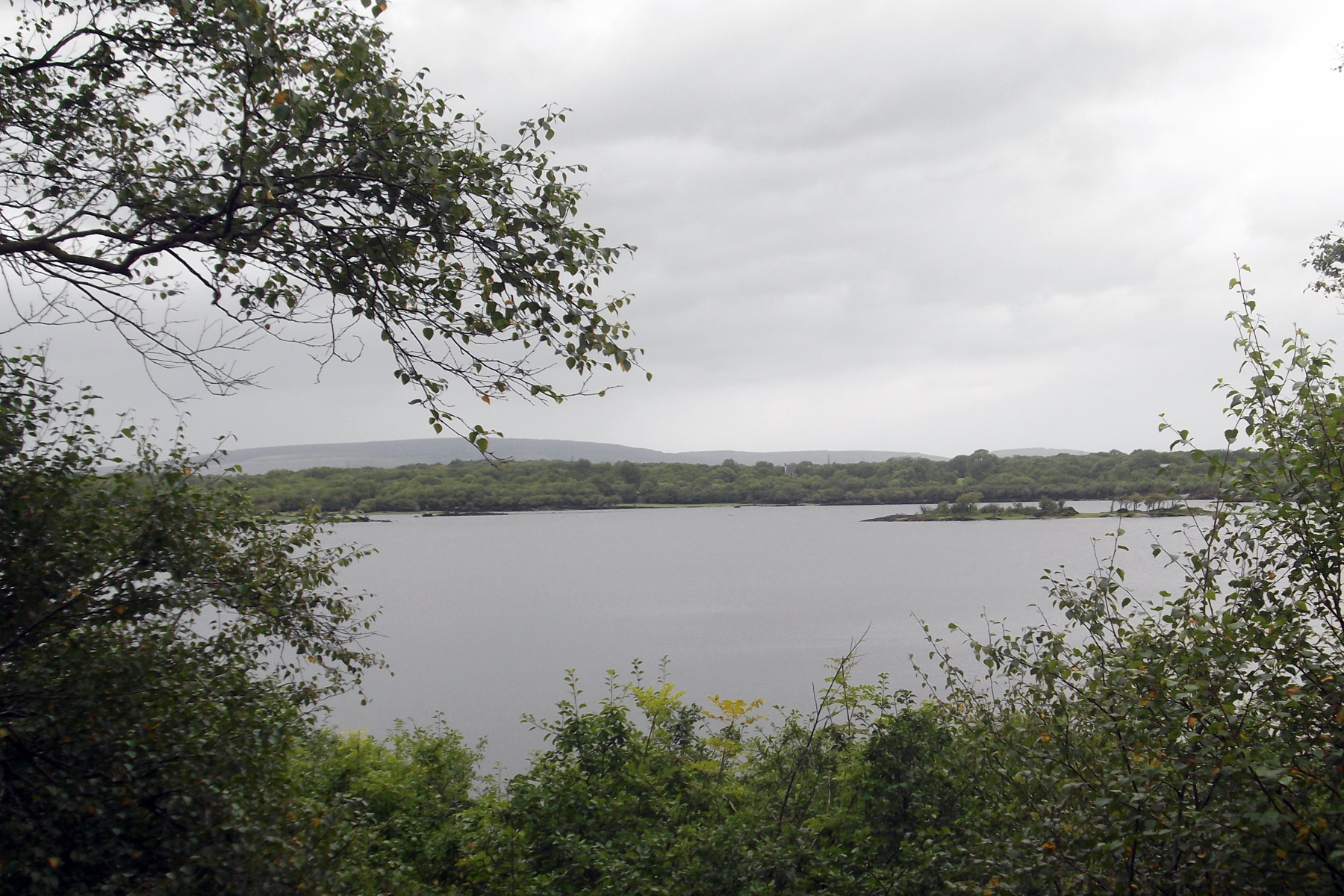
driving south out of Galway, the rain was splashing on the road and slowing the traffic to a crawl. By the time I reached Coole Park, it was easing, but the woodland paths certainly weren’t dry:
The house is gone, falling into disrepair even before Lady Gregory died in the early 1930s, but in the visitor centre there are displays centred around her granddaughters’ recollections of those days and the crowd that passed through. And what a crowd: a single fan displayed on the wall contains the signatures of no less than Henry James, Mark Twain, Theodore Roosevelt, Thomas Hardy, Ramsey McDonald, Augustus John, Kipling, Asquith, George Bernard Shaw, J M Synge, Sean O’Casey and the Yeats brothers.
On the water drift no swans, but branches break the (not-so) glittering waters of the flooded lake:
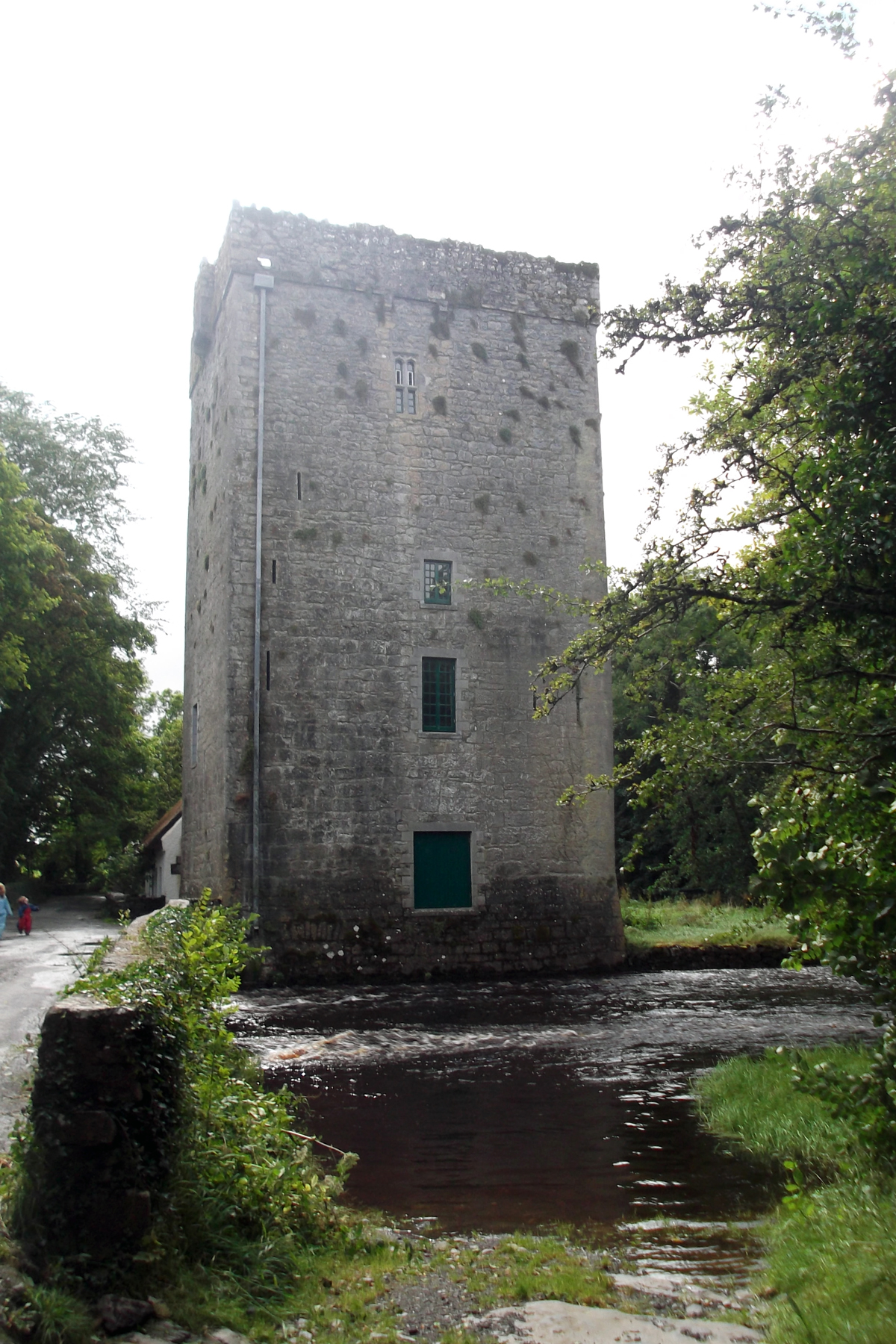
Close to flood too a few miles away at Thoor Ballylee:
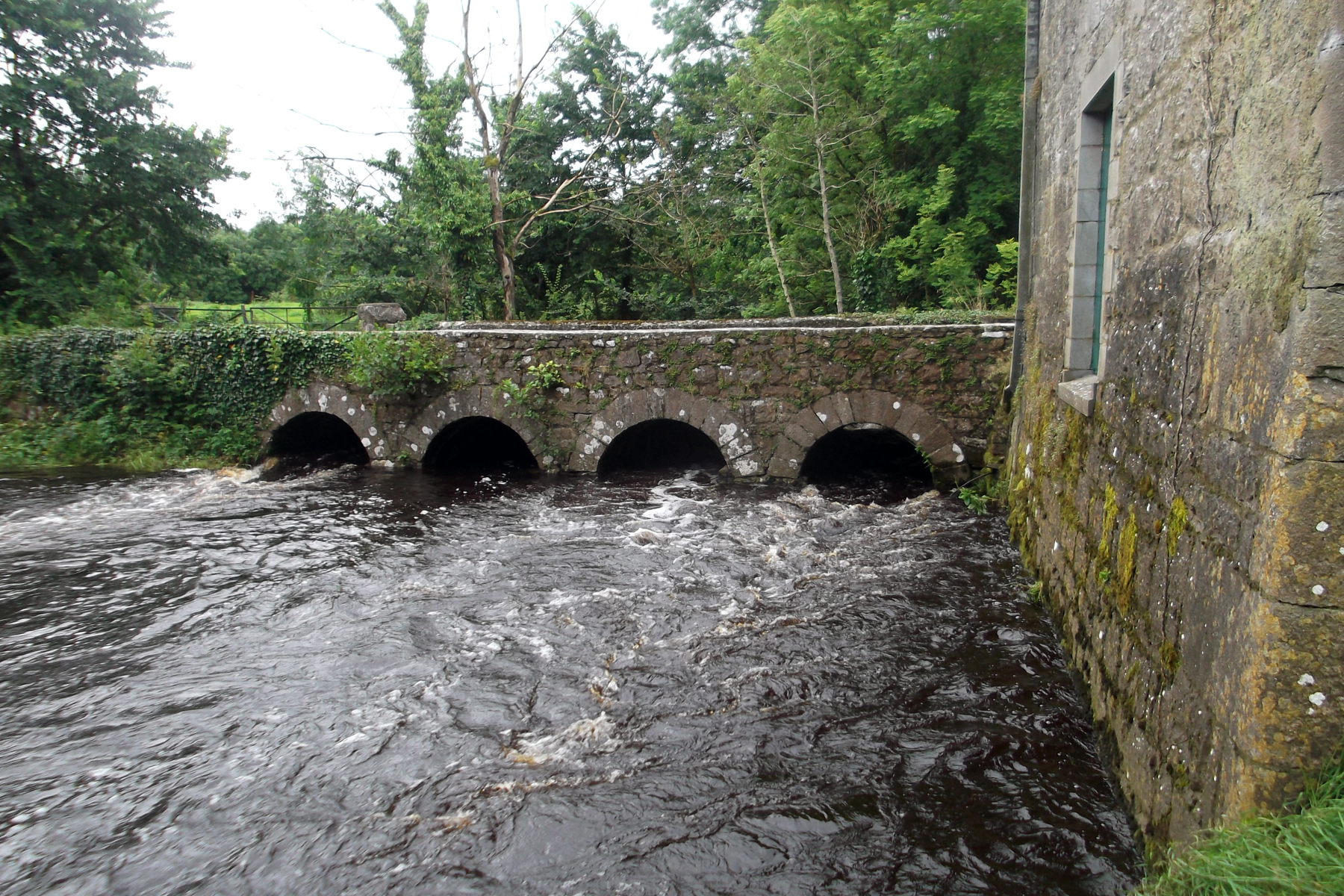
And still under what once was Yeats’ window-ledge the waters race:
The magnificent final line of that stanza comes easily to mind:
What’s water but the generated soul?
Yet here’s the problem with Yeats: he wrote some of the greatest verse of the twentieth century, but his very brilliance obscures the fact that much of what he wrote was nonsense. That line, for example, is such gobsmackingly authoritative poetry that while your inner ear is still trembling it might not occur to you that, wait, water is much more, and more significant (even to a pantheist) than the generated soul – and it is highly questionable whether it is even that! His talent did his thought no favours.
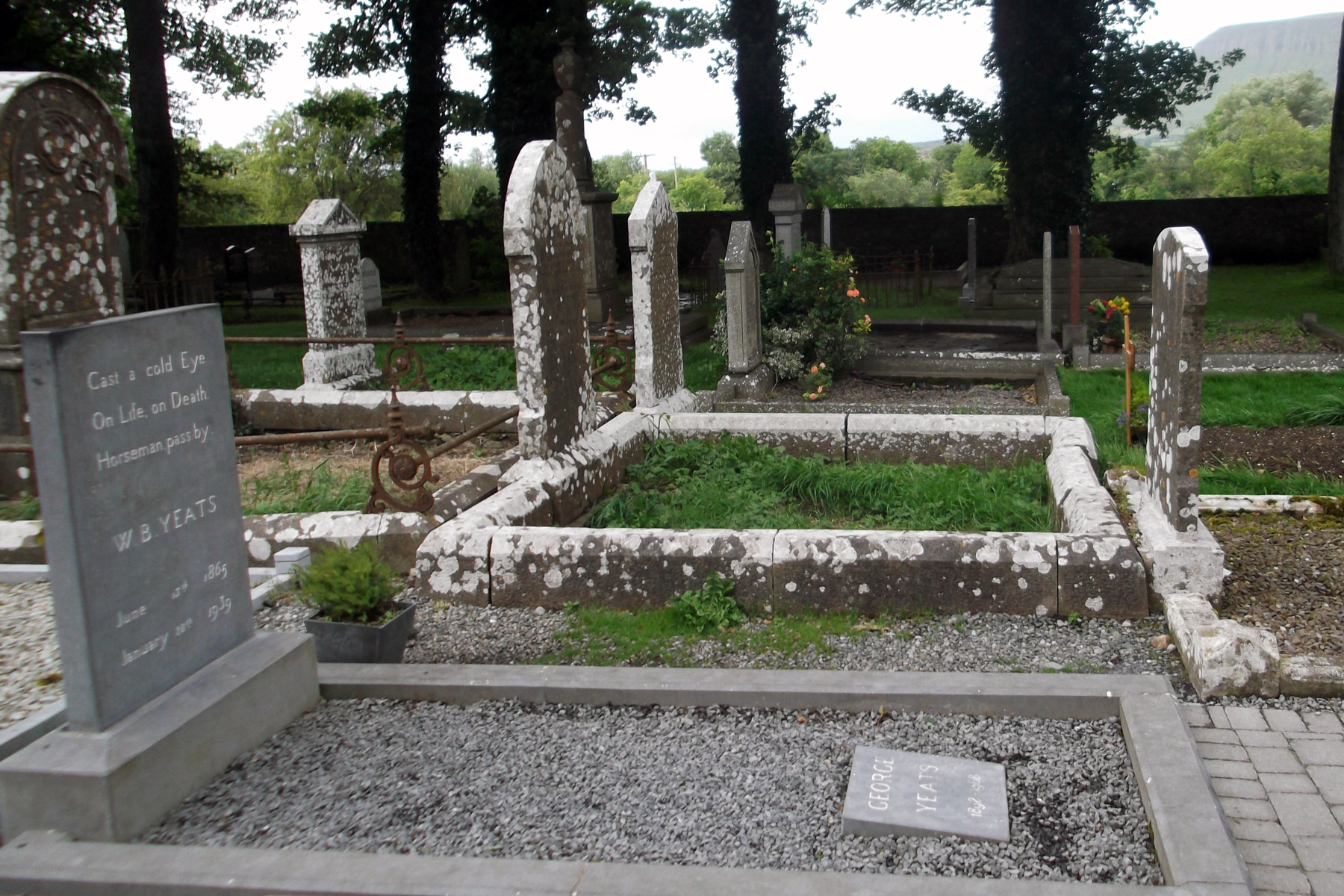
Then a two-hour drive to Sligo, where under bare Ben Bulben’s head in Drumcliff churchyard Yeats is laid:
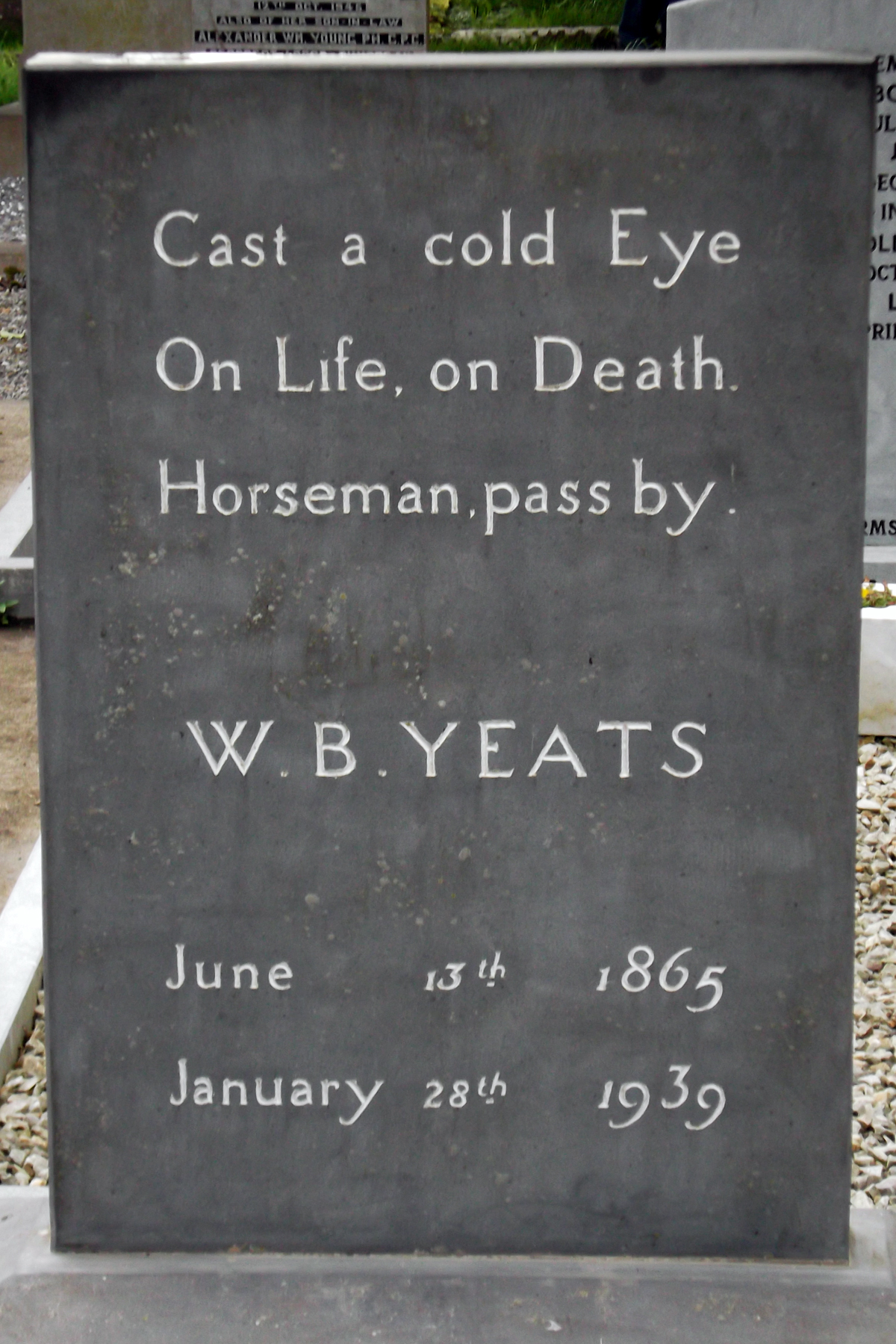
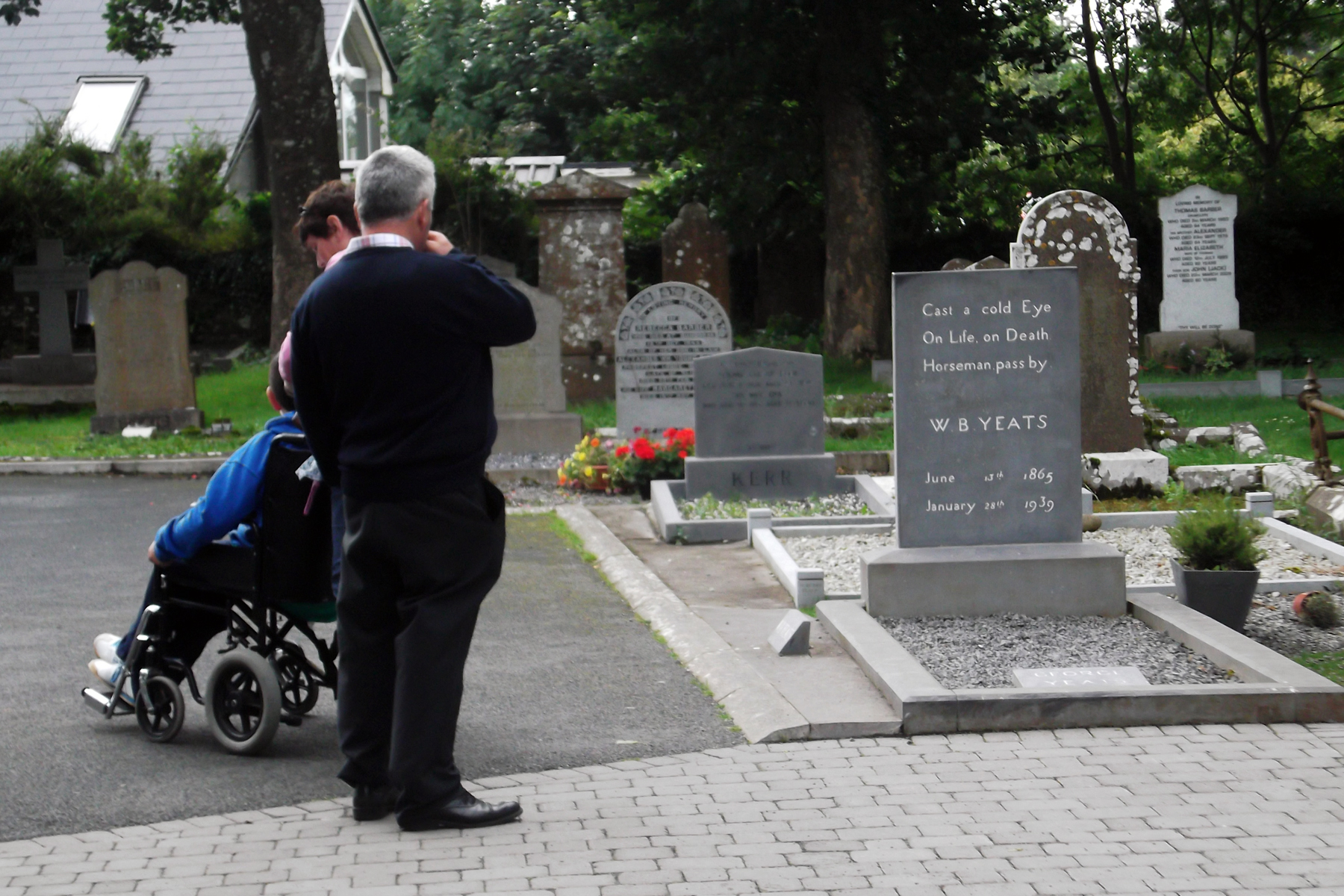
As I am parking the car, a giant tour bus pulls up and disgorges several dozen elderly Americans, who wander around the graveyard chattering quietly to one another, while their driver stands by his vehicle door smoking. Yeats’ grave itself is less romantic than I would have thought; far from being hidden in some secluded corner right under the mountain, it is directly exposed to the large tarmac forecourt of the church. Nevertheless, as expected, on marble quarried near the spot by his command these words are cut:
Yet for all the stellar verse he wrote and the stellar company he kept, if we truly cast that cold eye, what would become of people like this?
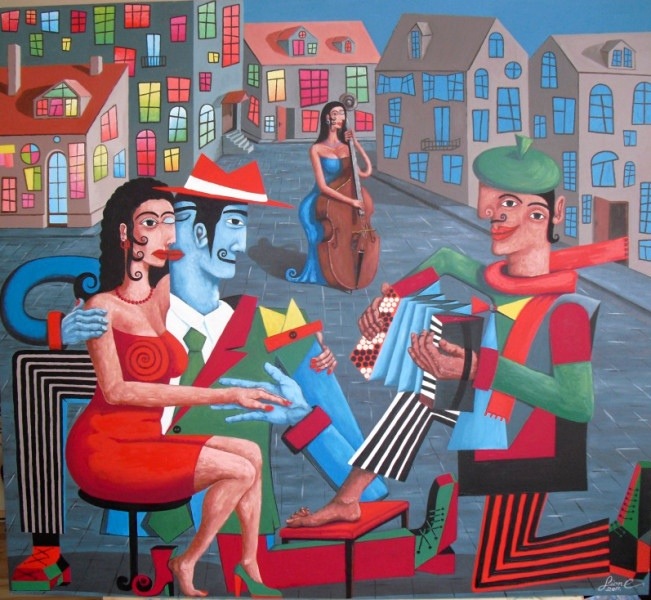
In a disused church in Aachen, an exhibition by a local artist, Lion Ebergard. He has taken Picasso’s trick with eyes and put it at the centre of his work: it is surprising how much eyes pointing in different directions, or simply closed, can say about inner states, especially as an indicator of attention. Here’s one:
In one of the little squares around town, another piece of Europe’s glory: another city, another evening, another free concert. A Swiss female vocal trio, dressed all in black, are performing strange dances in sculptural poses to go along with their thoughtful, eccentric, staccato harmonizing. They are accompanied by a man playing all manner of never-before-seen percussion instruments. They call themselves Nørn, after the female trio of Norse spirit beings who determined the fates of men. Here is a sample from YouTube.
They are sufficiently convincing that I spend €15 on a CD…
On Sunday afternoon, Aachen is a quietly typical German bourgeois town, with a brass band playing in the Cathedral square and teenagers wearing t-shirts emblazoned with legends like NEW YORK FUCKING CITY. It has hot springs, which, along with its central position between France and Germany, may have been what attracted Charlemagne, Karl der Groesse, the man who invented Europe. The Romans were Europeans, but their empire was of the Mediterranean, with Britain and the Danube bolted on almost as afterthoughts; Antioch and Alexandria were more crucial to them than London or Lyon. Charlemagne was the first to create a Europe that spanned France and Germany, with parts of Italy, Spain, even Poland thrown in.
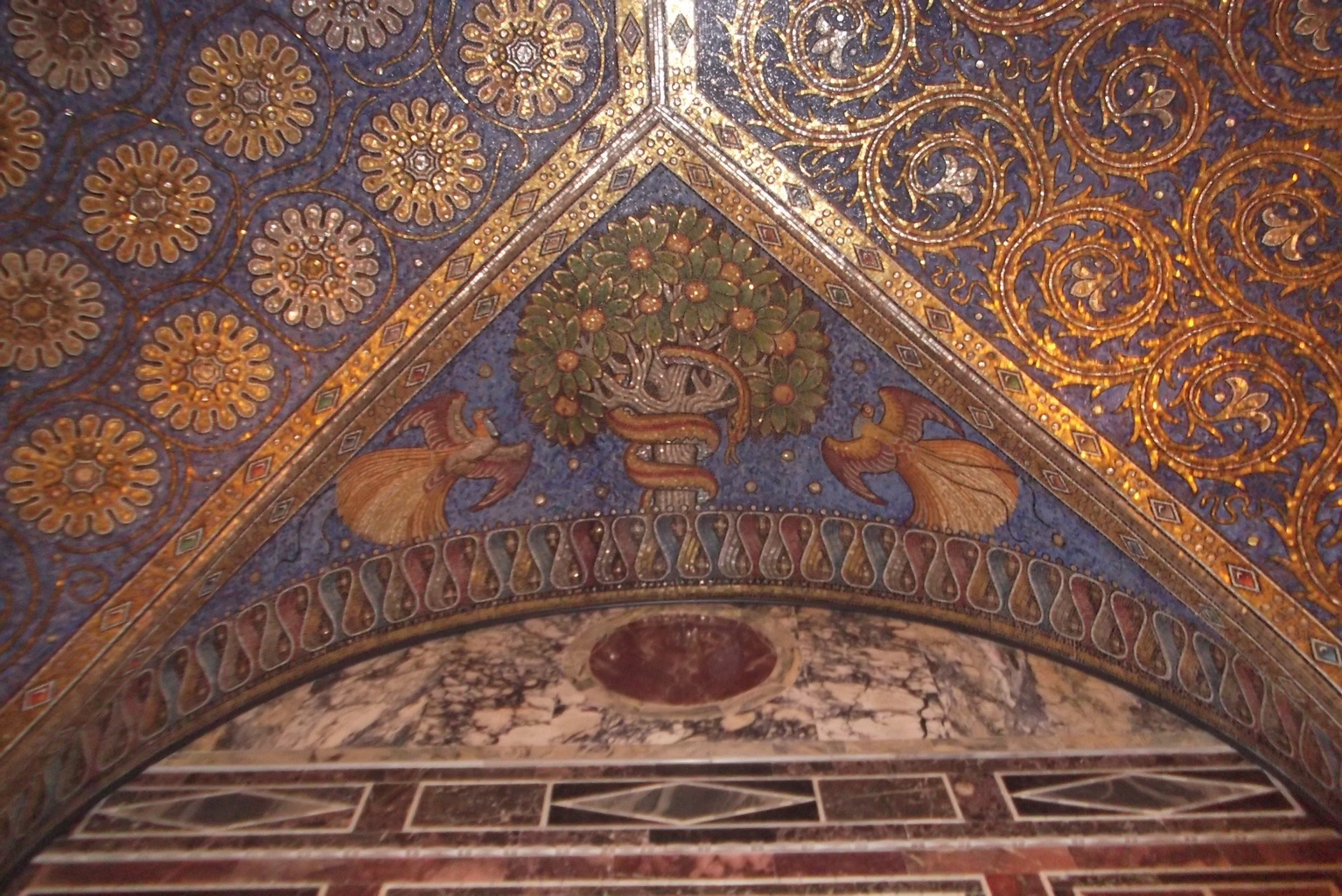
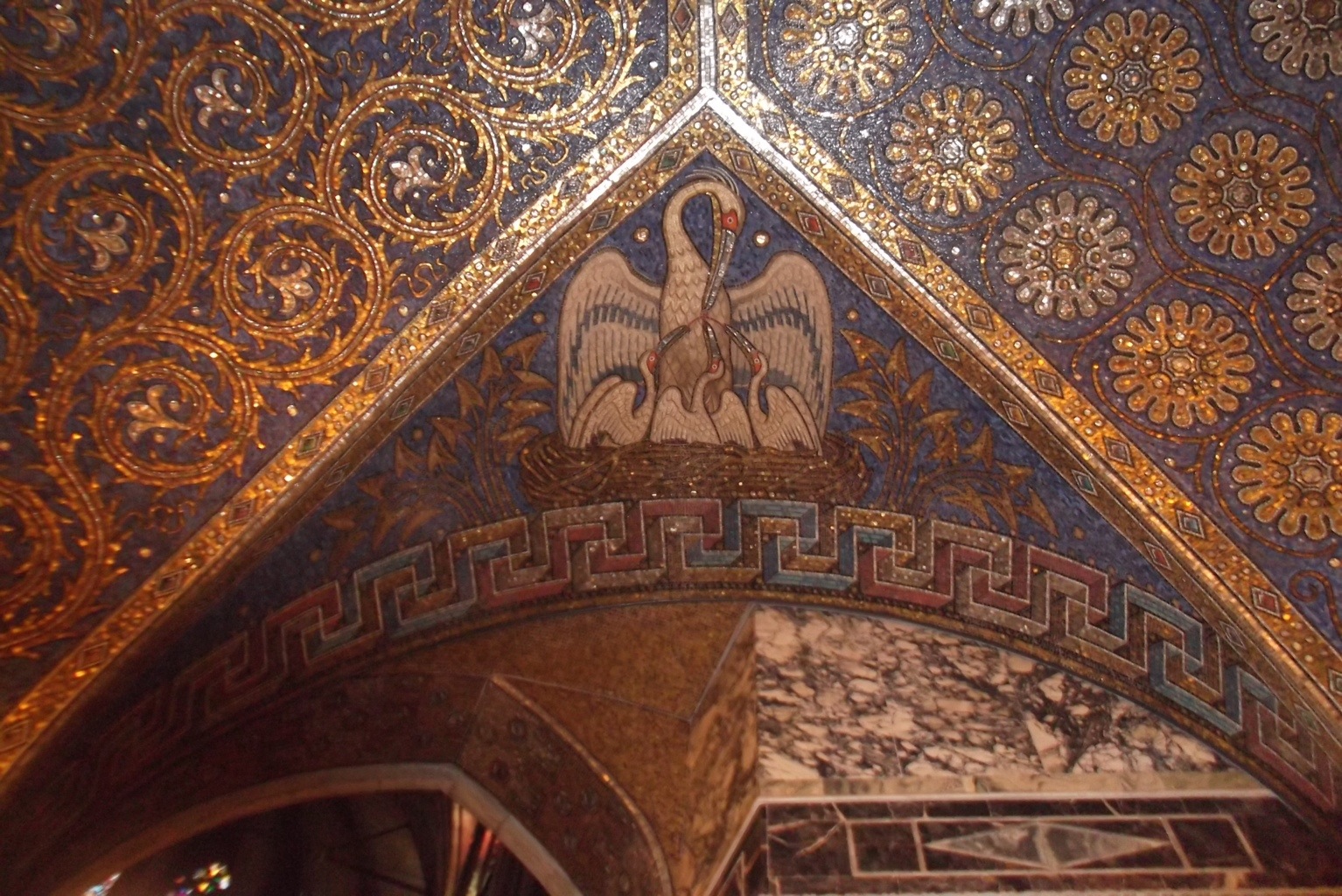
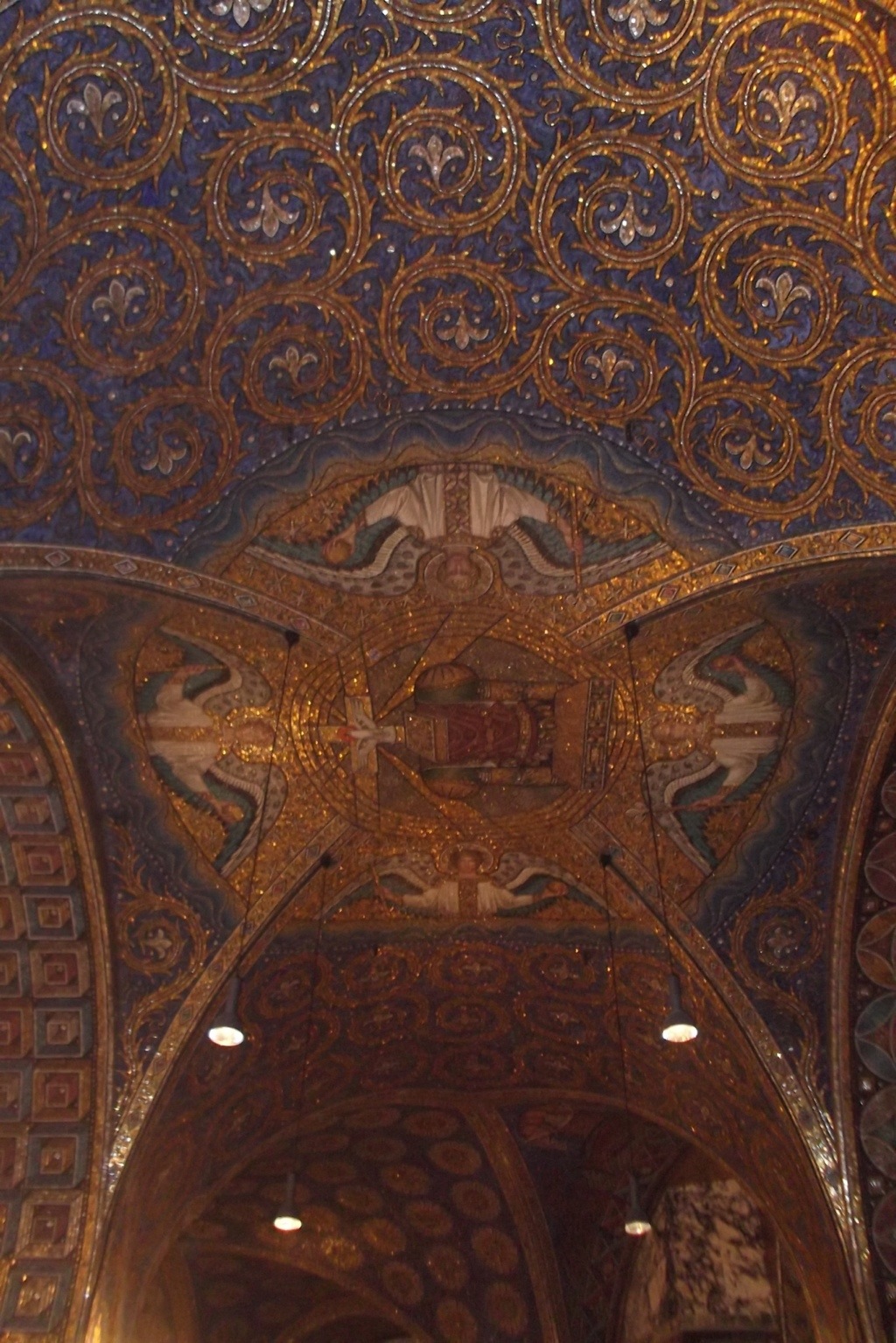
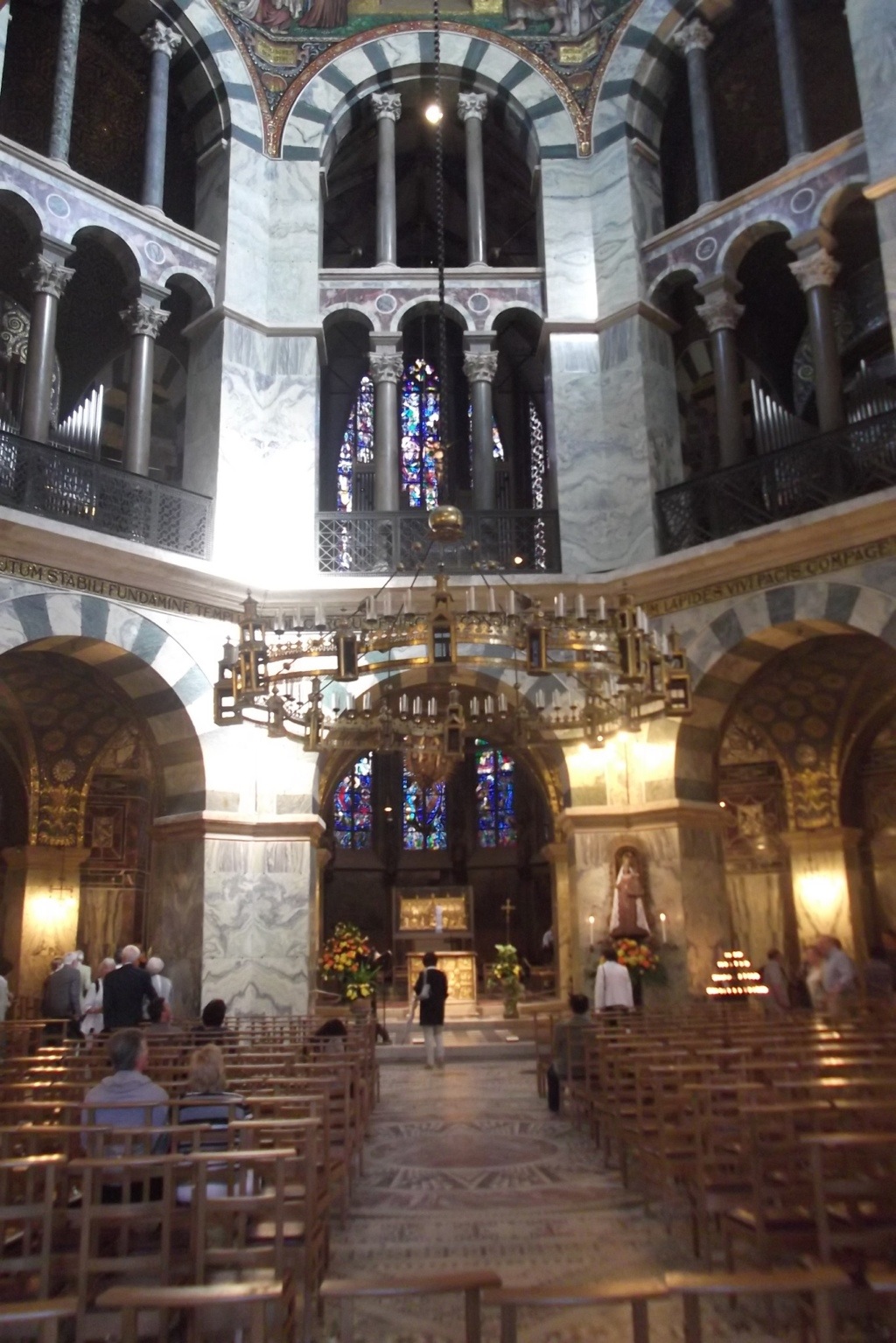
In Rome in 800, the Pope crowned Charlemagne Holy Roman Emperor – successor to Caesar Augustus, and direct counterpart, if not rival claimant, to the Eastern Roman Emperor in Constantinople. That is emphasized here in his capital by the gorgeous Byzantine mosaics on the walls and ceilings of what was his church – even if they were put in place over a thousand years later:
The shape of the church is an octagon – a Byzantine idea – as opposed to the cruciform floor plan of western churches. In it the Holy Roman Emperors were crowned, right up to the 16th century. In the treasury stands a thousand-year-old piece of their kit, the Cross of Lothar:
Like its countpart pieces of imperial regalia in the Vienna Schatzkammer, this fantastically rich, jewel-encrusted object has none of the finesse of the artifacts of later ages; the bottom of the cross is slightly off the perfect horizontal one would expect, and at its centre, instead of the standard Christian image of crucifixion, it bears, from the time of Christ, the most powerful image of worldly authority in European history: a cameo of Caesar Augustus, wreathed as emperor and holding aloft an eagle.
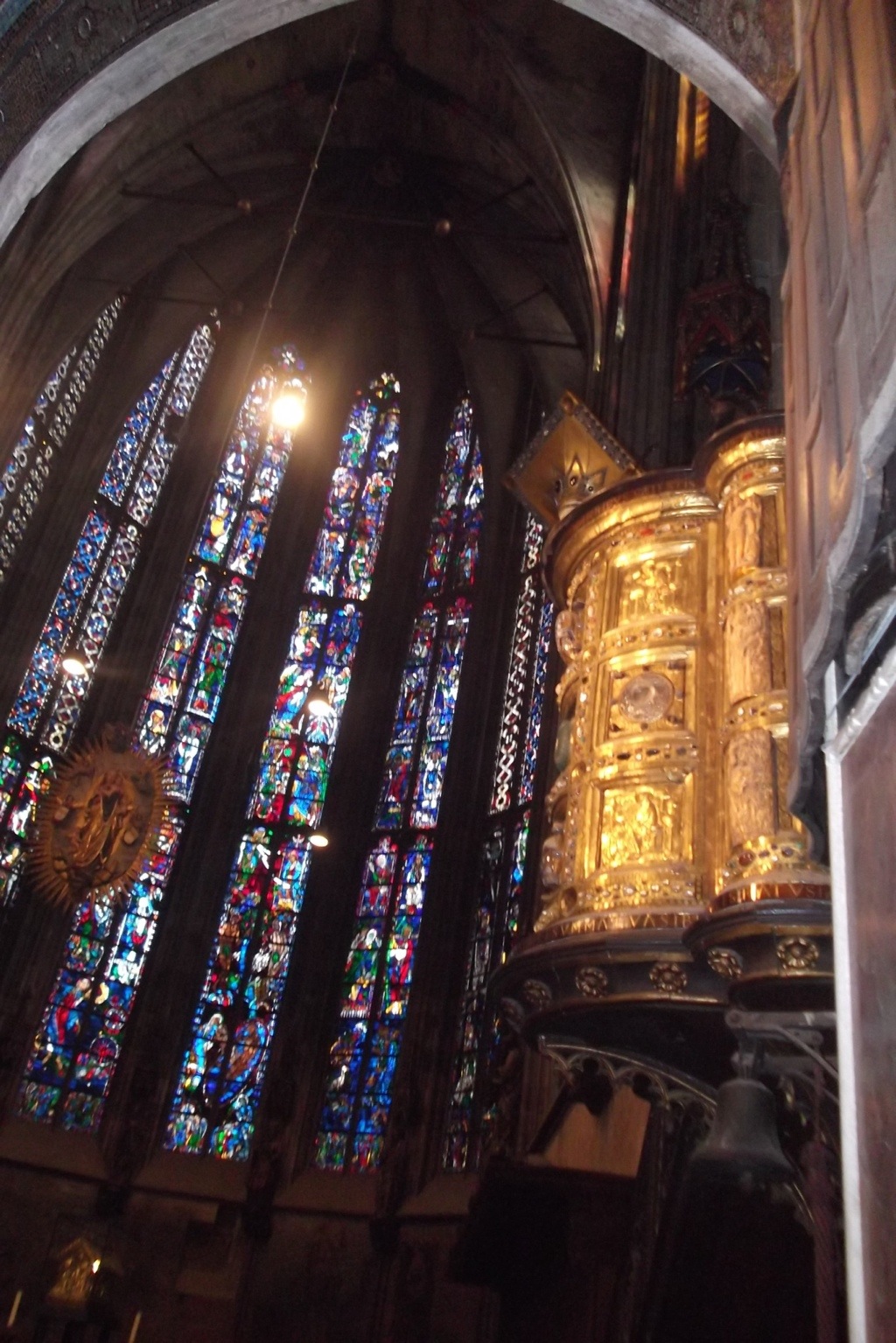
Barbarossa, the Holy Roman Emperor after whom Hitler’s insanely disastrous invasion of the Soviet Union was named, set Charlemagne’s supposed remains here in a raised golden casket in the choir (you can see it at extreme bottom left of this photo):
He also contributed a large golden circlet for a chandelier:
The Holy Roman Empire ultimately became a German kingdom, and France went its separate way; it was not until the grandiose pride of Bonaparte, the horrors of Hitler, and finally, consensually and in peace, the European Union, that they were to be put together again. No more crucifixions for Europe, we hope; instead, look! no hands:
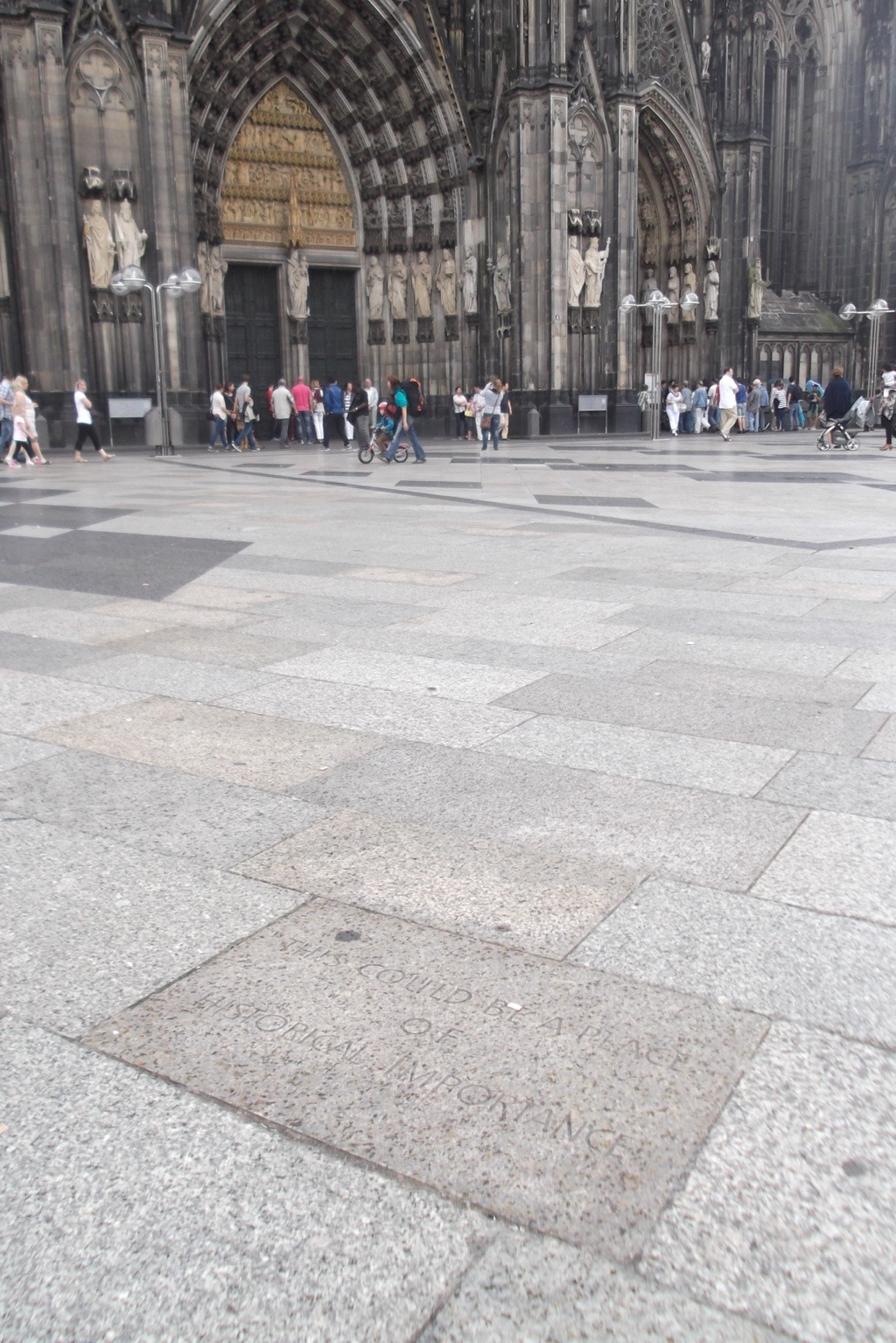
On the way from Berlin to Aachen, I had an 18-minute stopover in Cologne, whose name derives from the colony (colonia) that the Romans established here on the banks of the Rhine, their broad German frontier. As the train pulled across the mighty river into the station, a double-layered memory entered my mind: at some point in the 1980s, strolling the plaza in front of the cathedral, which is adjacent to the train station, I noticed a paving stone different from all the others around it, in that it was carved with the legend, in English:
THIS COULD BE A PLACE OF HISTORICAL IMPORTANCE
I don’t recall whether I was in the company of someone I loved back then, or on my own while in recovery from the ending of that relationship, or even with long-vanished friends; but I do recall that I thought it a witty take on the impossibility of clear and detailed historical knowledge, and at the same time an acknowledgement that any spot we stand on, unbeknown to us, could be significant in some sense: maybe an army assembled here as a general made a speech, maybe someone was murdered here for reasons falsely principled or petty, maybe two lovers met quietly here for their first tryst.
The second layer to the memory was that last year, on my way from Prague to Paris, I had similarly had to change trains in Cologne, but with a couple of hours to spare. I had spent much of that interval thoroughly combing the entire vicinity of the cathedral for the paving stone I remembered, without success, and had come to the conclusion that either the stone had been removed in the more than a quarter of a century since I had seen it, or that it had never been there in the first place; that I had made it all up, and that I was cleverer than I thought. But when I got home to Sharjah I had googled it, and yes, there it was – apparently one of a number placed at historical locations throughout Europe – just a few steps to the north-west of the cathedral doors.
That spot was much less than 18 minutes’ round trip from the station platform, so on the spur of the moment I decided to look again. The train disgorged its passengers, families and lovers meeting and greeting each other – this could be a place of historical importance – and I headed for the cathedral plaza. This time I found it with the minimum of searching. Here it is:
Now history twines in upon itself: for me, is this now a place of historical importance, binding together, through this photograph, vastly different decades of my life, the third and the sixth?
On my way back to the train I had enough time to buy and eat a Brie salad sandwich.
The German train system is perhaps (the French would argue otherwise) Europe’s finest. It works well. And yet…
The train from Poznań to Berlin was 20 minutes late at the border. In Frankfurt an der Oder, the first town on the German side, the crew changed to a German one. The new guard announced in fluent English that we would be late in Berlin, but didn’t add the explanation he had offered in German: that the delay had been incurred in a “foreign country” (“ausland”). Diplomatically, he didn’t specify which one…
On the train from Berlin to Cologne, two of the hi-tech toilets didn’t flush, and of all the advertised food options, only croissants were available. And we were 20 minutes late at our destination, though nobody mentioned where that delay had been incurred…
This autobiographical tale by Władysław Szpilman is another staggering account of the holocaust, this one by a Polish Jew. A nationally known concert pianist living in a Jewish area of Warsaw with his parents, brother and two sisters, after the Germans invade they are gradually forced into greater and greater deprivation, until they are sent to the rounding-up area to be deported to – we now know – Treblinka. Just as they are about to board the infamous cattle cars, the author is pulled out of the line by someone – he doesn’t say, or perhaps know, who – and separated from his family. He goes into hiding; chillingly, after some time his brother comes to him in a dream and says “we are dead now”. He recounts his descent through increasingly desperate and dangerous circumstances until he ends up barely existing in the ruins of Warsaw in starvation conditions. He survives, but there is no silver lining to this dark tale; the German officer who finally saves his life is deported to the gulag and tortured to death in 1952, treated with particular cruelty by the Soviets for telling them that he saved Jews.
Another appalling fragment of the horrors of the 20th century. Again, nothing to say by way of commentary; it can only be read in silence.
As a big city, Berlin feels odd: long vistas, plenty of space, and little of the rush and bustle that characterizes Paris, say, or London, or Tokyo. Unter Den Linden seems rather boring, featureless and staid in comparison to Ginza or the Champs Élysées. Yet the city’s true dimension seems to be its equally expansive sense of time; throughout my stay I had the impression that it didn’t much matter whether it was night or day, as there was always something to be doing at any hour. Not the same something: you can’t access the city centre’s necklace of museums in the middle of the night, and it might be only slightly less problematic to find a techno club in full swing at lunchtime. But you can quite happily go to sleep at any hour in the knowledge that when you awake, you won’t find yourself regretting that you have missed something and now have to sit twiddling your thumbs; at the least you can always go out and get a kebab (not a gyros, as one Turkish proprietor emphatically corrected me) and see where you go from there. What adds to this impression is that it seems pretty much mandatory, particularly around Ostbahnhof (the cheap and grungy area where I was staying), and especially after dark, to be carrying an open beer bottle in one hand, although this is also apparently quite normal in broad daylight in the more upmarket districts, even among mature couples.
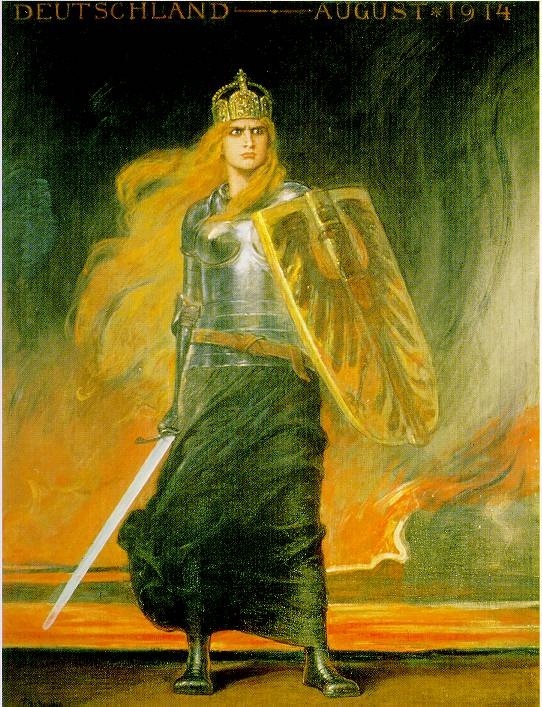
My original plan was to go to the Museum Insel, the island in the River Spree where most of the city’s cultural treasures are housed in a series of big galleries. But the queues were so long that I decided I’d find something else instead. It didn’t take long; I stepped inside the almost adjacent Museum of German History on the off-chance and got swallowed up for eight hours, watching Germany gradually assemble itself from its component fragments until in the 19th century it coalesced into a self-conscious and massively dynamic whole, presided over by the fiercely protective, sword-wielding spirit of Germania, her long golden locks flowing all the way down her back:
before shattering and disintegrating in World War I through the vain pretensions of Wilhelm II, then reconstructing itself in grotesque and demonic form under Hitler to wreak terror and destruction across Europe, and collapsing in absolute ruin. And I only had time to get up to 1945!
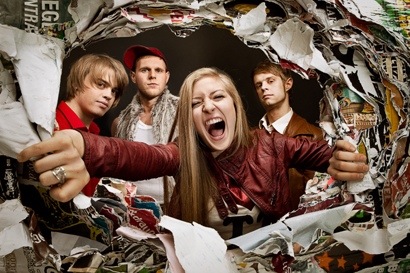
In the late afternoon Julie and Liz and I went out in the Tiergarten and had a drink in a bustling beer garden. At sunset we moved to the English Garden, where we watched a local rock group, wittily (after the Berlin-based U2 album) named Attention Baby, in fine form, playing loud and tight and enjoying themselves hugely. The singer and guitarist, a skinny 20-something bursting with joyous energy, with fine pipes and a walloping set of lungs on her, wore her hair coiled up on the back of her head; then she took her grip out and let her long golden locks flow all the way down her back, a Germania for the 21st century belting her heart out in a fluent jumble of Deutsch and English.
Liz observed that the audience was mostly middle-aged; I had a fleeting moment of panic that rock music this impressive is now merely a form of trad, like the clarinet-driven jazz listened to by the jolly old farts of my youth. Then I wondered whether it wasn’t just that it was too early in the evening for the young ‘uns, and if Attention Baby had been playing at 1.30 in the morning, whether it wouldn’t have been all students watching them?
I don’t know; but at 1.30 in the morning I went and looked at the queue for Berghain, the Mecca of world techno, just around the corner from my hotel and recommended to me by Stephen as an experience I could tell my grandchildren about – if I could get in, that is. Apparently, in what sounds to me like a surreally comic parody of the horrific procedure enacted seven decades ago on the ramp at Birkenau, an Aryan youth performs a selection on those lining up in front of him, and with a wave of his hand condemns many if not most of them to an evening of alternative entertainment, as the rejected plead frantically for their right to entry. Down at the other end of the line, the grim facade of the club (a converted Comunist-era power station) was visible several hundred metres away, while a continual parade of taxis disgorged their hopeful passengers – most of them less than half my age – to add to the motionless tail of the snake. I stood watching this for about 30 seconds, with the thought gradually crystallizing out of the late night fog enveloping my brain: I am not going to spend the rest of the night standing in this line, not even for the best club in the world! Then I turned on my heel and went to bed.
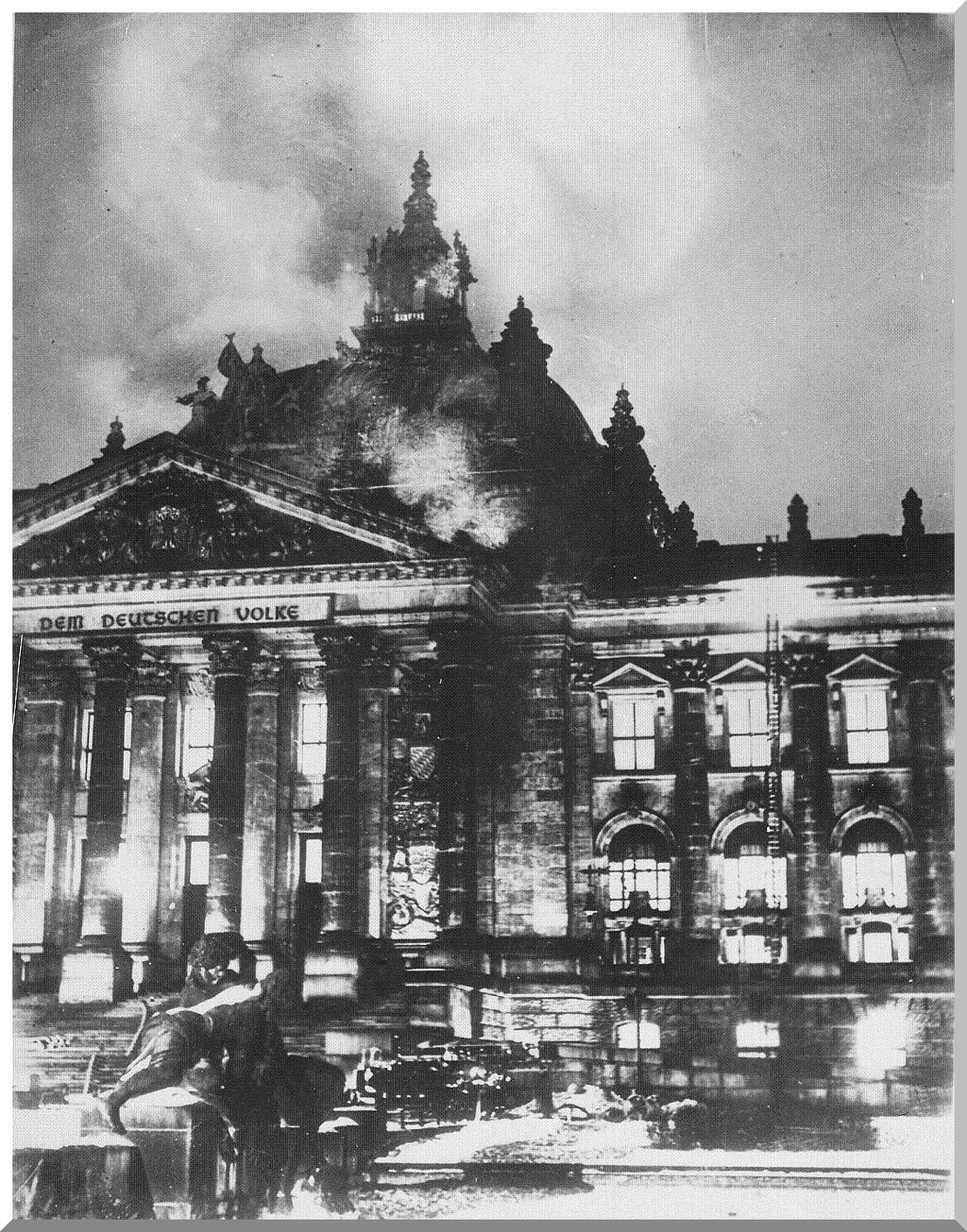
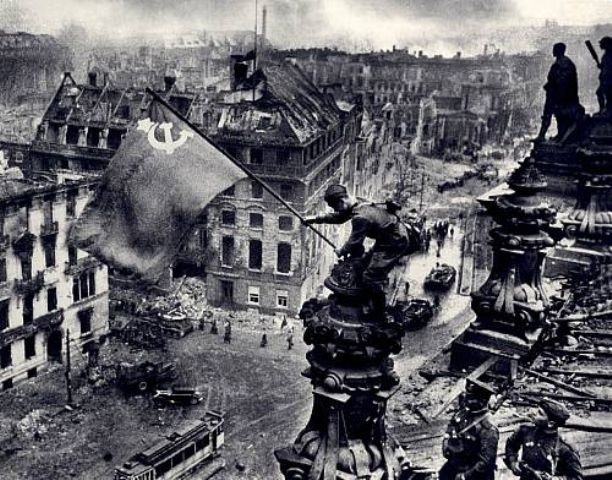
The other night I walked up Unter den Linden towards the approaching Brandenburg Gate, formerly the marker between the Soviet and western halves of Berlin, and then right through it, as though bursting through an invisible wall. I turned left to head for Potsdamer Platz, looking back for a final glance over my shoulder, and that was when I saw it, unexpectedly but unmistakably: the Reichstag. It was the first time I had set eyes on it, yet of course I had seen it a thousand times in so many photographs, and most of all in the two unforgettable images, seared in European consciousness, that bookended twelve years of horror and destruction: the Reichstag fire of 1933:
and the Soviet flag raised over the ruins of Berlin in May 1945:
Overcome, I stood back against the railings and wept, for Europe: for the dead, and the maimed, and the bereaved, and the displaced, and for all the barbarism, and all that was destroyed. And for myself too, for without that horrendous, epic conflagration, I would not be here: my parents, from different walks of life and different ends of England, met while in service, in Malta in 1945. And I wept to see that newer flag flying there too, the circle of gold stars on the blue ground: for all that has been mended and made possible by that peace (the cynics might say: especially for Germany), so that Germania now wields nothing scarier than a Gibson Flying Vee, and selections condemn their victims to no fate worse than uncooldom.
Berlin is far from finished: I need a week – if not a lifetime. Either of those will have to wait.




 Curved World