The Turks in World History

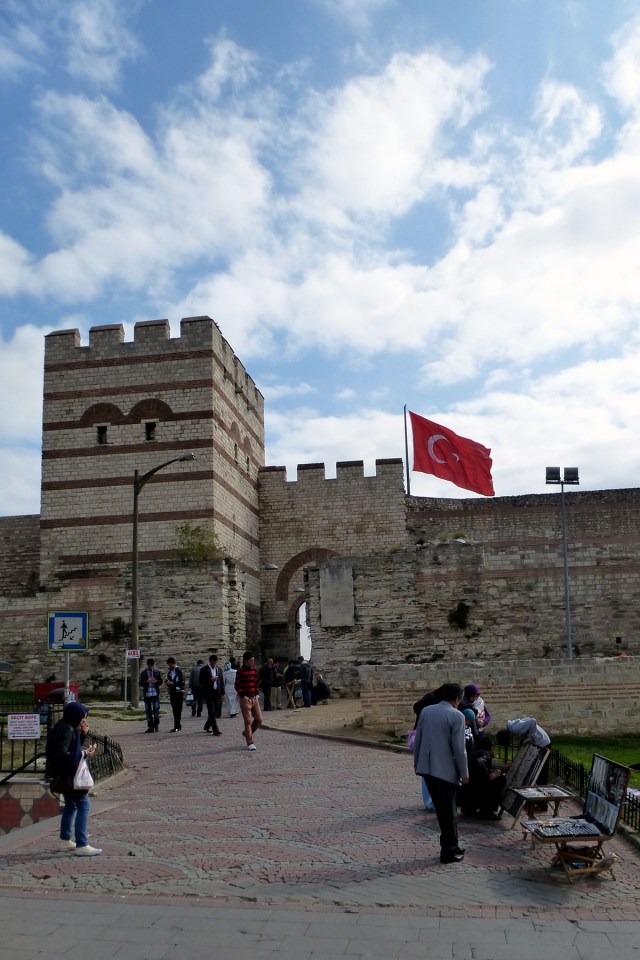
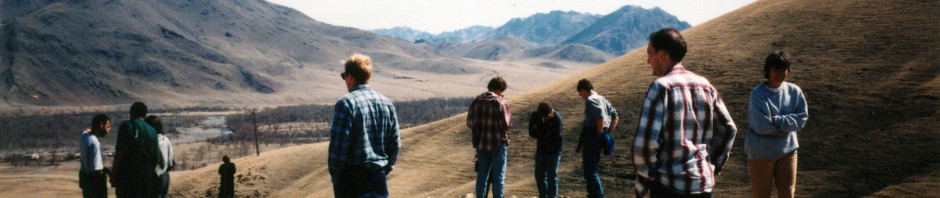
This book by Carter Vaughn Findley of Ohio State University (whose Wikipedia page is in Turkish), traces  the movement of the Turkic and Turkish peoples through history from the earliest records of steppe nomads on the margins of ancient empires (the Scythians for the Romans, the Xiongnu for the Chinese) to the contemporary Turkish republic which inhabits Anatolia and Thrace, and Turkic post-Soviet central Asia and Xinjiang. He sees all of these folk as a loose cultural and linguistic unit, but with the important caveat that it is impossible to fix this to any one particular “ethnic” group, certainly at least in terms of genetics. The appealing metaphor he uses at the beginning is that of a caravan rolling gradually across Asia from Mongolia to Istanbul, picking up and dropping people and baggage as it goes, so that by the time it reaches its destination it is both the same vehicle that started out and yet a different phenomenon altogether.

The other metaphor that threads its way through the book is that of the weaving of a Turkish carpet, so that all the shifting developments that have occurred in the Turkic/Turkish space – most significantly the conversion to Islam, and the encounter with modernity (whether in its European or Soviet forms) which characterized the 19th and 20th century Turkish/Turkic experience – are seen as strands woven into the fabric of its history by those who have created them. One dynamic that stands out is the author’s contention that historically it has been possible, even (in conditions of diffuse power) inevitable for states to be formed on the steppes, but that they have not been able to last unless they took over an Empire (the Mongols became the Yuan Dynasty, the Ottoman conquest of Byzantium) and then became sedentary themselves; otherwise the centrifugal forces were bound to overwhelm the centripetal ones. Another is the change that came with gunpowder and industry: now the steppes themselves can be pinned down by the great empires.

There is plenty of dense academic analysis here, but it is Findley’s propensity for weaving metaphor in and out of the text that lifts the book into a higher class, where the provision of detailed information merges with the sympathetic human search for meaning in history and the quest to create a liberating space where once nomadic peoples can live in an age where there are no more open spaces to roam.
Posted in read | Tagged , , , | Leave a comment

tiles and tombs

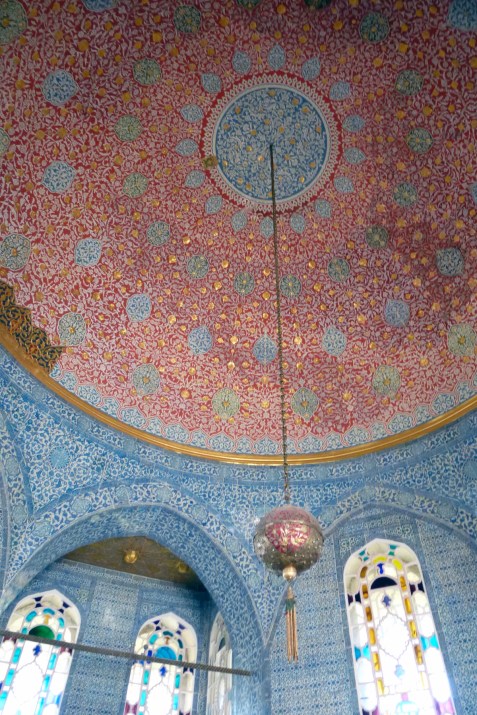
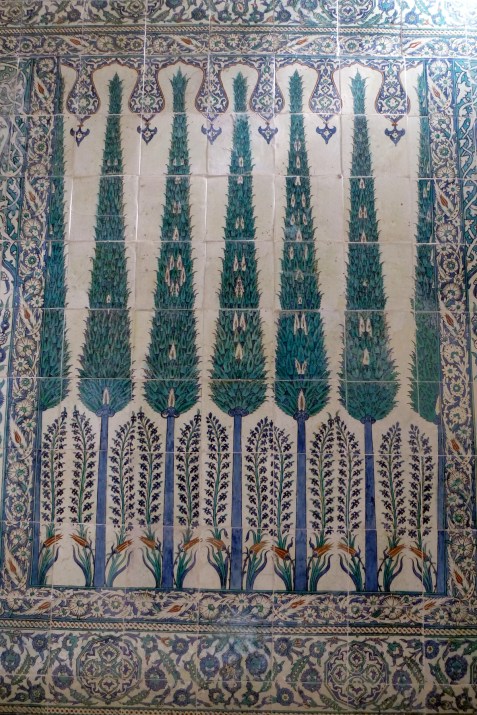
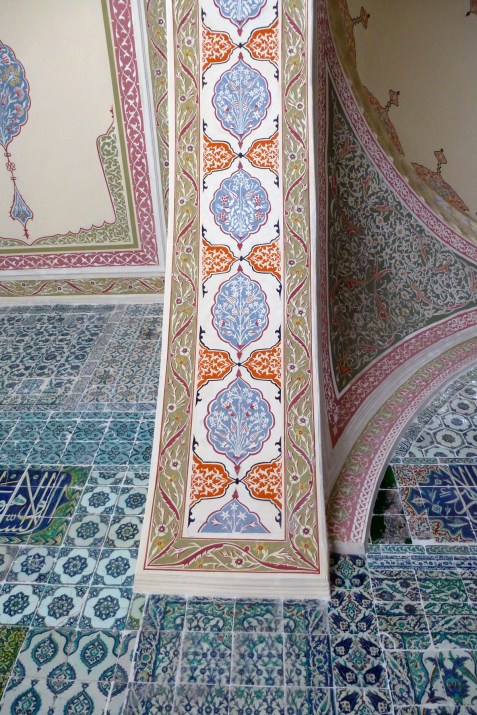
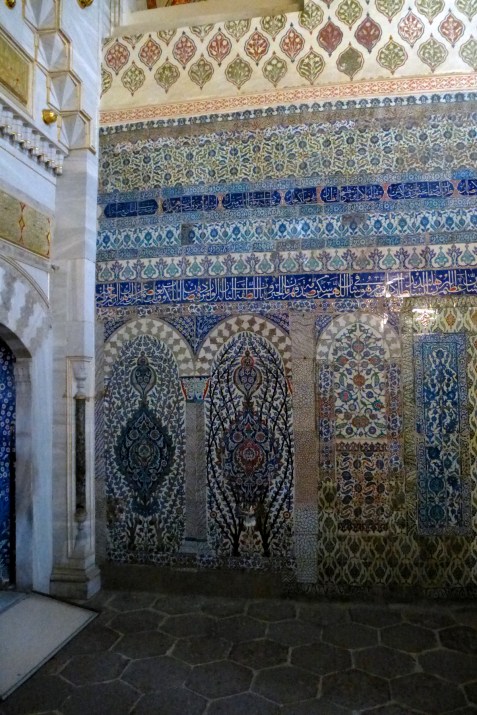
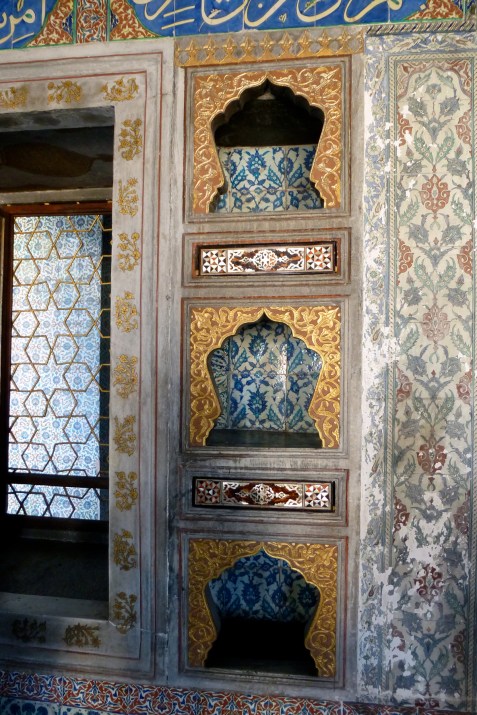
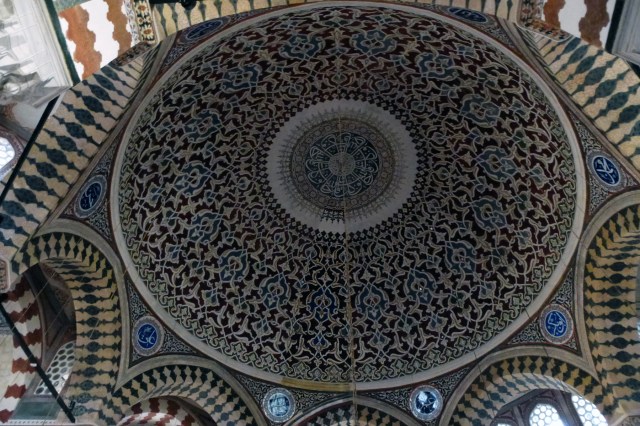
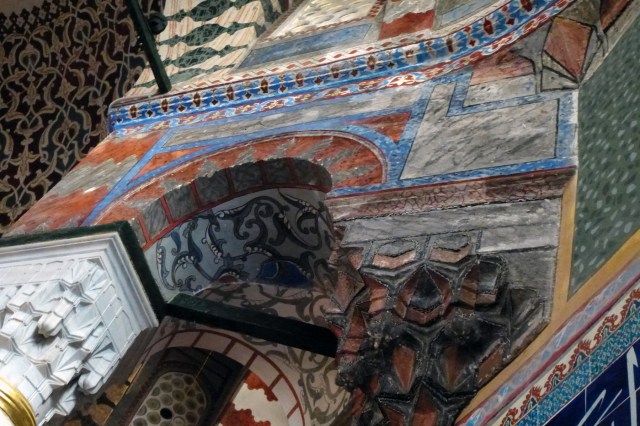
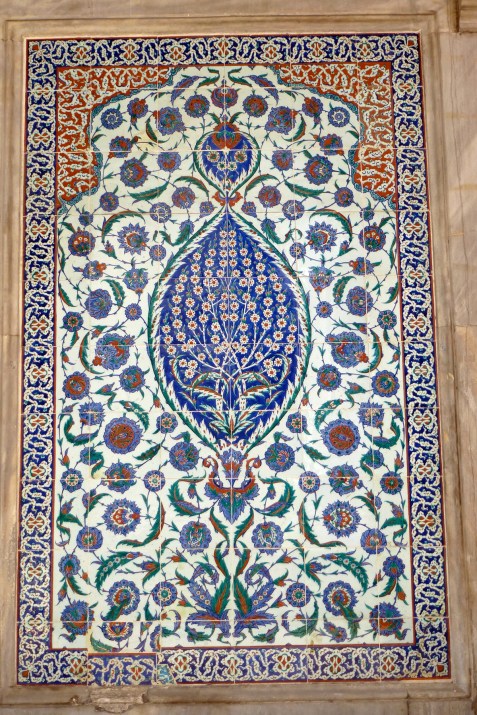
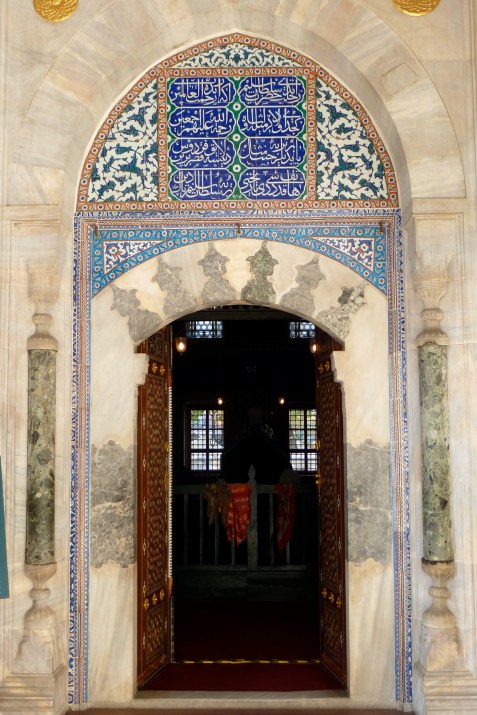
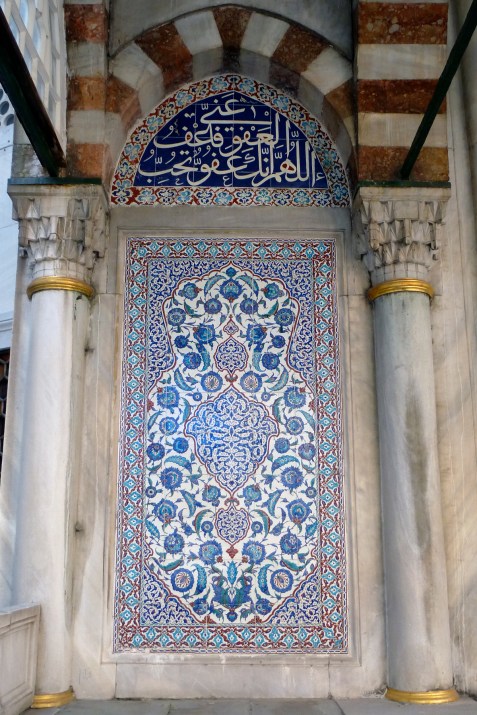
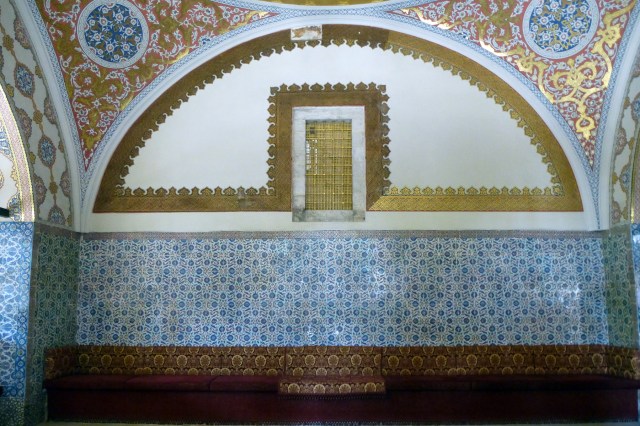
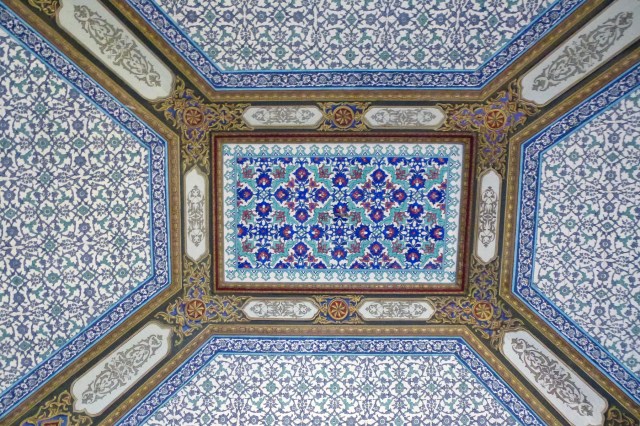
The Turks may have destroyed Byzantium, but to replace the mosaics they brought ceramics.  This is the Topkapi, palace of the Ottoman sultans. I’ll let the pictures speak for themselves…

26.10.12 Istanbul-19 Topkapi Divan 26.10.12 Istanbul-20 Topkapi ceiling 26.10.12 Istanbul-23 Topkapi ceiling26.10.12 Istanbul-29 Topkapi harem 26.10.12 Istanbul-33 Topkapi harem 26.10.12 Istanbul-35 Topkapi harem26.10.12 Istanbul-40 Topkapi harem Sinan room 26.10.12 Istanbul-43 Topkapi harem

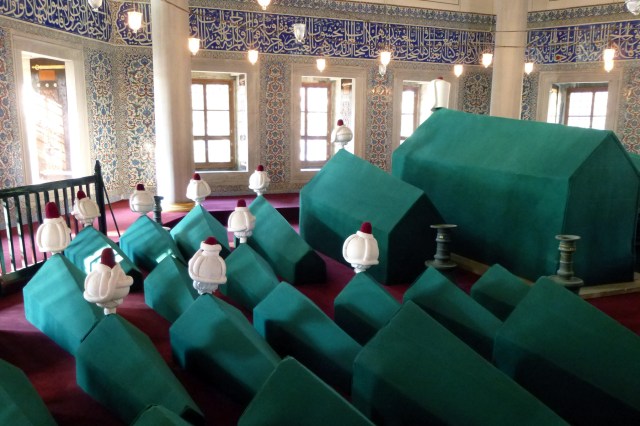
Those were for the living, but they did it for the dead too, building spectacular tombs for the Sultans and their families in the grounds of Aya Sofia:

27.10.12 Istanbul-12 sultan tombs 27.10.12 Istanbul-15 sultan tombs 27.10.12 Istanbul-16 sultan tombs 27.10.12 Istanbul-17 sultan tombs 27.10.12 Istanbul-18 sultan tombs

These tiny caskets are a poignant reminder of how infant mortality affected even the rich and powerful in those days:

27.10.12 Istanbul-19 sultan tombs

Posted in road | Tagged , , | Leave a comment

churches into mosques

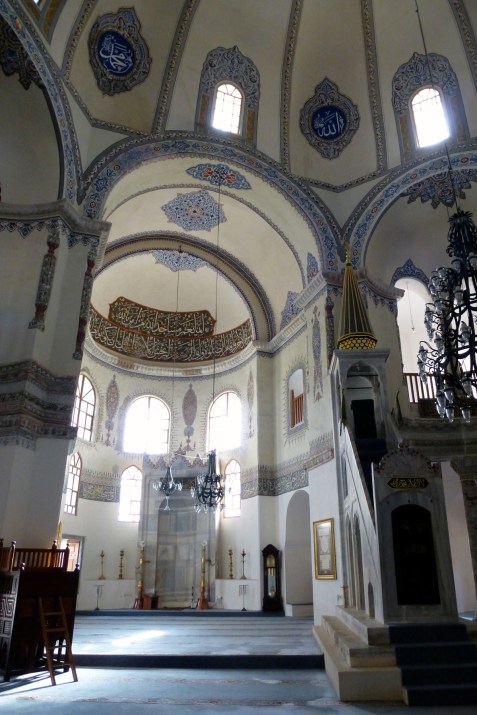
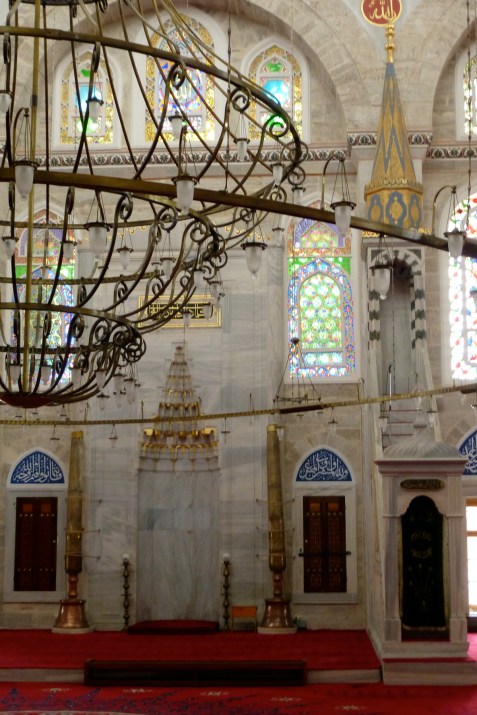
Aya Sofia is the most obvious example, but there are a few less famous ones around Istanbul: the Turks came, took the churches and converted them into mosques. One that still is a mosque is the small ex-church that was the prototype for Aya Sofia back in the 6th century, and is still known in Turkish as little Aya Sofia. Note the off-centre niche aligning prayer towards Mecca, replacing the original east-facing Christian altar:

25.10.12 Istanbul-8 Küçuk Ayasofya Camii25.10.12 Istanbul-7 Küçuk Ayasofya Camii

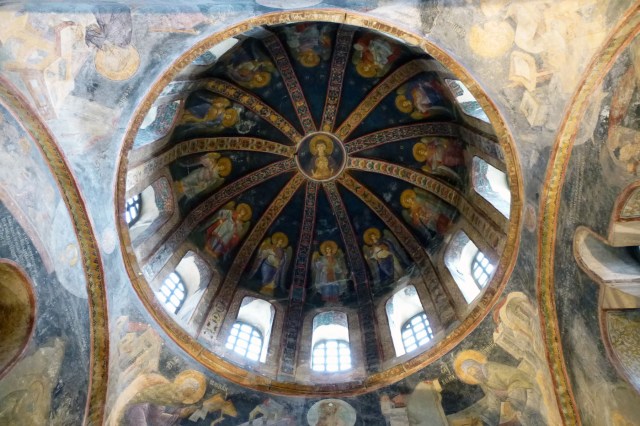
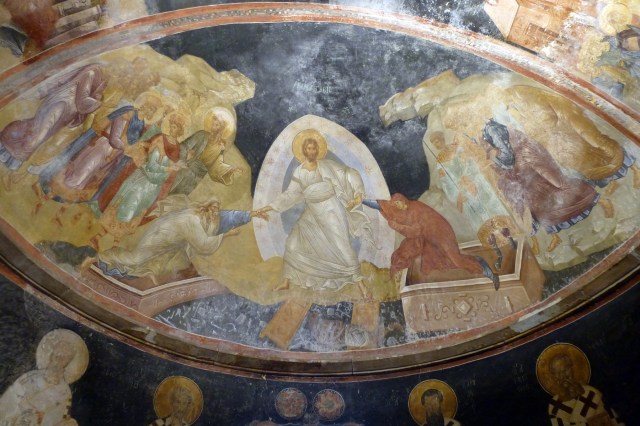
Another much later example – the church of Xhora – is up on the hill near the Edirne gate, and followed the same trajectory as Aya Sofia: it was converted into a mosque and is now a museum. Fortunately the Muslims who plastered over the Christian frescoes did so so thoroughly that they were perfectly preserved underneath, and now they are back in all their glory:

25.10.12 Istanbul-21 Xhora Mary & angels 25.10.12 Istanbul-25 Xhora Harrowing of HellThis last features Christ dragging Adam and Eve from their ancient tombs on the day of judgement.
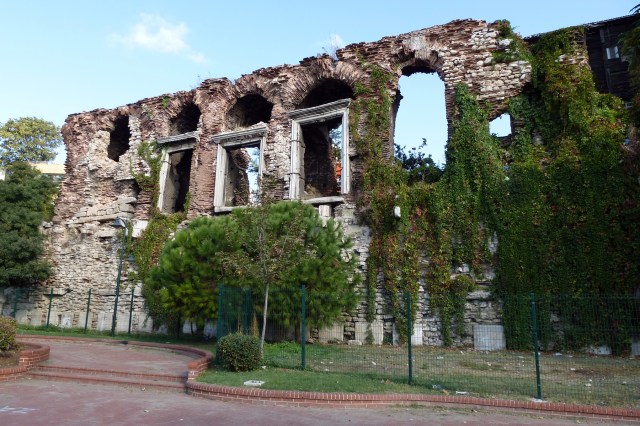
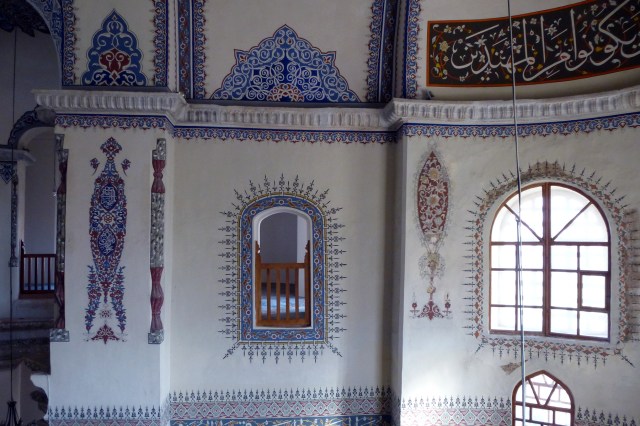
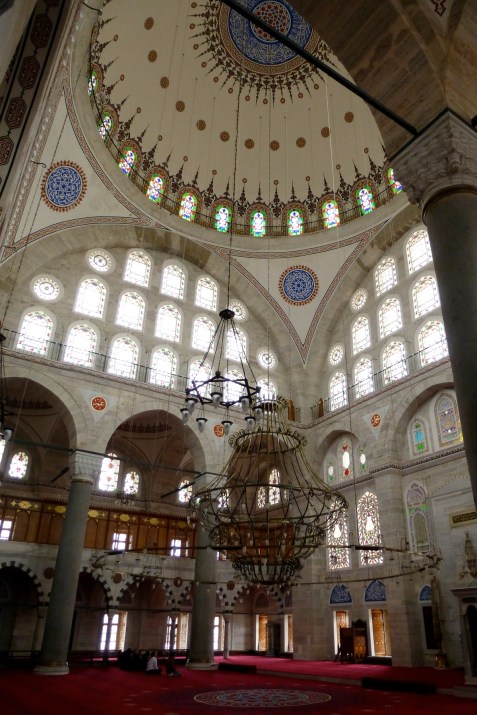
When the Turks came they didn’t just convert churches into mosques, they built their own too. Their most famous architect, Sinan, architect of the third most compelling mosque in Edirne, cut his teeth in candy-cane colours at Mihrimah Camii, also by the Edirne gate:

25.10.12 Istanbul-26 Mihrimah Camii 25.10.12 Istanbul-28 Mihrimah Camii

Later he built this richer number, Sokollu Mehmet Pasha Camii, close to the Marmara shore right below the ancient city centre:

26.10.12 Istanbul-81 Sokollu Mehmet Pasha Camii 26.10.12 Istanbul-82 Sokollu Mehmet Pasha Camii

Posted in road | Tagged , , , , , | Leave a comment

the Justinian underground

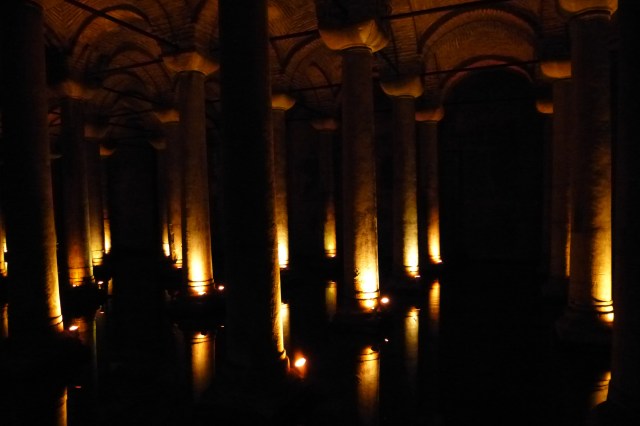
as above so below: right across the street from Aya Sofia, Justinian’s people built something else – an underground cistern to store the drinking water that was brought into Constantinople from nearby forest springs, by means of aqueducts and pipes. A strictly functional purpose, but look at this for architecture:

25.10.12 Istanbul-30 Basilica CisternThey recycled, too, older building materials from the pagan days; who knows where this upside-down Medusa originally came from?

25.10.12 Istanbul-31 Basilica Cistern Medusa head

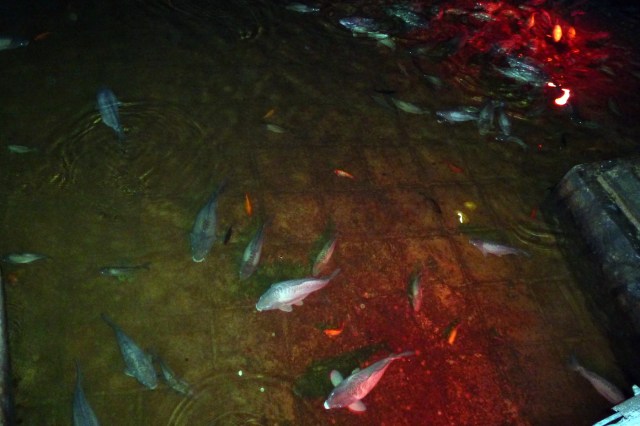
The whole thing was forgotten for hundreds of years; it was only rediscovered because a sharp-eyed Italian traveller in the 16th century enquired why freshwater fish were being sold ion the streets of the city, many miles from the nearest fresh water. The answer: they were pulling them up from right beneath their feet.

25.10.12 Istanbul-32 Basilica Cistern fish


Posted in road | Tagged , , | Leave a comment

surpassing Solomon

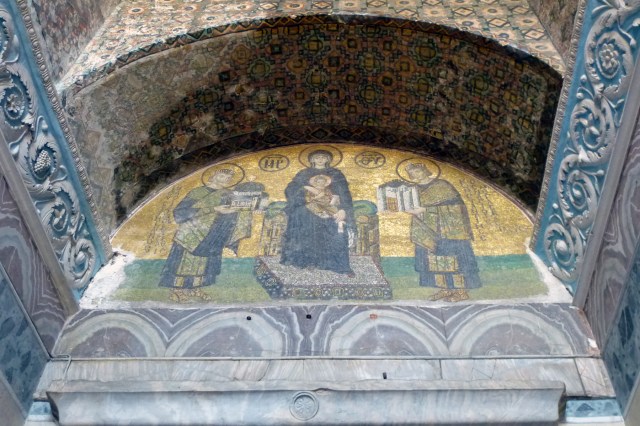
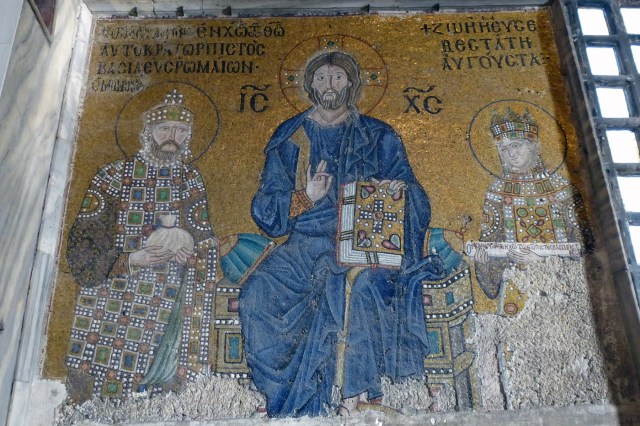
“Solomon, I have surpassed you”; that is what the 6th century Byzantine emperor Justinian is supposed to have said when he first entered the church he had commissioned, Aya Sofia, the shrine of the Holy Wisdom. In this mosaic he, on the left, presents his church to Christ and his mother, as Constantine, on the right, presents his city:

26.10.12 Istanbul-77 Aya Sofia mosaic Justinian Constantine

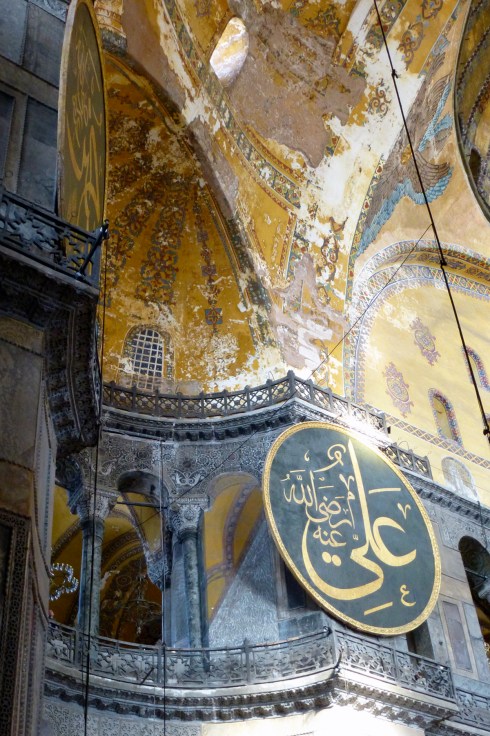
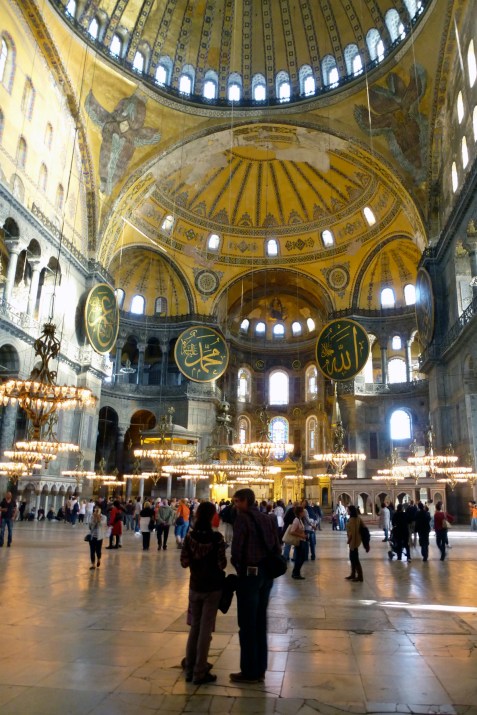
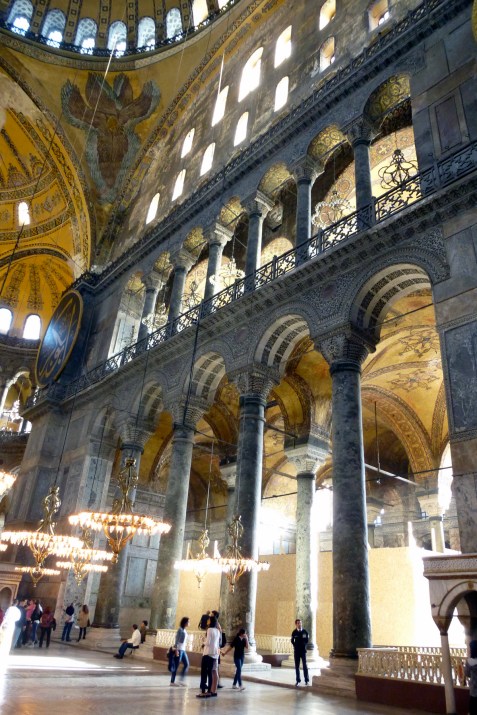
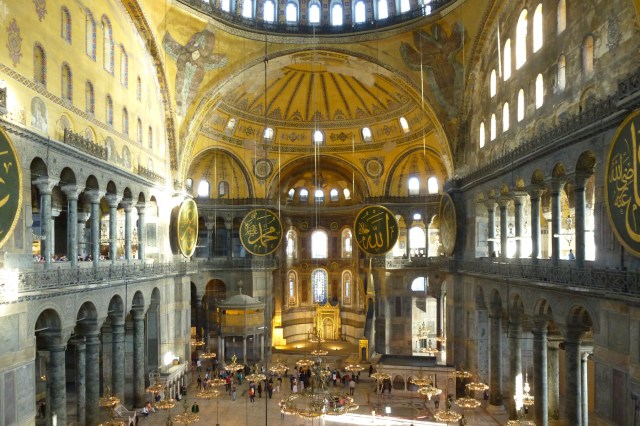
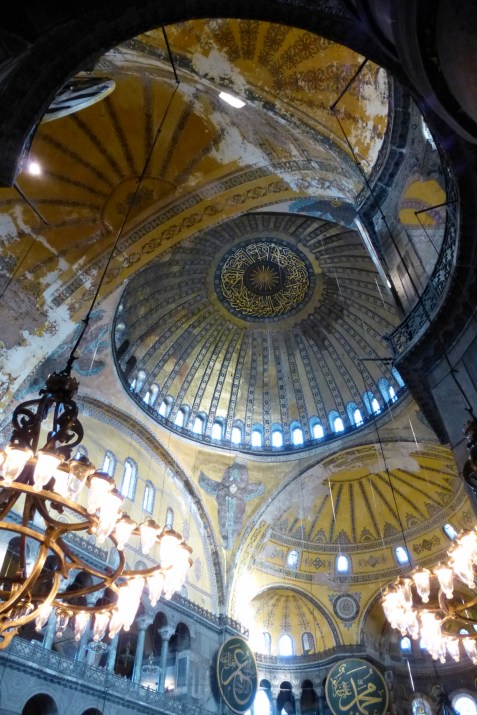
Nearly fifteen centuries on I stand, almost equally rapt, in Justinian’s space. After more than 800 years as a church and nearly 600 as a mosque before being retired to museumhood, after defacement and destruction of many of her great icons, after earthquake collapses of domes and apses, the old lady is somewhat worn and tatty now:

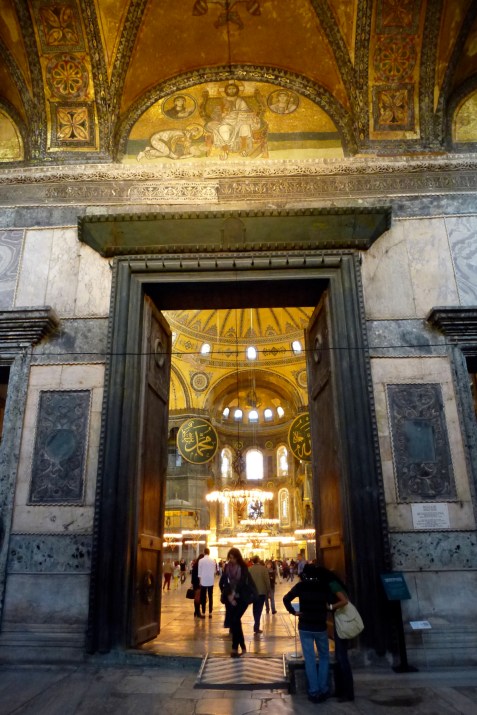
26.10.12 Istanbul-47 Aya Sofiabut barely the less magnificent for it: still a giant arc of space and light, somehow enveloping time. The sense of anticipation as you enter the narthex and catch the first glimpse through the door which, in Byzantine days, could only be accessed by the emperor (who, above the lintel, prostrates himself before Christ)

26.10.12 Istanbul-56 Aya Sofia main doorgives way to the immense golden glow of the interior:

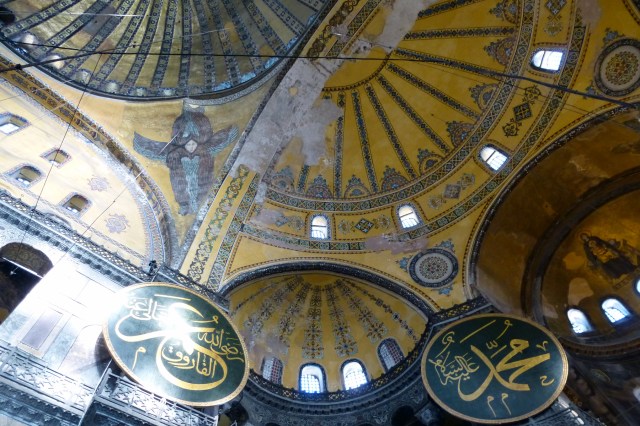
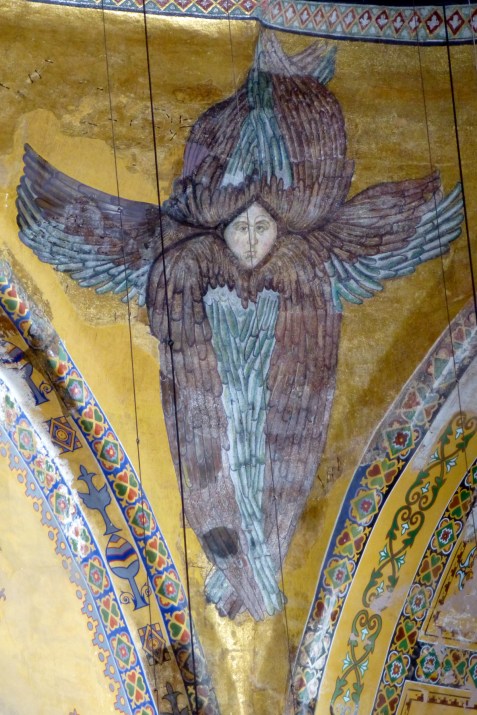
26.10.12 Istanbul-45 Aya Sofia26.10.12 Istanbul-49 Aya Sofia26.10.12 Istanbul-58 Aya Sofiadomes and semidomes:26.10.12 Istanbul-52 Aya Sofia26.10.12 Istanbul-76 Aya Sofiasix-winged cherubim and Christ himself, with his book:

26.10.12 Istanbul-63 Aya Sofia cherub 26.10.12 Istanbul-69 Aya Sofia mosaic

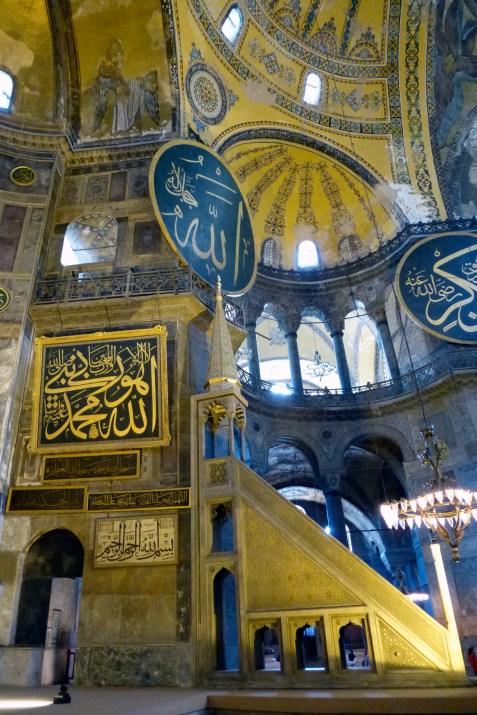
In 1453, when Constantinople became Istanbul and the Turks converted Aya Sofia into a mosque, they destroyed the icons and mosaics or painted over them over with patterns (which is why the giant Christ Pantocrator on the dome is no longer there – that must have been something to see), installed a niche facing Mecca, a pulpit and giant black lozenges bearing the names in Arabic script of Allah, the Prophet, his grandsons Hassan and Hussein, and the four Rashidun caliphs:

26.10.12 Istanbul-73 Aya Sofia

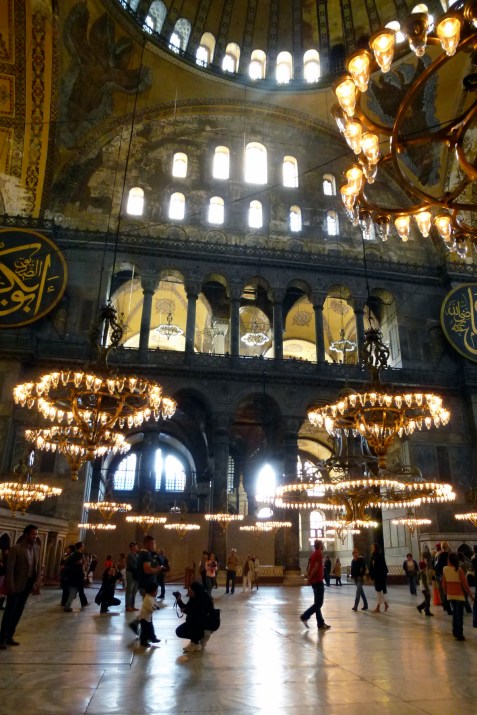
As the daylight begins to fade and the lamps brighten, the magic intensifies; the space is full of strangers, but somehow in this twilight they become companions in the warmth and oneness of the whole. More than a thousand years ago, emissaries came from King Vladimir of Kiev, who was looking for a religion; they had rejected Islam (in part because it promoted abstinence), Judaism, and Catholicism, but when they came to Aya Sofia they reported: “We knew not whether we were in heaven or on earth.  For on earth there is no such splendor or such beauty…We cannot describe it, but this much we can say:  there God dwells among mankind.”

26.10.12 Istanbul-74 Aya Sofia

But what is running in my mind is this: a recently rediscovered postcard from a long-forgotten ex-girlfriend depicting Gustav Klimt’s glittering masterpiece, The Kiss, on the back of which she had inscribed in gold ink in her own hand (those days before we word-processed) W B Yeats’ vision of timeless transcendence:

Once out of nature I shall never take
My bodily form from any natural thing,
But such a form as Grecian goldsmiths make
Of hammered gold and gold enamelling
To keep a drowsy Emperor awake;
Or set upon a golden bough to sing
To lords and ladies of Byzantium
Of what is past, or passing, or to come.

Posted in anybody up there?, road | Tagged , , , , , , | Leave a comment

back to Byzantium

Once again in Istanbul: Asia to the left, Europe to the right, with the Sea of Marmara in the background and the Blue Mosque and Aya Sofia on the hill:

2012-10-11 Istanbul view

By the Marmara shore, this is all that remains of the mighty palace of the Eastern Roman Emperors:

25.10.12 Istanbul-5 Bucoleon Palace

This was the seaward side; the site stretches all the way up the hill to where the Blue Mosque now stands on the hill. Just behind and between the mosque and Aya Sofia is a cool restaurant called Palatium, where you can relax on cushions at low tables after a hard day’s pounding the pavement; but in the basement are the ancient diplomats’ quarters:

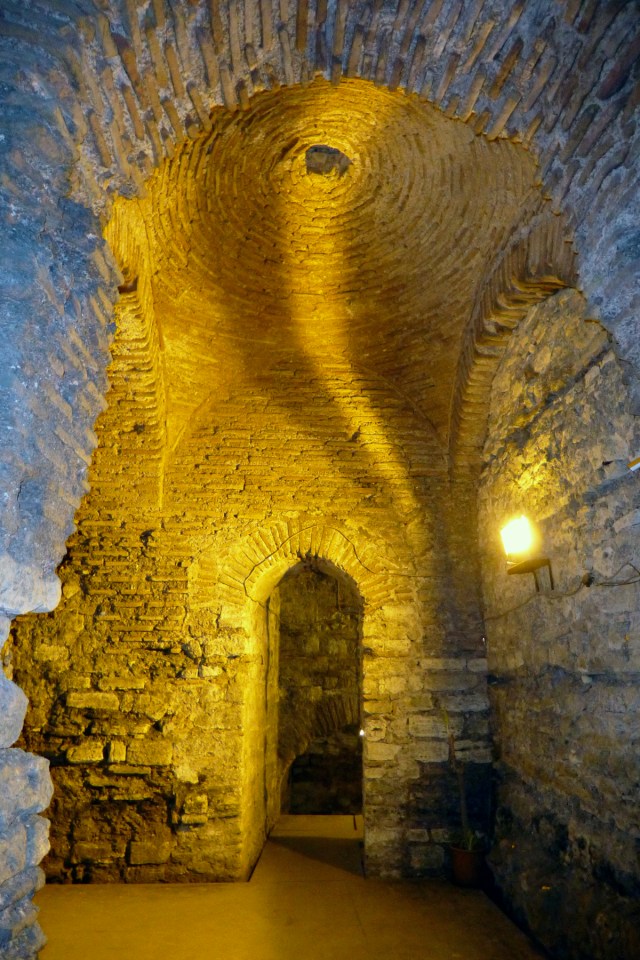
26.10.12 Istanbul-84 Palatium basement

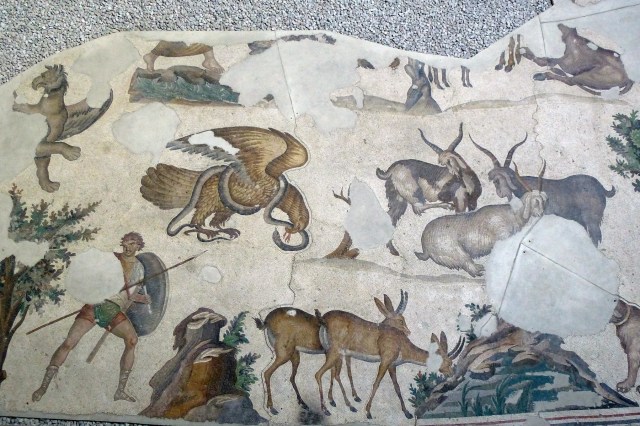
more fragments in the mosaic museum behind the Blue Mosque:

2012-10-2 Istanbul Byzantine Mosaic

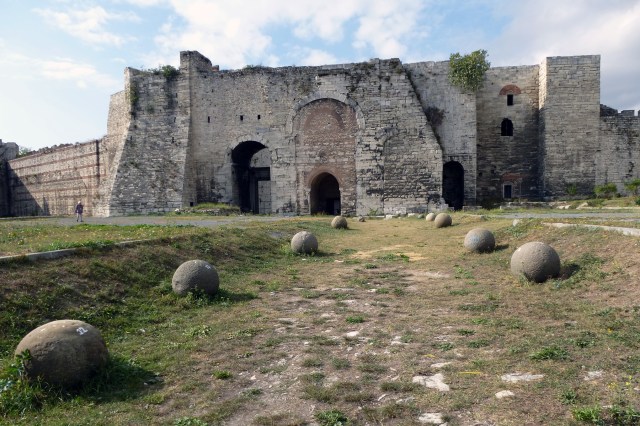
For a thousand years all the splendour at which these broken jigsaw pieces hint was protected by the Theodosian land walls. This sad-looking ruin at their southern end was once the Golden Gate, the point of triumphal entry to Constantinople for returning emperors; the stone cannonballs at its feet were among those with which the Turks finally breached the fortifications in May 1453:

25.10.12 Istanbul-11 Golden Gate

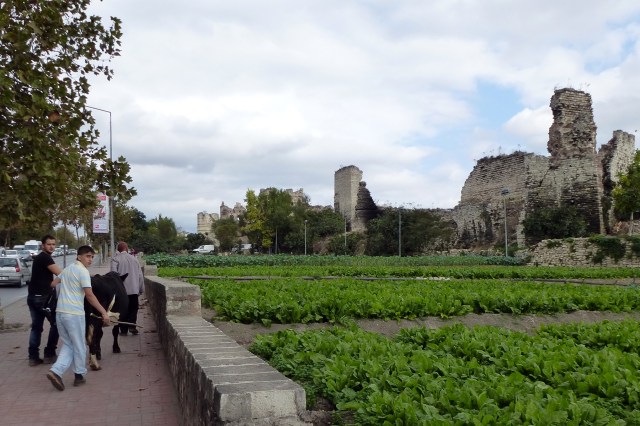
The walls are now largely given over to market gardening (this photo was taken at Eid Al Adha, the feast of the sacrifice; we can only guess the fate of the cow):

25.10.12 Istanbul-15 Eid Al Adha

There cannot be a better place anywhere to consider the fate of empires. It was in this valley that, in May 1453, the walls were most badly damaged by those balls, and here, once the outcome was clear, that Constantine XI, the final emperor in the unbroken line that stretched back 1480 years to the elevation of Caesar Augustus, rode out to die in battle:

25.10.12 Istanbul-17 Lycus valley

and through this gate that the new ruler, the Ottoman Sultan Mehmet the Conqueror, entered the city, thus at last bringing to an end over 2200 years of the Roman polity which once so dominated Europe and the Mediterranean.

25.10.12 Istanbul-16 Topkapi

Posted in road | Tagged , , , | Leave a comment

when baghdad ruled the muslim world

In January I read Hugh Kennedy’s book about the great Arab conquests, which burst rough-necked upon the world at the very moment when  the heavyweight, overweight Sassanid and Byzantine empires were punch-drunk from 30 years of grueling mutual warfare, destroying the former and reducing the latter to a stunted rump, saved only by the chain drawn across the Golden Horn. That was a fantastic book, full of legends of the rough-and-ready mounted warriors who, to their own amazement as well as everyone else’s, came thundering out of the desert as the old world collapsed like a house of cards, its fat children put to the sword; heavily poignant with the sense of time passing, the world turning, the rise and fall, but also loaded with fascinating historiographical analysis.

This earlier volume has a more time-extended but geographically circumscribed remit: the Abbasid dynasty which, in a back-to-the-roots Islamic rush, toppled the unpopular Ummayads in 750, and their caliphs who ruled the empire in power and gorgeous splendour from Baghdad and Samarra until their authority was usurped by their underlings, in fact if not in name, in the late ninth century. The characters and their legends are clearly drawn, as is the milieu of their court: its artists, its thirsters after knowledge who ironically (more than the Irish) saved the continuity of western civilization from its classical roots through to the renaissance and added a good few discoveries of their own, its hedonists (incredible how much alcohol was consumed at a Muslim court) and its brutalisers. The chronology is also clear (except for the civil war as it unfolded for the six years after the murder of the caliph Amin). A peculiar sense emerges, in spite of the dependence of the empire on Persian and Turks, of the devotion to this single family, descendants  not even of the Prophet himself but of his uncle, and how the Commander of the Faithful must always, in spite of the realities of power, be chosen from among its ranks.

What is missing, though, is a sense of what life was like for his ordinary subjects, be they Muslims, Christians, Jews, even the few holdout pagans, in the vast stretch of land from Tunisia through Yemen all the way through to the banks of the Oxus and beyond. What was the day-to-day quality of their existence? We learn that they pay different taxes – how did this affect their well-being and the relations among them? Also, a disappointment that, in spite of the demise in the caliphs’ real authority in the ninth century, there was nothing of the later centuries up to their fall at the hands of Hulagu Khan (grandson of Genghis), which is still considered, culturally at least, as part of the Abbasid golden age. Still, that would have made for a much bigger book, and the present one, if you are interested in tales of the notables, is fine as far as it goes.

Posted in read | Tagged , | Leave a comment

new city of hype

I don’t know whether to laugh or cry: Dubai is back. After years of stalled cranes and worthy road projects inching forward under a burden of debt, we are back in the land of underwater hotels and ski slopes in the desert. This time:

“Taj Arabia, a replica of the 360-year-old marble mausoleum, will be about four times the size of the original”, according to the Gulf News. It will feature “a five-star hotel property with 300 rooms…flanked by seven mixed use buildings, two of which will have 200 serviced apartments”, and will serve as “the world’s grandest wedding destination.” And lest this infant Taj-on-steroids feel lonely in its desert home, it will have a posse of celebrity hangers-on to keep it company:  “several historical and modern icons of architecture from around the world such as the Pyramids, Hanging Gardens, Eiffel Tower, Taj Mahal, Great Wall of China, and Leaning Tower of Pisa.” Naturally, “Bollywood producers have shown interest in using Taj Arabia as a backdrop”.

Now how are they going to air condition all that? Did anybody mention sustainability, or the coming energy crunch? The shimmering bubble drifts on…

Posted in city of hype, lemmingwatch | 8 Comments

The First Dynasty of Islam

This history by G R Hawting (School of Oriental and African Studies, London) of the Umayyad Dynasty, who seized power in 661 after Ali, the last of the Rashidun (“rightly-guided” caliphs, the immediate successors to the Prophet), was murdered, and who reigned from Damascus amid various uprisings and rebellions until they were overthrown in 750, checks all the right boxes in terms of facts and details. All the players are here, with their tribal affiliations and cross-alliances, and (in so far as is known) where they lived and when and where they met in battle. This makes, especially towards the end, as the tensions became more bitter and the fighting more frequent, for a hotpot of more-or-less interchangeable black-and-white names vibrating and colliding and bouncing off each other, without any sense of who they really were beyond the affiliations of their equally abstruse tribal alliances. So now I know, with some allowance for impenetrability, what happened, but I don’t really understand who these people were, how they lived, what they were about, or what they achieved. It would have been nice, for example (the text is only 119 pages) to have learned something about art or architecture or lifestyles ; as it is, such massive accomplishments as the Dome of the Rock (which gets a couple of sentences for the value as a source text of the inscriptions on its dome) or the Ummayad Mosque are barely even mentioned. No doubt the author was hampered by the poverty of the source material, but even so, something less dry surely must remain to brighten up these 89 years?

So, concise bare bones informational value, yes; otherwise, this is a really boring book.

Posted in read | Tagged , , | Leave a comment

The First Muslims: History and Memory

This book by Asma Afsaruddin, who is Professor of Near Eastern Languages and Cultures at Indiana University is, on the face of it, a history of the earliest Muslims, in particular the Rashidun Caliphs (the four immediate successors to the Prophet Muhammad) and  the Prophet’s other companions, both male and female, and successors. This part of the book is informationally valuable, if slightly marred by occasional digs at other religions like Christianity.

So far, so fairly ordinary; but then half way through it crackles right into life, as it takes on a discussion of four important topics in the light of what of present relevance is to be learned from these earliest Muslims, including the  Prophet himself: the “Islamic State”, shari’a law, the status and role of women, and the nature of jihad, or struggle. In the course of this, she really sticks it to the radical Islamists, who turn out to be not so radical after all, but guilty of selective appropriation and willful misreading of the early texts (including the Quran) and hypocritical reliance on later, more dubious and ideologically driven sources. She is particularly scathing of their take on jihad, which “for them primarily serves to yoke the religious to their self-serving political ambitions…The position of contemporary radical Islamists that jihad refers to unrelenting military activity against all those unlike them, Muslim and non-Muslim, until the latter come around to their view of things is regarded by modernists as a desperate and grotesque distortion of a noble and morally uplifting concept, whose reclamation from the extremists is necessary and long overdue.”

This was very enjoyable reading, both on its own terms as polemic (even if presented as balanced argument), and because it is heartwarming to know that there are voices in the Muslim world so bravely taking on the forces of ignorance, bigotry, repression and violence, even though it must be at some cost to their personal safety. If only their views got more publicity.

Posted in read | Tagged , , , , , , , | 1 Comment