Hungarian history on a hot day

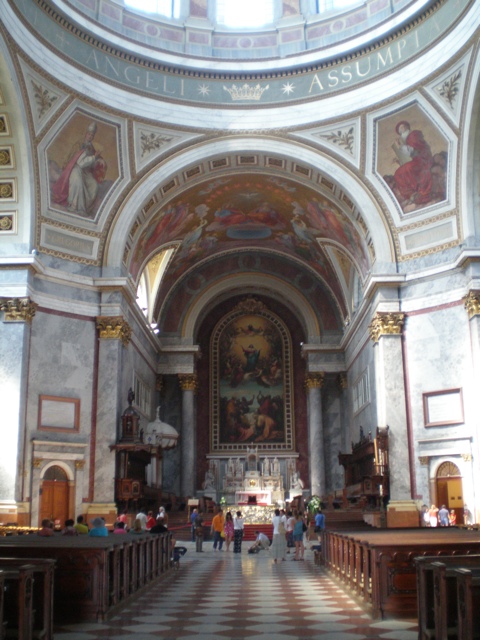
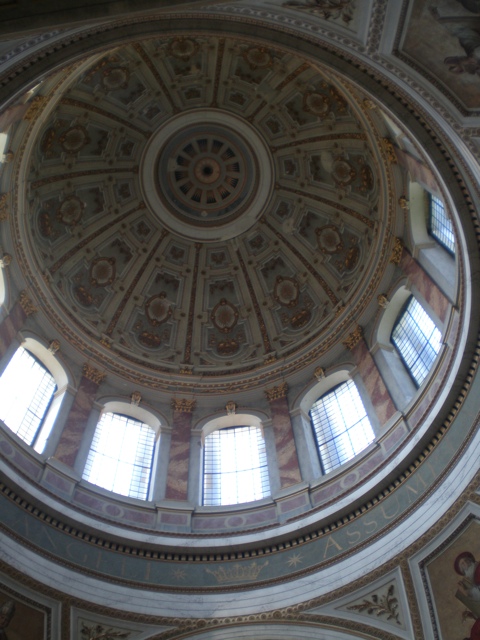
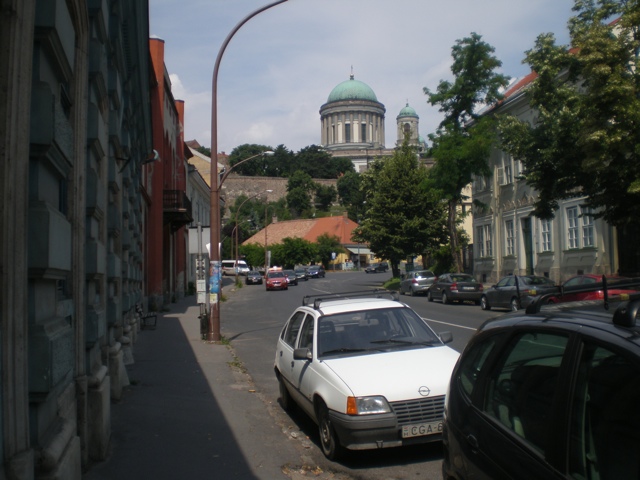
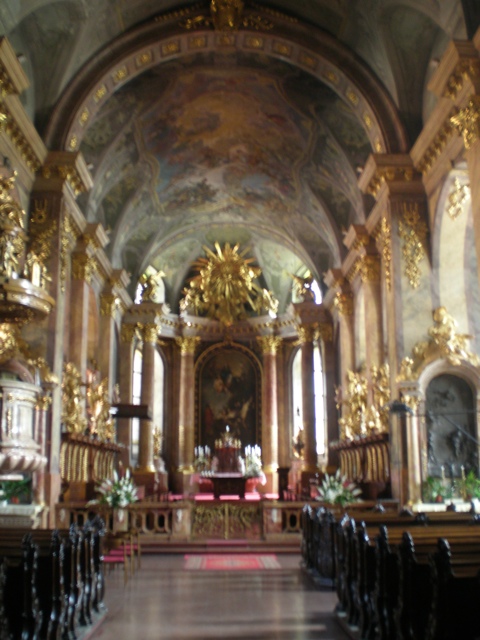
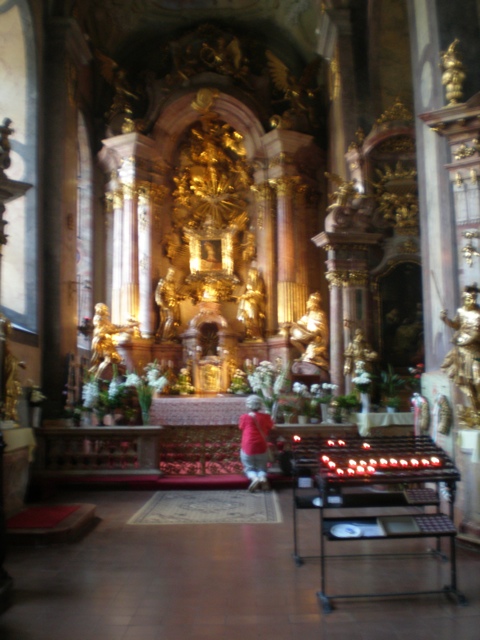
today I went to two old places outside of Budapest, connected with Hungary’s history. When the Hungarians came out of the east 1200 years ago (they had originally lived in Asia, between the Caspian and Aral seas), they settled first around a place called Esztergom. It’s not much of a town these days, but what is is with people wanting to build giant churches right above the Danube (like at Melk last week)?

20110708-085303.jpg

20110708-085419.jpg

20110708-085500.jpg

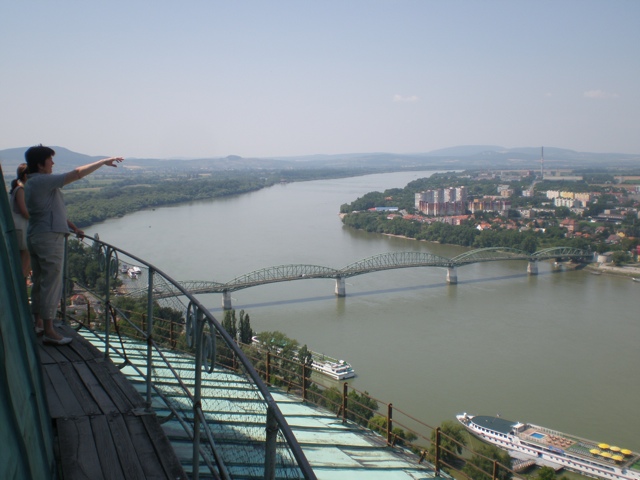
I climbed right to the top of the dome on the outside – plenty of exercise, especially as it was already beginning to get hot…this was the view from up there over the Danube, which here is an international border, so the buildings on the other side are in Slovakia:

20110708-085747.jpg

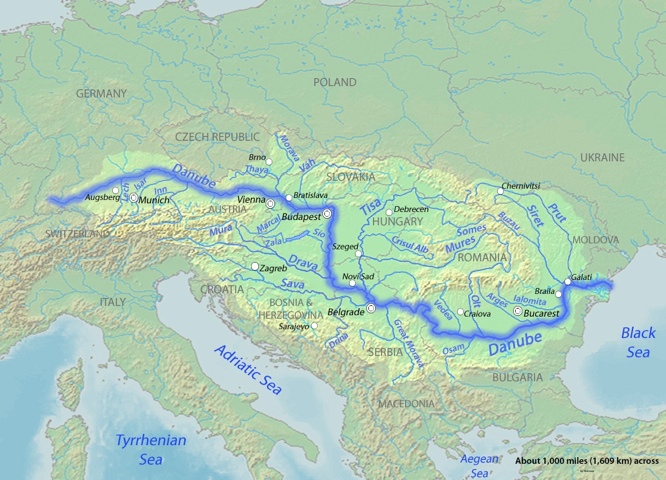
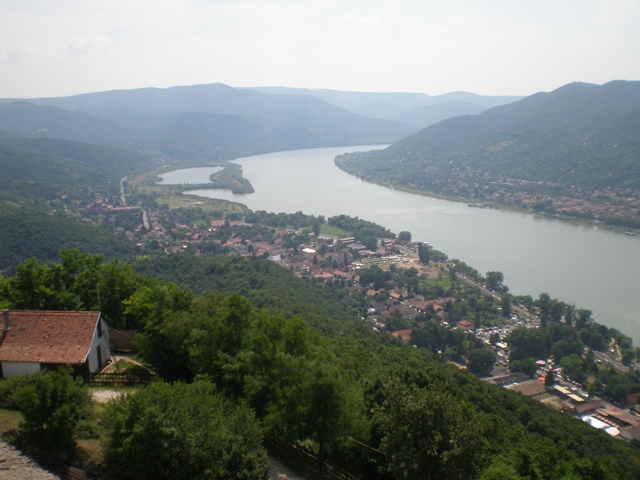
Then I got on a bus and had my first non-transactional conversation for ten days, with an affable old Hungarian drunk who sat down next to me. Thing is, his English was as good as my Hungarian – zero – so we had to make do with lots of shaking hands and sign language and the odd collocation that we were able to piece together, like “Manchester” “United!”. This was on the way to Visegrad, an old fort overlooking the beginning of the Great Bend of the Danube, where after traveling eastwards for hundreds of miles across Germany and Austria and northern Hungary, it turns south and begins to head towards Budapest and the Balkans. You can see it on this map, right above Budapest:

20110708-091128.jpg

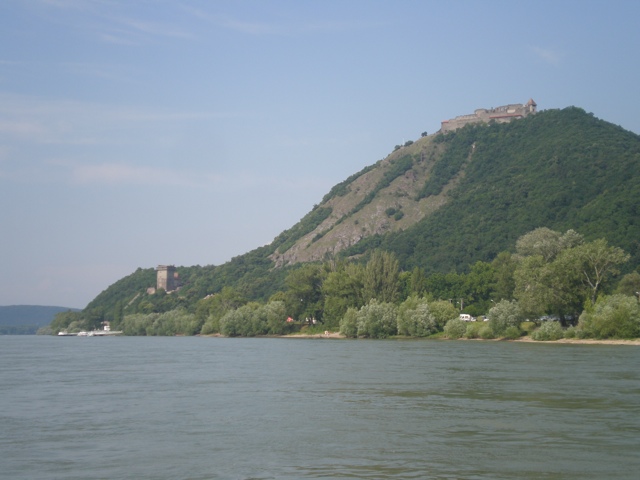
There was a while about 400 or 500 years ago when there was a danger of tribes invading from the East, and when the Turks were beginning to threaten Europe, that this was pretty wild frontier territory, so it helped to have a castle high up on a hill commanding the Danube:

20110708-091610.jpg

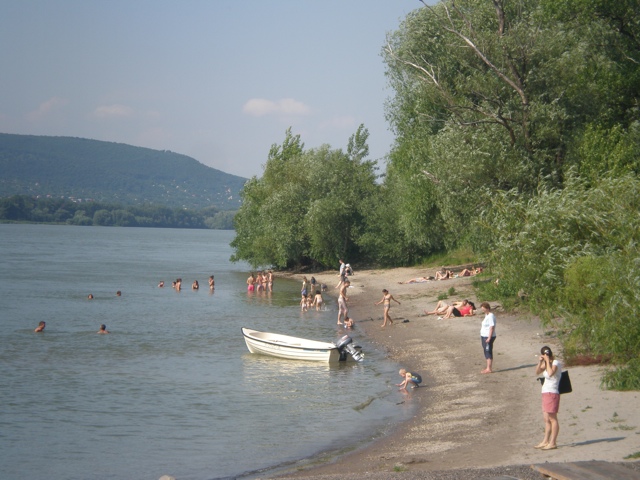
Only thing is, I had to climb up to it, and it was already beginning to seriously swelter – temperatures in the 30s – as you can see from these people cooling themselves off in the river:

20110708-092257.jpg

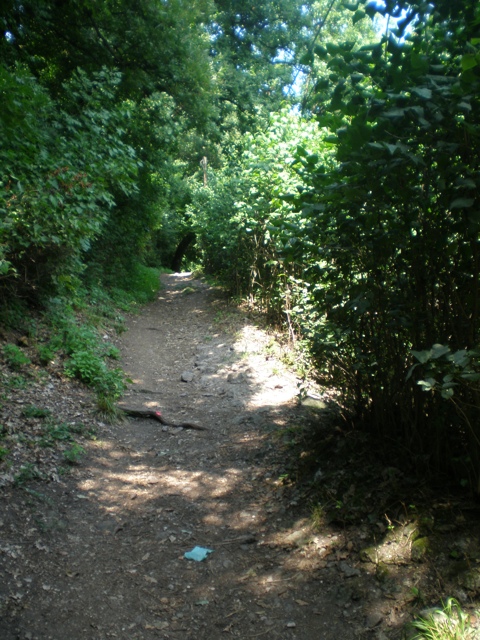
Fortunately the path was green and shady, with lots of butterflies flitting around:

20110708-092441.jpg

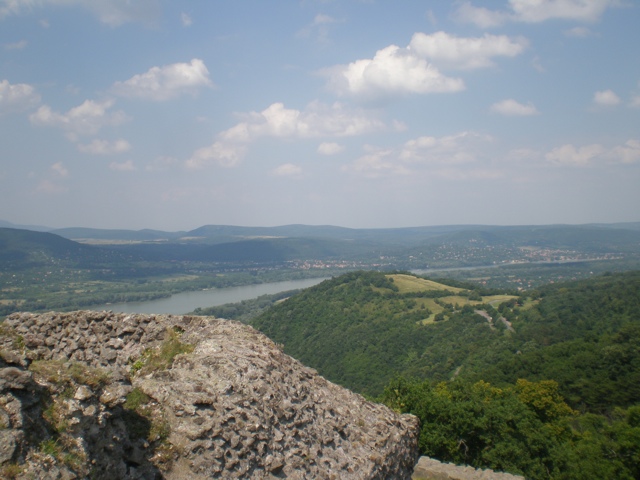
And the views from the top were well worth it. The first one is looking back up the river, as it comes out of the mountains, and the second, with a chunk of the old castle wall, is looking downstream – you can see the river beginning to bend to the right, i.e. to the south, behind the hill…

20110708-093115.jpg

20110708-093217.jpg

The train back to Budapest had no cooling system except for open windows, which were pretty much no use at all! Everybody was cooking in the heat. Even though I had a good night’s sleep, I nodded out on all three of my journeys today. I don’t know if it was just the heat, or the long-term exhaustion finally catching up with me…

Posted in road | Tagged , , , , , , , | 1 Comment

terror and comfort

Today I went to the Terror House in Budapest. This is a museum set up in the house which was the headquarters, first, of Hungary’s Nazis, who ruled brutally for a few months in 1944-45; and then of the Hungarian communist secret police, who (under the thumb of their Soviet masters) detained and tortured people on the basis of their beliefs from 1945 until 1989, but especially nastily in the period from 1945-1956, at the end of which Hungary exploded in a massive rebellion against Soviet rule. The revolt was put down and its leaders were hanged, but after that the Soviets went a little easier. Not much, though – they still had people spying on other people in their own families, and all manner of other nastiness. I don’t want to go into much more detail than this, other than to say that it was really sad and appalling…

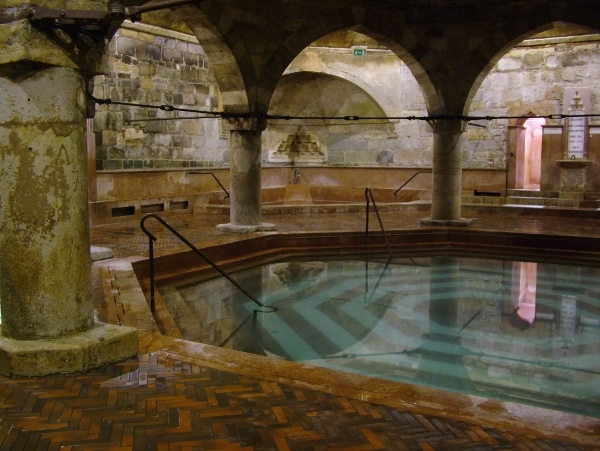
Then this afternoon I went, by way of contrast, to some hot baths built by the Turks when they ruled Budapest around 450 years ago. They are called the Rudas baths, and they look like this:

20110707-093732.jpg

except that they were full of men (some of them very fat) wandering and sitting around in little comical loincloths which didn’t really disguise anything, and what else you can’t see is that the old Turkish dome above the central dome is full of small holes, maybe 10 or 15 centimeters in diameter, which let the sun’s rays in; since some of these have stained glass in them, the effect is really quite beautiful. I had a great time sitting in the water pools of various temperatures in these beautiful surroundings, and just relaxing…

Posted in misery for the many, freedom for the few, road | Tagged , , , , , , | Leave a comment

Budapest

My arrival in Budapest wasn’t too salubrious: a drunken woman and a man with a weatherbeaten face and a moustache like out of a chronicle of some Balkan war shouting and throwing a table at each other, and an old man ferreting through a bin for anything he could find. But then again it was the train station.

Budapest is another city of grand buildings on leafy boulevards, but one difference with Vienna is that quite a lot of them are crumbling, even in the centre (though others have been beautifully restored). The atmosphere is a whole lot rougher than Vienna, though, and at the same time more laid back – more like Paris in that way. There are a lot of British flags around (almost as many as the statues of patriots!) – I am guessing these are for English language schools. I am finding that I can make myself understood in English rather than German here too (which is just as well, with the state of my German…)

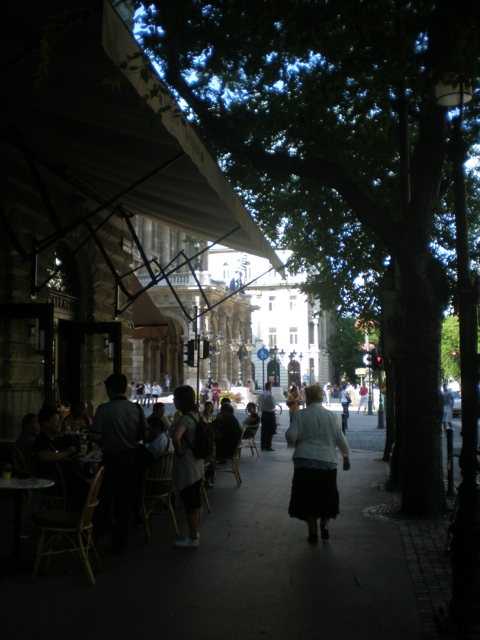
The place I am staying is right behind the opera, which is a grand building in a large avenue, in an area full of pavement cafes. It was meant to be Budapest’s answer to the Champs-Élysées.
20110706-081925.jpg

The weather has warmed up again now – about 25 degrees – so I am sitting outside in a quiet street having a glass of wine (and the Hungarian wine I have had so far is very tasty), surrounded by lots of people chatting and laughing after their day at work (that’s the kind of thing people often do in Europe…) With the summer sun and the warm evening and the convivial atmosphere, something about it makes me imagine that I am in old Pannonia, the Roman province on the banks of the Danube, where Hungary now is, sitting outside a tavern…

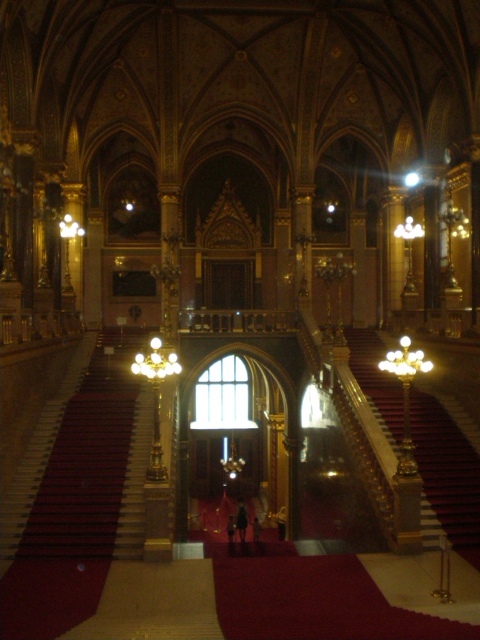
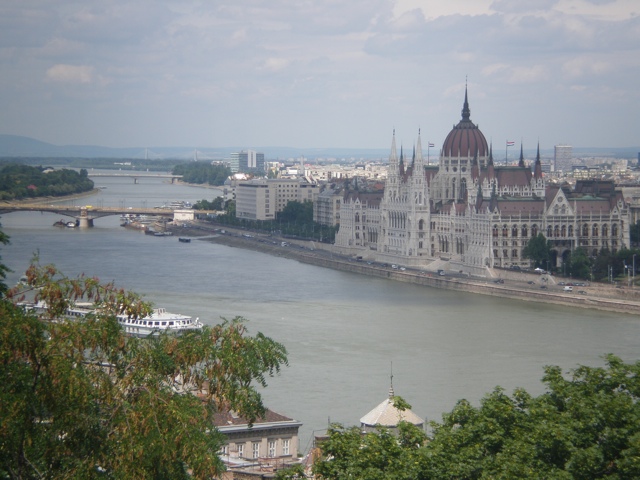
Today I went to see the Parliament building (very grand, as you might expect) – this is it seen from across the river:
20110706-081623.jpg

and this is part of the inside:

20110706-081747.jpg

I also went to see the old Royal Palace on top of the hill – very grand too:
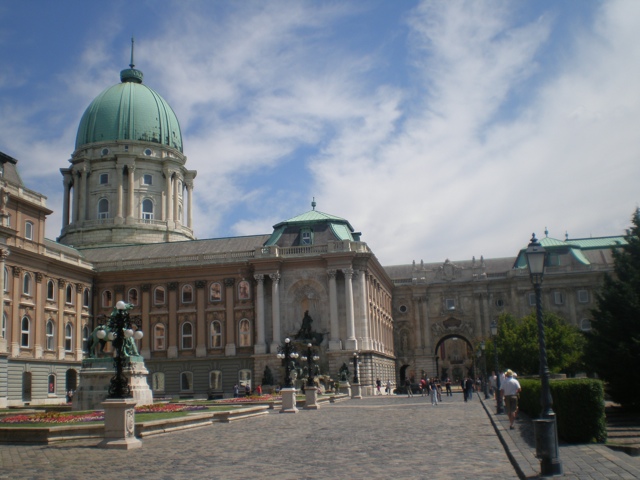
20110706-082251.jpg

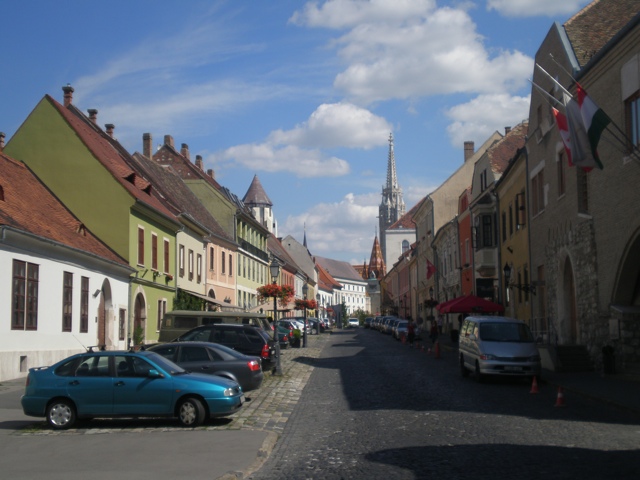
It was set in a nice quiet area of old houses:
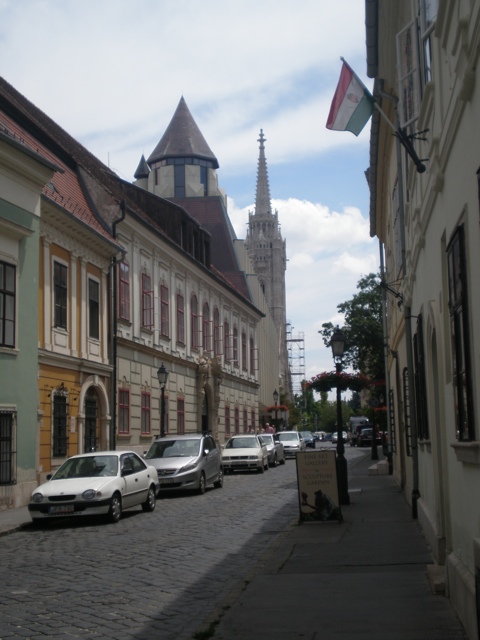
20110706-082444.jpg

20110706-082529.jpg

They have done some decorative work on some of the roofs too:
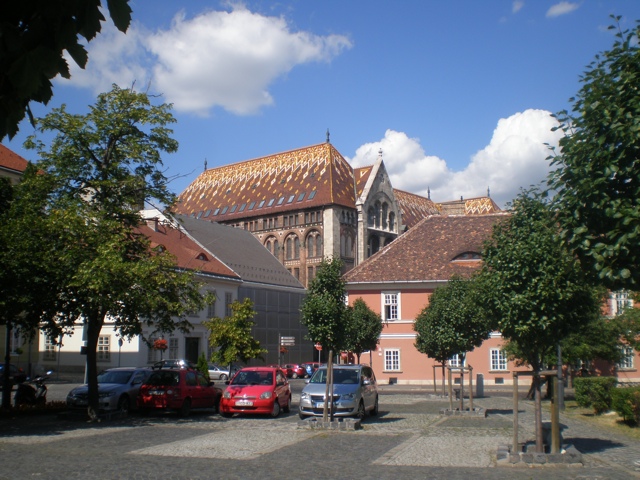
20110706-082726.jpg

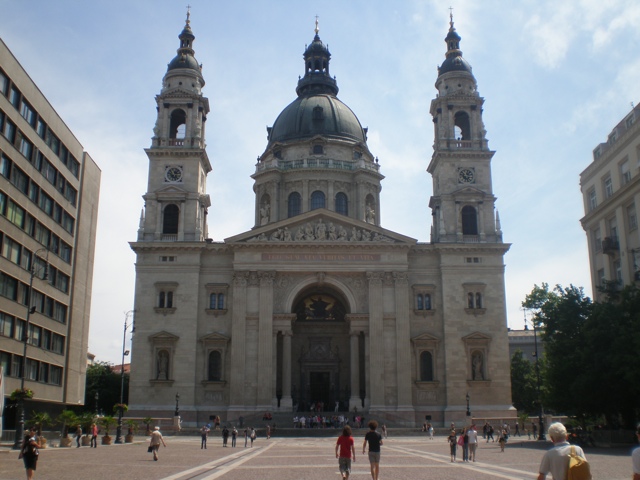
I went to a couple more spectacular churches too – this is the basilica of St. Stephen (who was the first king of Hungary, 1000 years ago), seen from across the river:
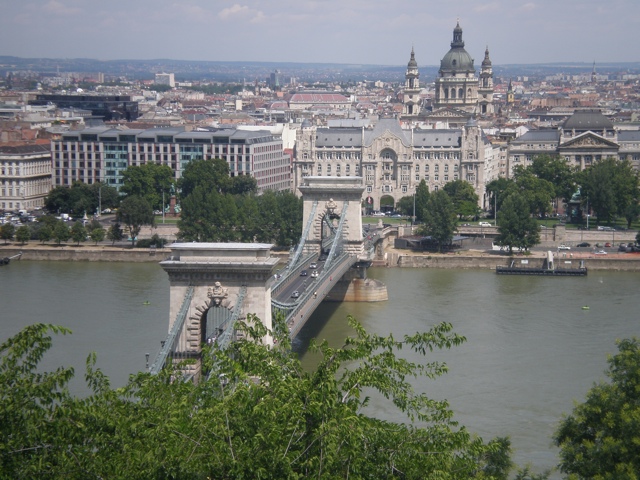
20110706-082954.jpg

and from right in front:

20110706-083355.jpg

and from the inside, with a band playing (they were playing Jerusalem):
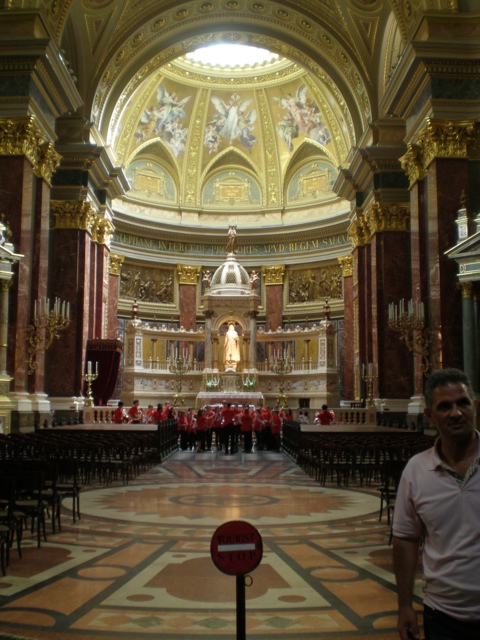
20110706-083250.jpg

And this is the inside of a church named for Matthew, who was another king of Hungary (I guess they figure a lot of their kings were saints):
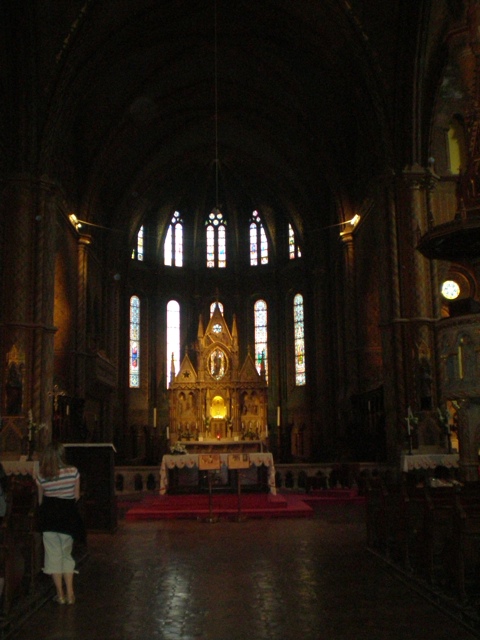
20110706-083932.jpg

Lots more gold, but they did it in a distinctively Hungarian way, like making odd-shaped windows and painting the pillars:
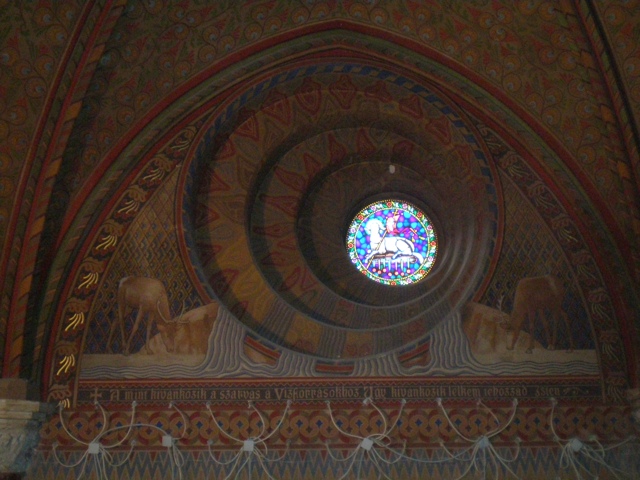
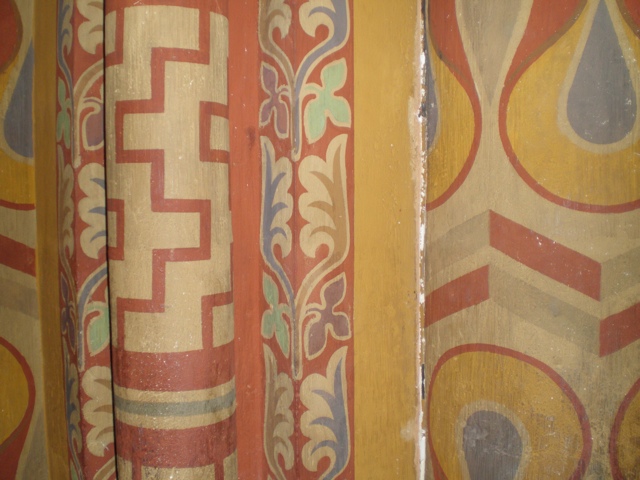
20110706-084302.jpg

20110706-084416.jpg

Maybe this is because this church was once a mosque – the Turkish Ottoman Empire, which was Muslim, ruled Budapest for 145 years, about 400 years ago…

The last place I went today was a different religion again. Budapest has the largest synagogue in Europe (or so it claims) – a synagogue is like a church or a mosque, except that it belongs to the Jewish religion. As you can see, it looks quite similar to a Christian church, except that instead of crosses or pictures of Christ, it has geometrical patterns:
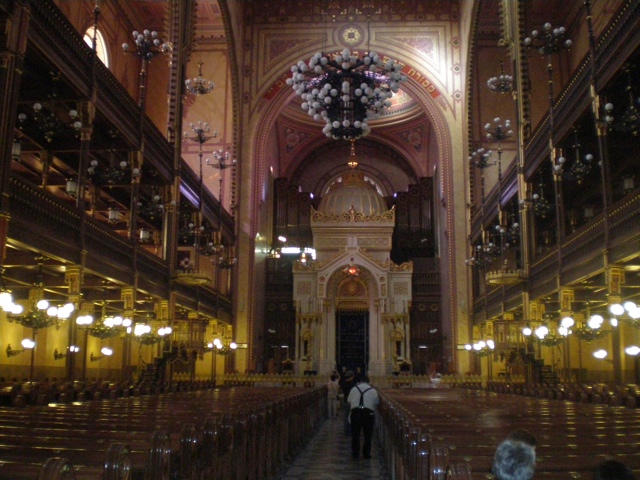
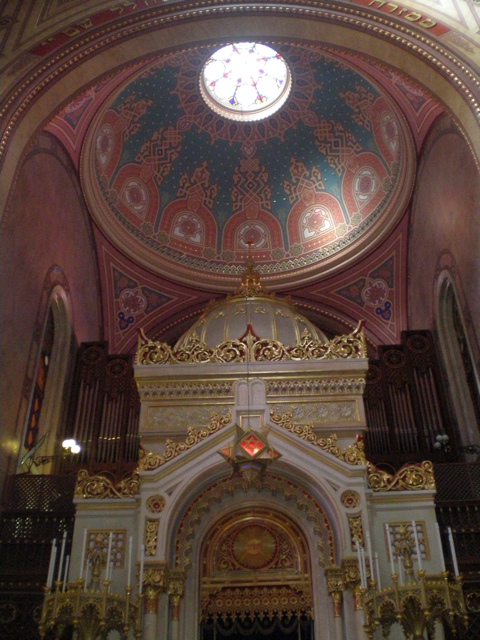
20110706-092416.jpg

20110706-092512.jpg

In some ways, though, this was quite a sad place, because after they had built this synagogue more than 100 years ago, about 80 years ago Adolf Hitler came to power in Germany, and he wanted to kill all the Jews in Europe, because he thought (he was crazy – and, by the way, one-eighth Jewish himself) that they were responsible for all of Europe’s problems. This was actually quite an old story – Jews had been blamed for other people’s problems, and thrown out of their houses and even killed, from time to time for many centuries in Europe. But Hitler had the power and the technology to kill the Jewish people on an industrial scale – and that’s what he did. There were over 8 million Jewish people in continental Europe in the 1930s – about 6 million of those were killed before 1945. (In this event, called the Holocaust, between another 5 and 10 million people were also killed, by the way, because Hitler and his cronies didn’t like them, for one reason or another – they were Polish, or they were gay, or they had the wrong ideas, or…)

The Hungarian government didn’t like what was going on, and it wouldn’t send the Jews to the places in Poland and Germany where they were being killed in death factories. So the Germans invaded Hungary and got rid of the ruler, and put another ruler, a crazy who agreed with them, in his place. The Jews were made to wear special badges to show that they were Jews, and they were forced to live in a certain area of town called the ghetto; they weren’t allowed to leave, and no-one else was allowed to go in. Then they were shipped out in trains to the death factories, packed into the train cars so tightly that they could hardly breathe. When they got to the death camps, the old people and the sick people and the pregnant women and all the children – the children! – were taken out – about 12,000 people each train – and put in special rooms which were filled with poison gas so they all died right away. The men and the women who wren’t pregnant were made to work almost without food, until they died of exhaustion and starvation.

Can you imagine people doing that to other people?

But the new, nasty Hungarian government didn’t have enough time to send all the Jews to the death factories – so they tried to starve them to death in the Jewish ghettoes before the Soviets arrived. I mentioned before that the Soviets came in and took over the eastern half of Europe from 1945 to 1989, and that this wasn’t very popular with the people who lived there. But one good thing that they did do in 1945, when they arrived, was kick out the Nazis and try to help out the Jewish people who were still alive. This is a photograph of when they arrived in Budapest and found the bodies of many Jewish people who had starved to death in the snow.
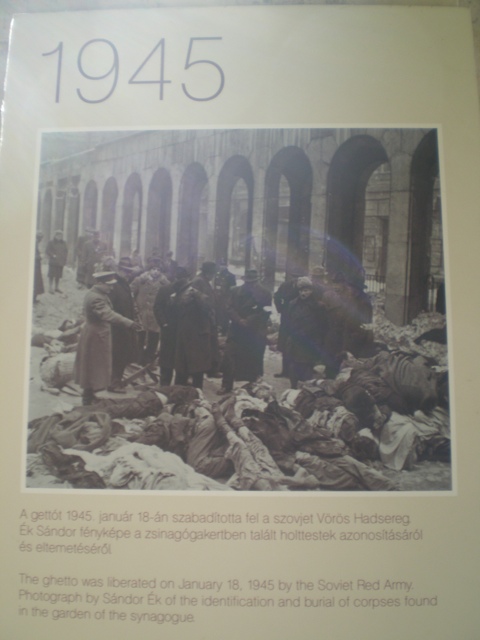
20110706-101623.jpg

If one good thing came out of these dreadful events, it was a sense in much of Europe, at least, that this kind of thing must never happen again – that we must all be tolerant of our different religions and cultures. But of course there are far fewer Jews in Europe than there used to be…
Posted in road | Tagged , , , , , , , , , , | 1 Comment

aside: a German on holiday

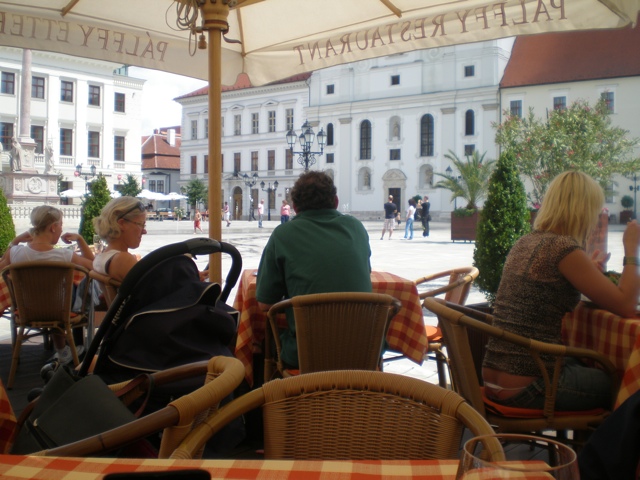
I took this photo while eating lunch in a cafe in the main square at Győr. Note the German tourist at the far right of the photo, and the state of her underwear. This went on the whole time she was dining – must have been an hour – with a man who was old enough to be her father. Maybe he was her father – though if he was, I don’t know what he was doing not telling her to put it away. Kyria, please take note…
20110705-083740.jpg

Posted in road | Tagged , , , | Leave a comment

Győr

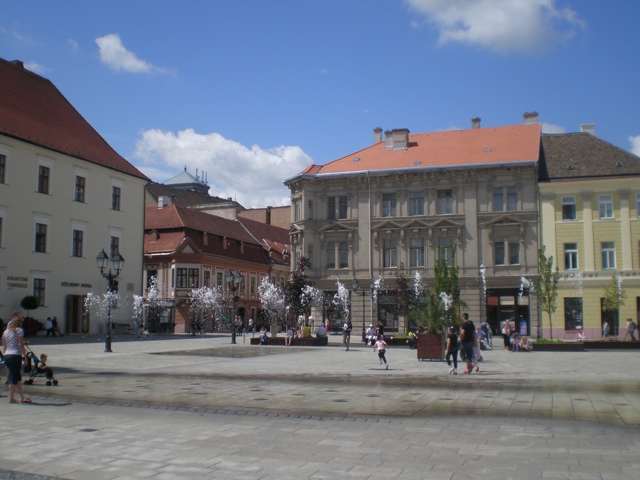
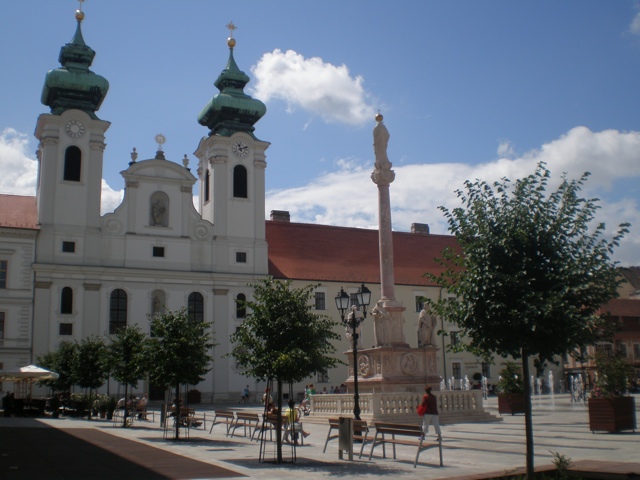
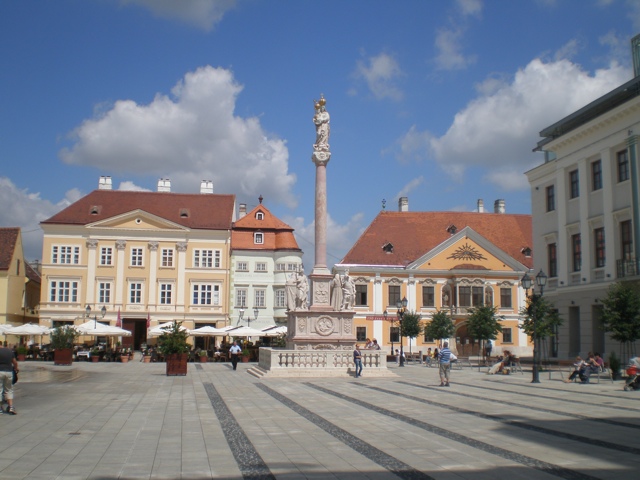
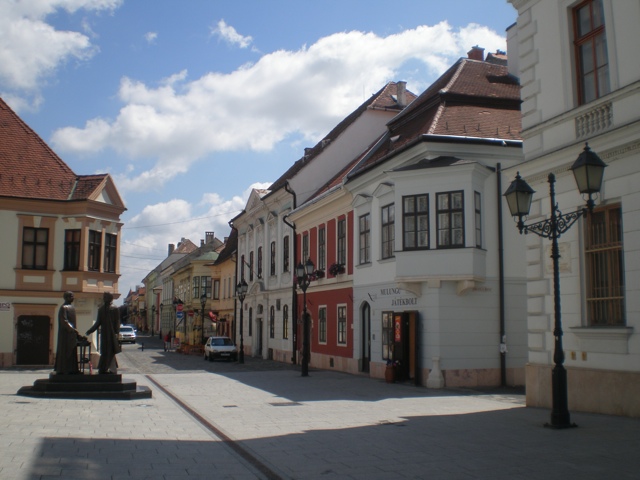
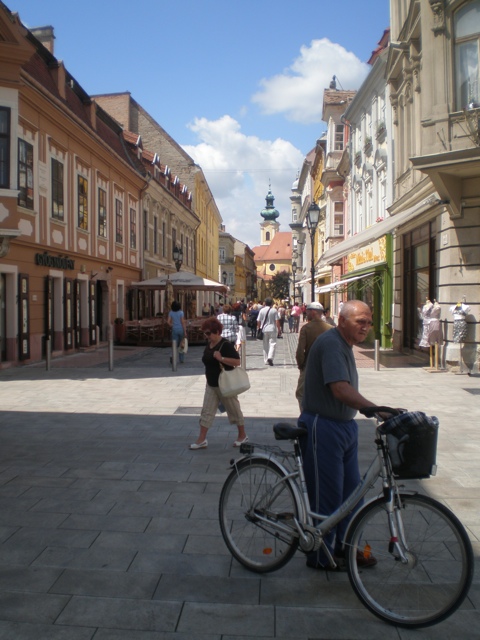
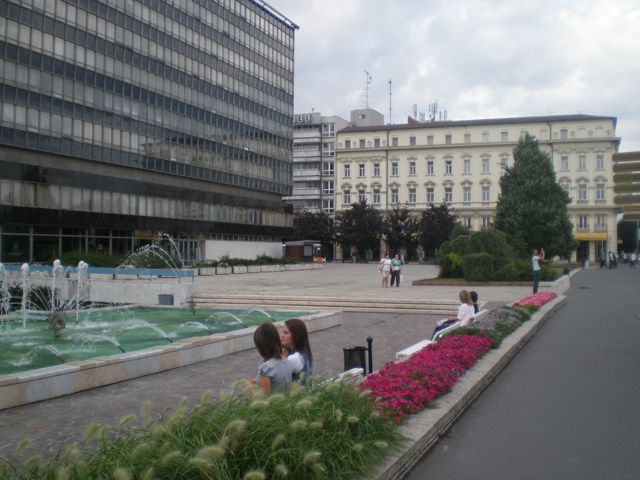
From Bratislava I went on into Hungary down the valley of the Danube, through fields of sunflowers and giant wind turbines (at first I had assumed these were Austrian, but they went right on into Hungary, too). I arrived at Győr, another town with three names (Raab in German – this is the name by which the battle that Bonaparte fought outside the city in 1809 is known – and Ráb in Slovak), but it is a city altogether happier with itself than Bratislava. People stroll and chat in the streets at a leisurely pace, and there is a large main square surrounded by classical and baroque buildings where kids shriek and play in the fountains, and rollerblade in the evenings:

20110705-014610.jpg

20110705-014705.jpg

20110705-015408.jpg

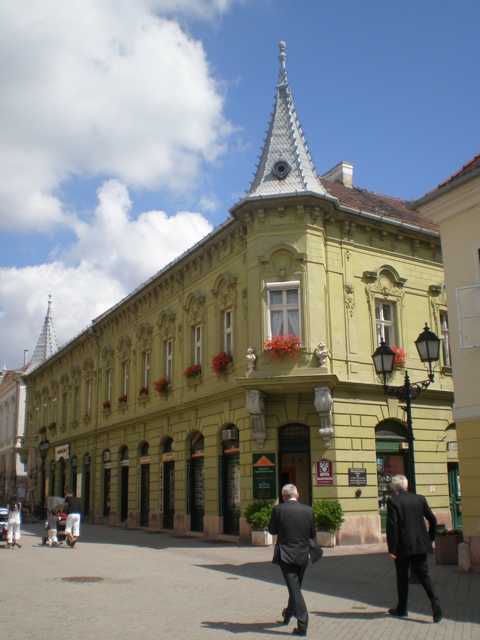
There are plenty of other nice buildings to look at too (and guess what? some onion steeples):

20110705-015023.jpg

20110705-015115.jpg

20110705-015218.jpg

20110705-015320.jpg

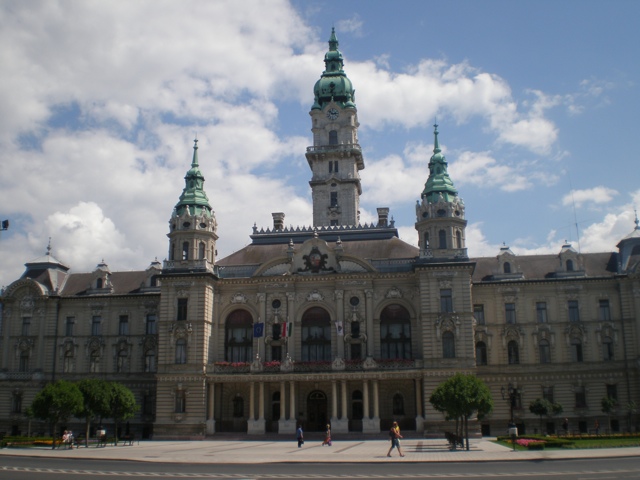
and a grand town hall:

20110705-082913.jpg

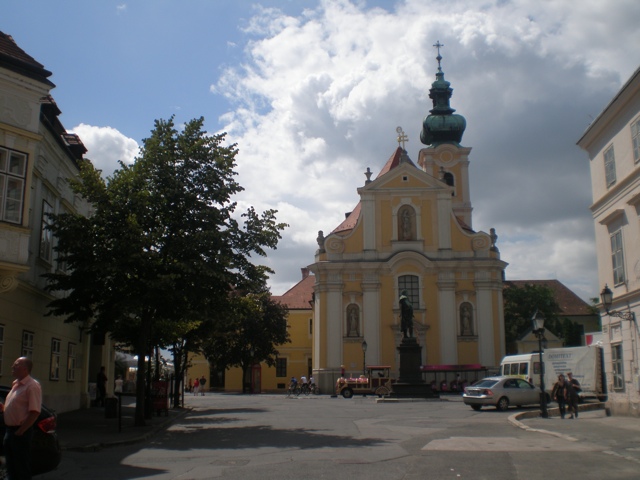
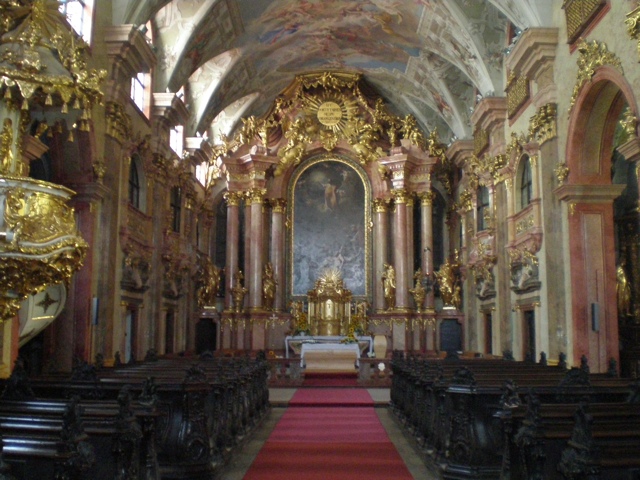
And lots of gold in the churches:

20110705-015832.jpg

20110705-015945.jpg

20110705-020032.jpg

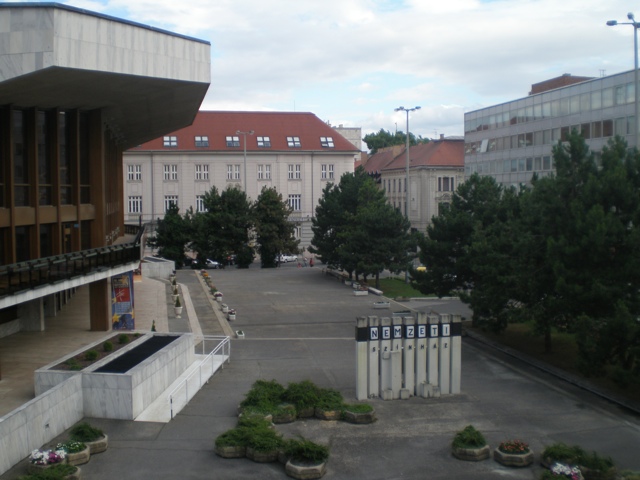
The pop music is mostly in English, but the lingua franca is German (this is the town where most of the parts of most Audi cars are made), so I have been battling along with my few words of that. This is a view from the hotel I am staying in – the building on the left is the local branch of the Hungarian National Theatre:

20110705-020409.jpg

Of course Hungary was ruled by the Soviets too, for 45 years, and there are some ugly steel and glass buildings sitting next to the beautiful old ones (but of course you could say that of many western countries too…):

20110705-020919.jpg

20110705-021007.jpg

But there is a basic sense of continuity here: the place has been inhabited for thousands of years, and the same people have been here for over a thousand. Maybe that is why there is such an easy self-confidence…
Posted in road | Tagged , , , , , , , , , | Leave a comment

through the Iron Curtain

There is no doubt that Vienna is quite a mind-blowing town when it comes to art, even if (judging from the work in the Secession House) it looks like it might be living off its former glories (but perhaps that’s not a fair representation – I didn’t really take the time to find out – or perhaps the creativity has moved into other areas, like music). As a city, it’s a little too grand, slow and rectilinear for my taste – I prefer the haphazard, bubbling cosmopolitanism of say, Paris. But it does have great warmth and charm.

It’s easy to forget how close that may have been to getting destroyed; that for ten years after 1945 it was, like Berlin, a city administered by the Soviets as well as the Americans, British and French. It probably only escaped Berlin’s fate – a Vienna Wall – because the powers took turns administering the centre of the city, rather than dividing it geographically, as they did in Berlin. Then, in 1955, in return for a declaration of neutrality, Austria was given its independence, nevertheless to remain trapped in a scary corner of Europe’s frozen Cold War landscape – Czechoslovakia to the north, Hungary to the east, Yugoslavia to the south – for another 34 years.

There is one reminder, though:

20110704-083314.jpg

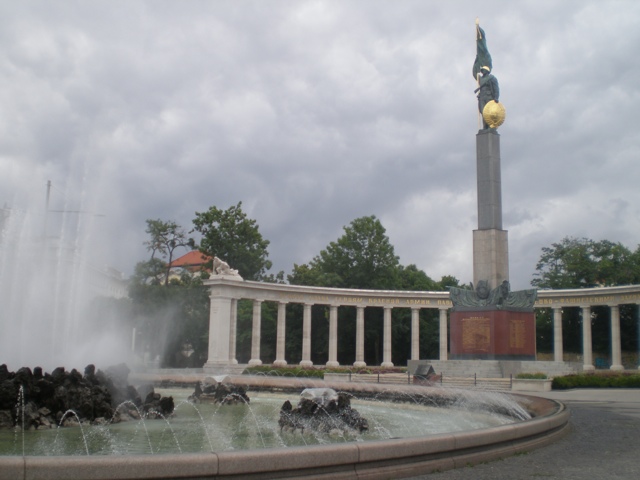
This is the memorial to their own victory that the Soviets built in 1945, within four months of liberating Vienna from the Nazis (the figure on the top of the column is a Soviet soldier, waving a Soviet flag). It’s not in the guidebooks, or marked on the maps, though it’s hardly tucked away in a corner; they stuck it right below the Belvedere, and close to Karlsplatz, one of Vienna’s main squares. Perhaps everybody ignores it because it’s an insult: although the first wave of Soviet troops that liberated Vienna in April 1945 were well-disciplined, those that followed acted like barbarian hordes (the monument is sometimes apparently known as the memorial to the unknown rapist); perhaps because its savage celebration of power is so at odds with Vienna’s gentility; perhaps because it provokes a shuddering recollection of how close Austria came to the fate of the surrounding countries.

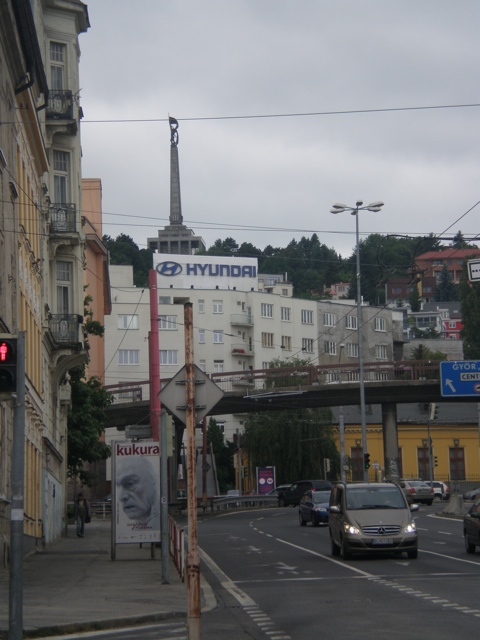
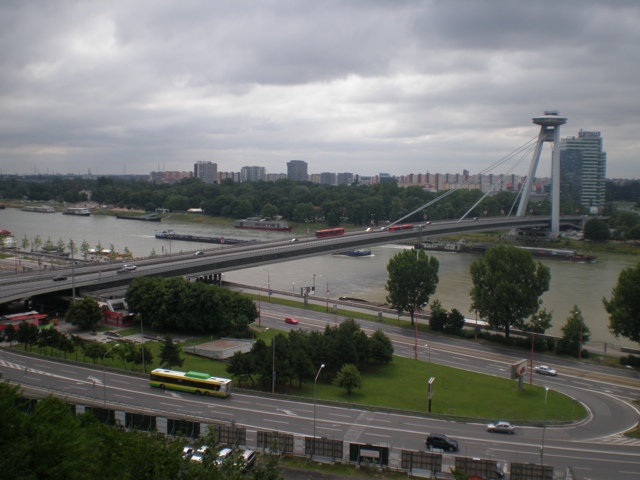
There was no such lucky escape an hour down the grey and rainy Danube, in Bratislava. The hydrofoil that takes me there is called Twin City Liner, but if that is an accurate description then Bratislava is definitely the poor relation. The Soviets planted their iron boot in an inescapable way here, siting their memorial where nobody could forget who was in charge:

20110705-094125.jpg

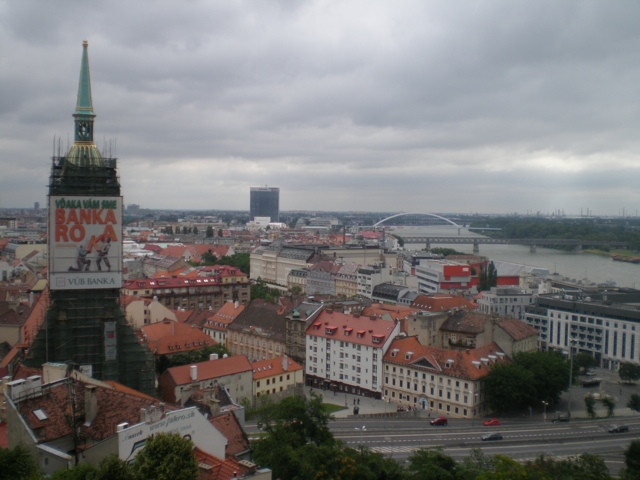
They also surrounded the old town with a ring of factories and mass housing, and built a giant bridge over the Danube:

20110705-094645.jpg

20110705-094903.jpg

When I arrived, Sunday evening, there was a Polish folk band struggling against the elements for the benefit of a few interested people:

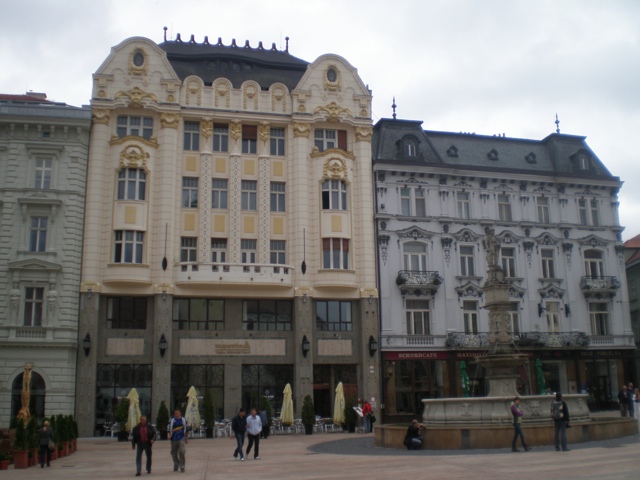
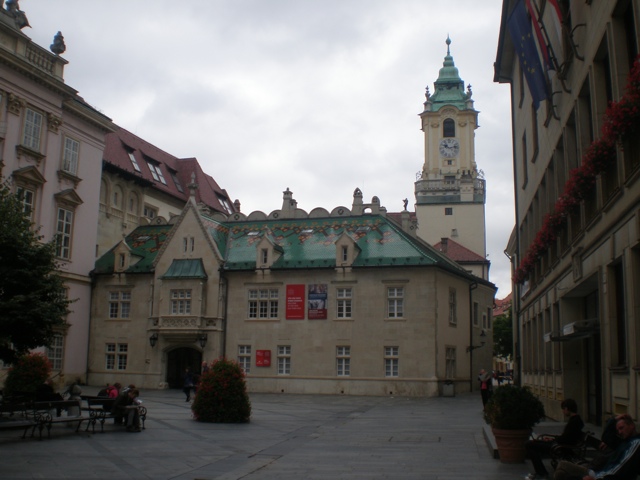
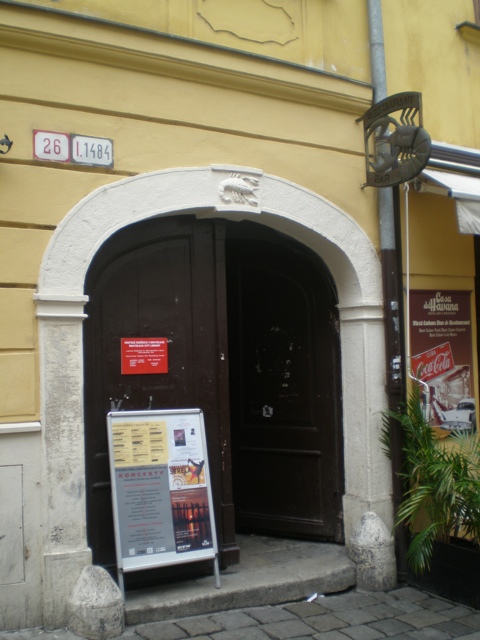
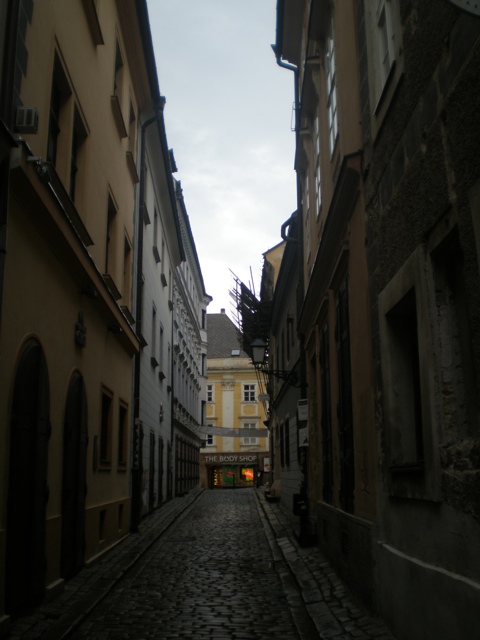
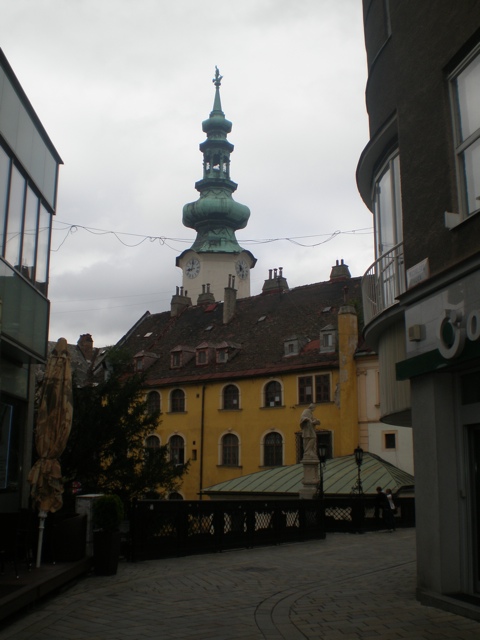
You can see from that that the old part of town has some beautiful buildings with some nice details – and some of those central European onion steeples. Here are some more pictures:

20110705-095454.jpg

20110705-095621.jpg

20110705-095743.jpg

20110705-095839.jpg

20110705-095933.jpg

You can see from the shop at the end of the alley in the last photo that western brands have definitely arrived here. In fact, although the place does have a certain post-communist tattiness to it – the ugly Soviet-era buildings are crumbling faster than the older ones – there also seems to be a fair bit of money around, at least in some people’s pockets. But something still doesn’t seem quite right – and not just the way the straight-line steel and glass sits cheek by jowl with the old classical and baroque styles:

20110705-100628.jpg

No, there is a certain ill-at-ease feeling about the whole place, a world away from Vienna’s grand self-confidence. Then I found out something that maybe explains it: here, in what is now the capital of the Slovak republic, with a population over 90% Slovak, a census taken 100 years ago, just before World War I, showed that only 15% of the people were Slovak! The rest were Germans and Hungarians, with over 40% each. The town was not even normally called Bratislava – its usual names were Pressburg (German) and Pozsony (Hungarian). But in the 1918 division of Europe at the end of World War I it was given to Czechoslovakia; the Hungarians didn’t like it, rebelled, and were kicked out, their property given to Slovaks. The same thing happened to the Germans after the end of World War II in 1945. So the Slovaks who are here now are living in a city built by someone else! No wonder the place doesn’t feel quite comfortable in its own skin…

Posted in road | Tagged , , , , , , , , , | 1 Comment

the end of Vienna

There was one last museum left in Vienna before I moved on: the Leopold Museum. This had some Klimt in it, but its main star was Egon Schiele, a protege of Klimt’s, who arrived in Vienna at the age of 16 in 1906. He was an Expressionist, which means he didn’t really care about whether his paintings looked like what he was painting – the main point was that they expressed something inside of himself. For a while he moved to a town in what is now the Czech Republic called Cesky Krumlow. This was a painting he did there:

20110704-080427.jpg

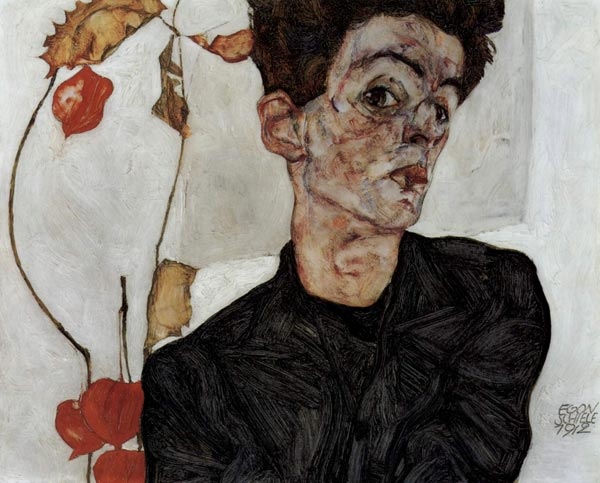
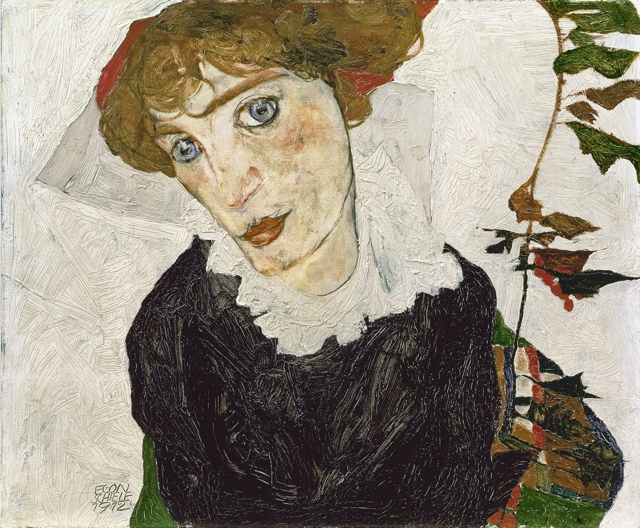
There were lots of others of his paintings that I liked too, but here are just a few. These two are matching portraits of himself and his girlfriend:

20110704-081410.jpg

20110704-081459.jpg

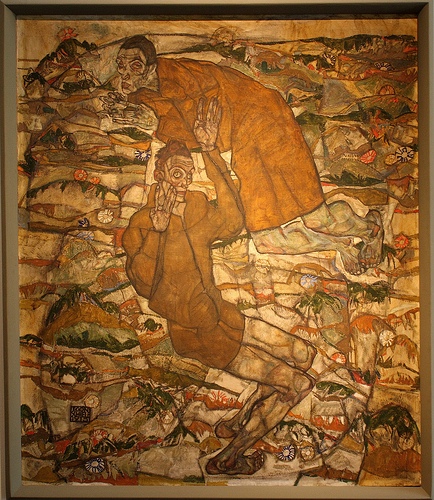
Finally, this is a picture (done during World War I) of two people dying, and floating away:

20110704-081710.jpg

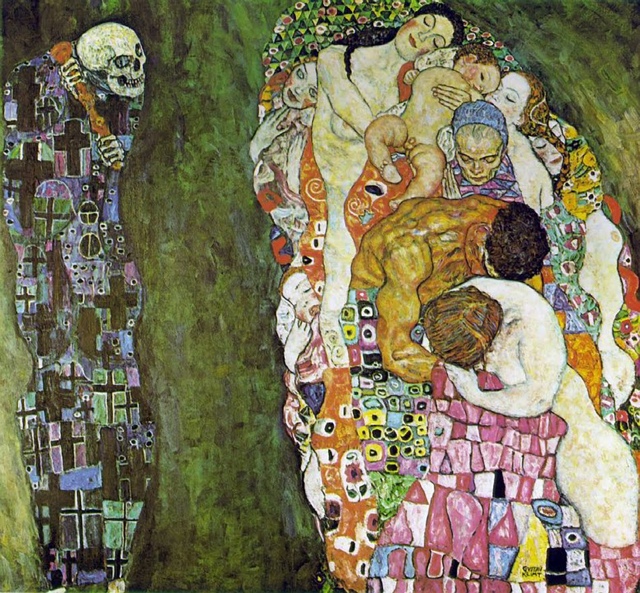
When it was first shown in a gallery, 96 years ago, it was hung next to what is maybe my favorite Klimt painting of all, Death and Life – doesn’t Death look sneaky and mean-spirited?

20110704-081921.jpg

Less than three years after that exhibition, Klimt was dead, of the terrible Spanish influenza that swept through Europe while people’s immune systems were weakened by the hunger of World War I. Later that year, 1918, Otto Wagner, who was the architect of some handsome buildings in Vienna that I never even got to see, also died – and then, in late October, Schiele died of the Spanish flu too, at the age of 28. Ten days later, the Habsburg Empire collapsed, and Vienna was no longer the capital of a great and wealthy empire, but of a small central European country – which is what it is today.

Posted in road | Tagged , , , , , , , | Leave a comment

four museums in a day: the straight line is godless

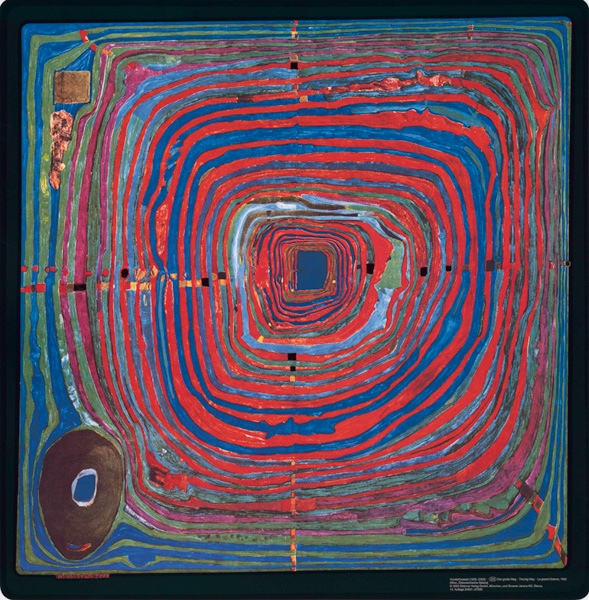
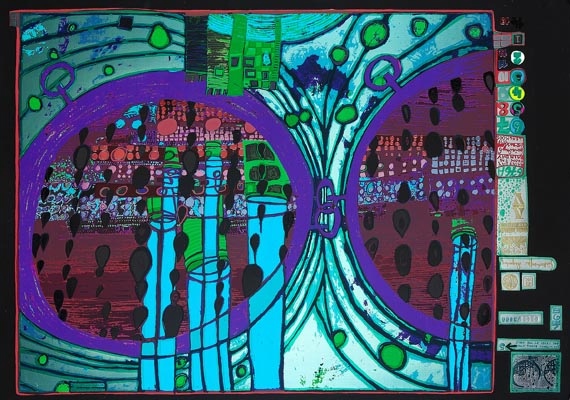
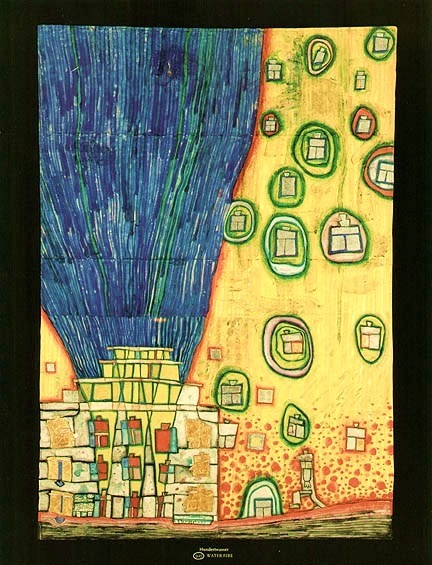
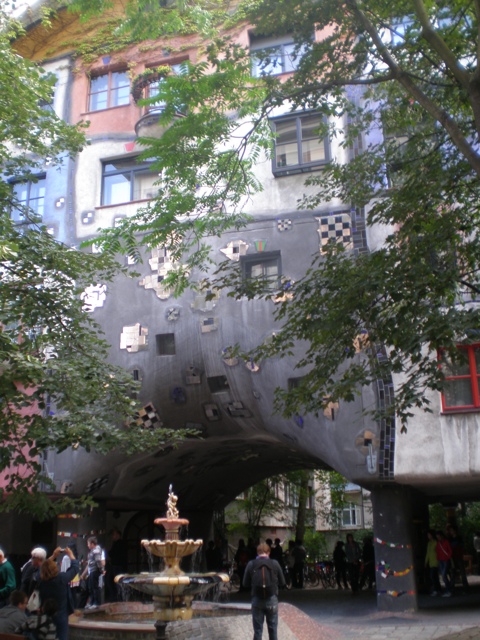
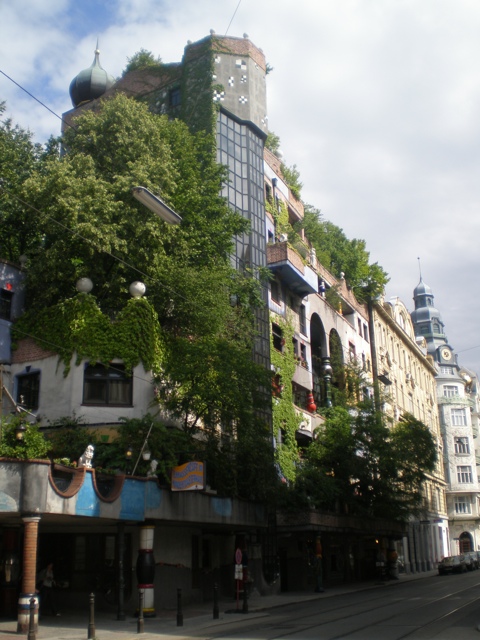
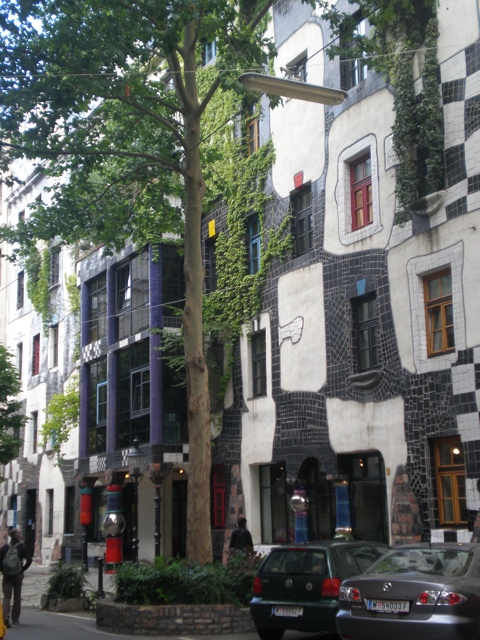
That’s what Hundertwasser said. He was an originally Viennese but ultimately globetrotting artist originally named Friedrich Stowasser, who ultimately renamed himself Friedenreich Hundertwasser (which is German for peacecountry hundredwater). You can see why he said that about the straight line when you look at his pictures, like Der Grosse Weg (which means the big road), from 1955:

20110704-012406.jpg

or Hommage au Tachisme (1961):

20110704-012600.jpg

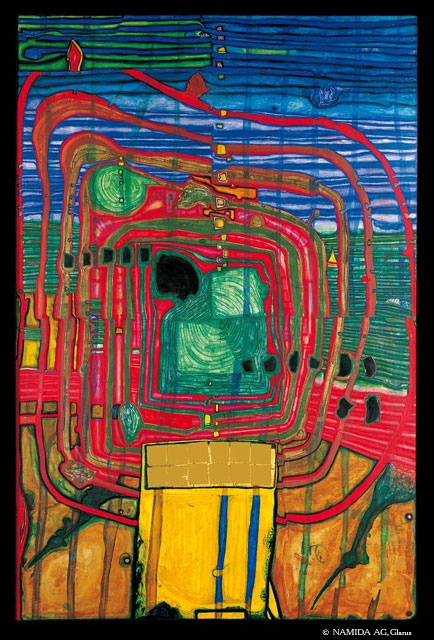
or Regen auf Regentag (Rain on a Rainy Day), from 1972:

20110704-013119.jpg

or Water Fire (1991):

20110704-013328.jpg

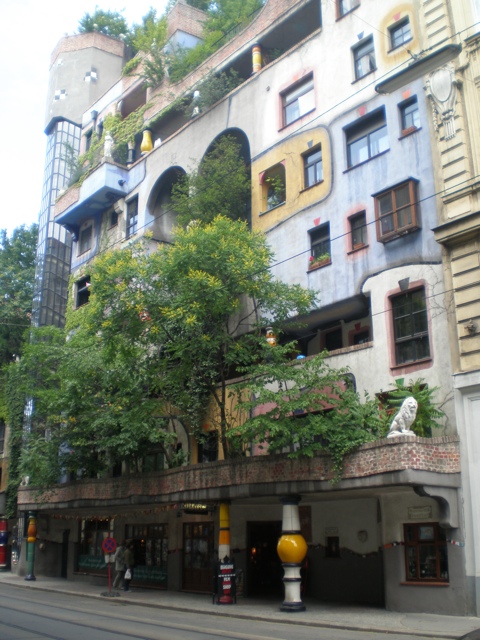
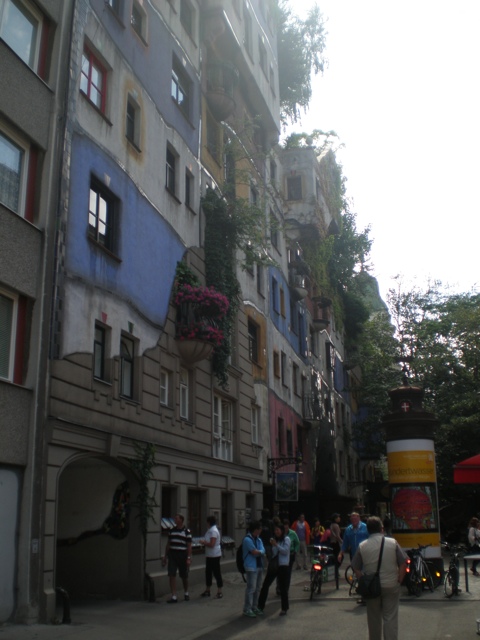
He also designed buildings, often with plants, which he called “tree tenants”, growing out of them (another thing he said was “we must restore to nature territories which man has illegally occupied”). There are two of his buildings in the middle of Vienna. One is a block of flats, with a crowd of people who admire his work hanging around it (only the tenants are allowed inside):

20110704-072215.jpg

20110704-072433.jpg

20110704-072540.jpg

20110704-072639.jpg

The other is his museum, Art House Vienna, where I saw most of the pictures at the top of this post:

20110704-073440.jpg

20110704-073626.jpg

20110704-073708.jpg

The last one is the gents toilet (where straight lines don’t naturally exist anyway…)

Posted in road | Tagged , , , , | Leave a comment

four museums in a day: Belvedere

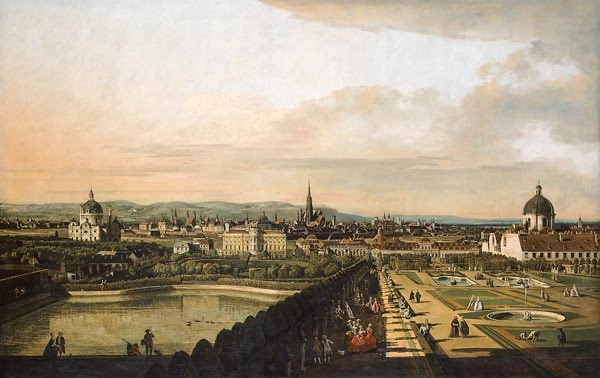
My next stop was the Belvedere, another old palace converted into a gallery. It’s on a low hill, so there is a view over Vienna – as painted by Canaletto 250 years ago:

20110704-084626.jpg

and how it looks now:

20110704-084808.jpg

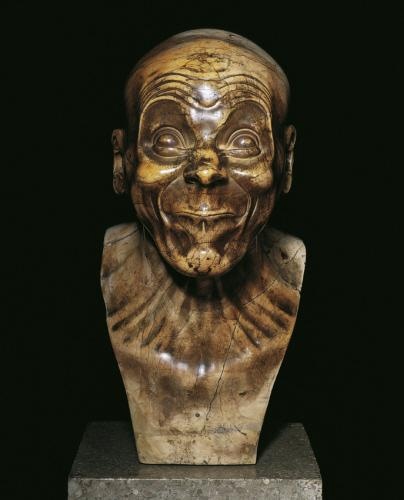
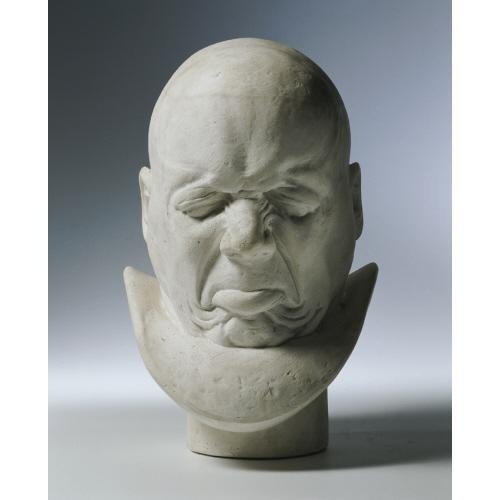
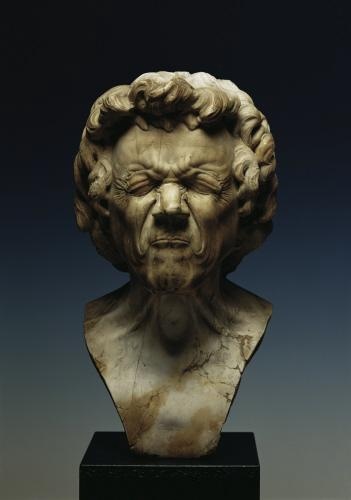
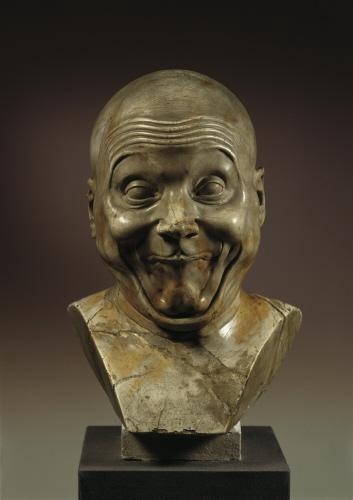
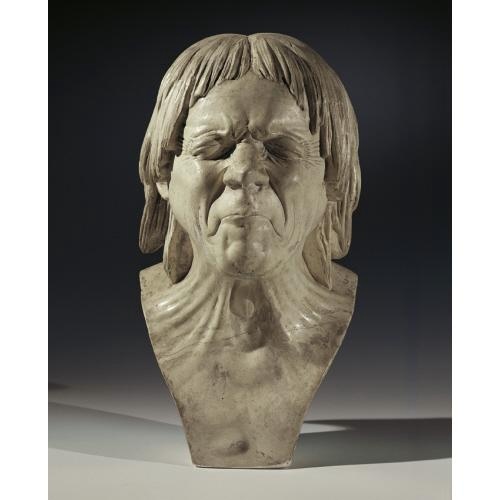
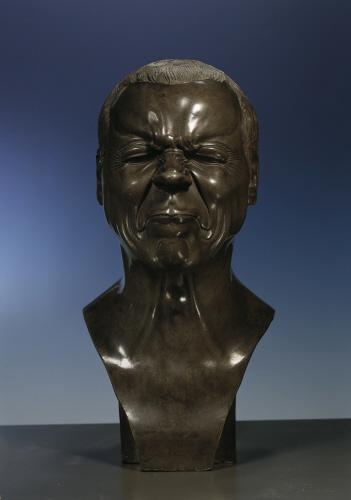
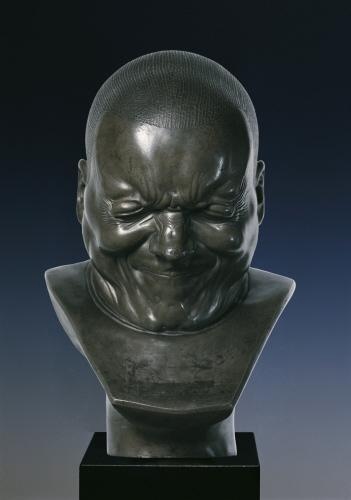
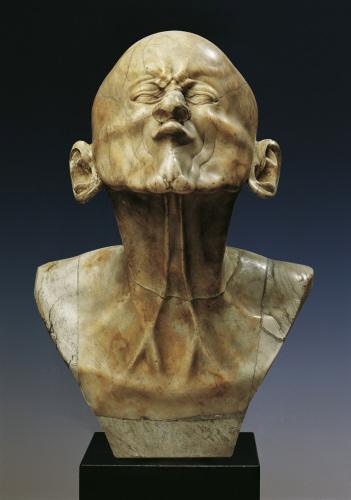
Again there were quite a few amazing things to see inside – here are just a few of them. First, there were some sculptures by somebody called Franz Xaver Messerschmidt, who was a famous sculptor at the court of Maria Theresa, about 250 years ago. He did a bust of the Empress, amongst many other important people. But then something happened in his mind, and he went off the rails and retired to the town he had come from. There he did a whole series of sculptures of grimacing heads, including these, which may have been of people undergoing medical treatment:

20110704-085626.jpg

20110704-085719.jpg

20110704-085756.jpg

20110704-085831.jpg

20110704-085858.jpg

20110704-085930.jpg

20110704-090001.jpg

20110704-090052.jpg

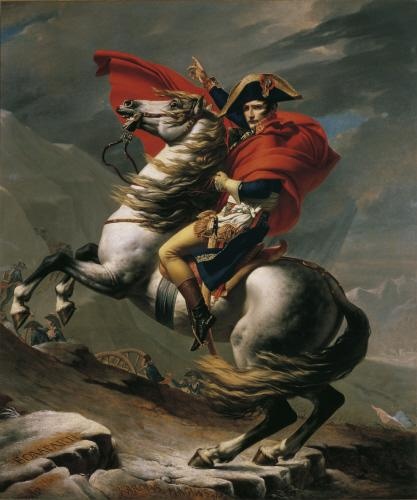
In complete contrast, there was also this huge propaganda painting by Jacques Louis David of Napoleon Crossing the Alps:

20110704-090712.jpg

Apparently Napoleon really crossed the Alps on a donkey!

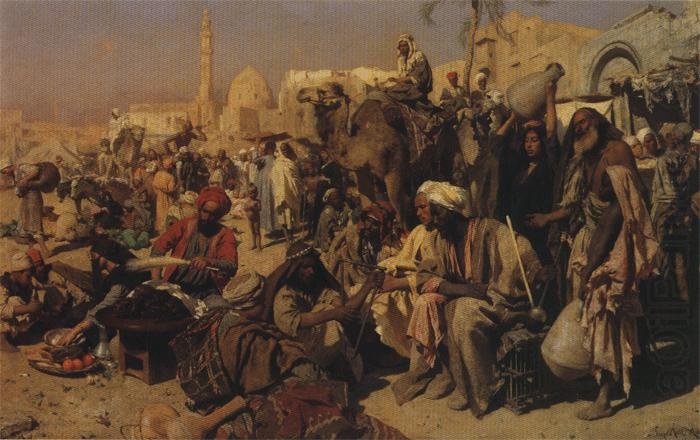
I thought the next one, from 1878, of a market in Cairo by Leopold Carl Mueller was interesting, because it shows that the story that painters (like the Impressionists) reacted to the invention of photography in the 1840s by beginning to create pictures that were less and less realistic, isn’t wholly true. To me this one looks almost like a National Geographic photo:

20110704-091220.jpg

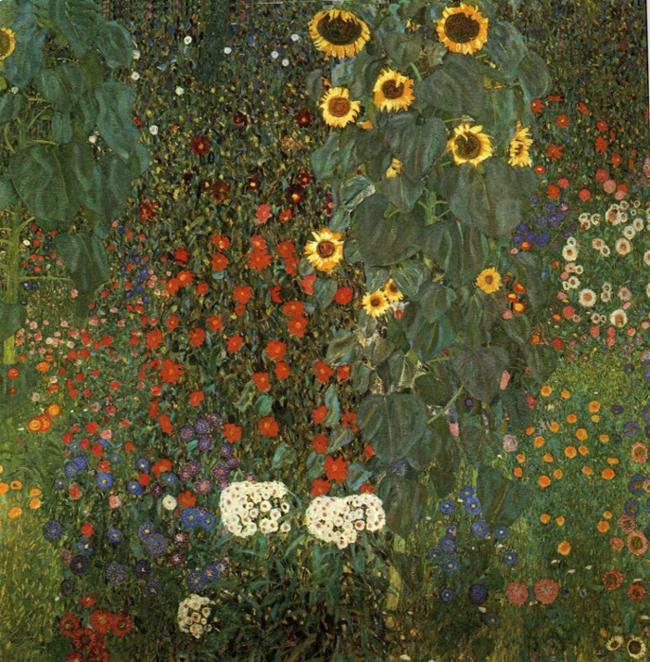
And then, in complete contrast, the Klimts, like this Garden with Sunflowers, from 1908:

20110704-091537.jpg

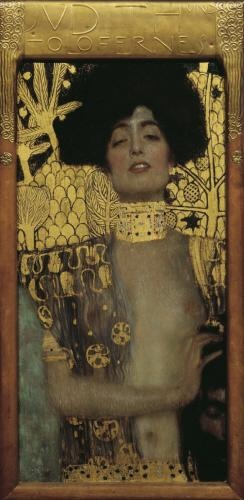
and Judith, the mankiller, from 1901 (notice her victim’s head at the far bottom right):

20110704-091711.jpg

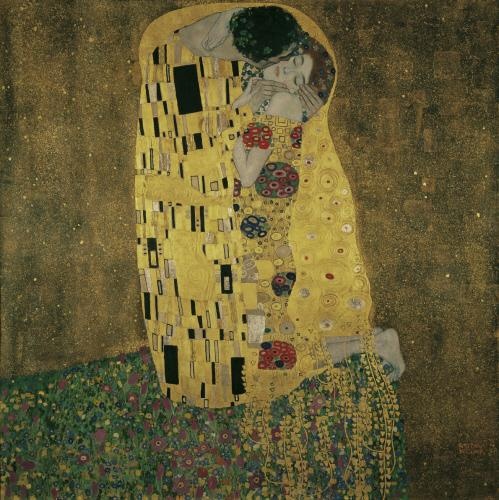
The most famous one of all, The Kiss (1908), with its spectacular gold:

20110704-091845.jpg

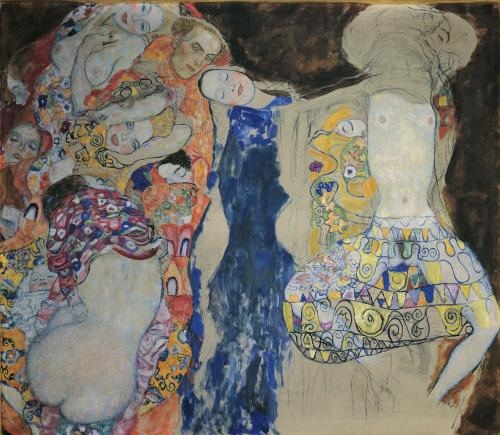
The museum information went on about how The Kiss is a perfect picture of bliss – but to me the woman doesn’t look quite happy, as though the man is crowding her somehow. I also thought it was wrong about The Bride, an unfinished one that he was working on when he died in 1918:

20110704-092731.jpg

It is supposed to be about what the bride and groom are thinking of as they get married. She is worrying about a scary rival (the one in the right of the picture), while he is dreaming about all his old girlfriends and his fantasies about other women (the cloud of images coming out of his head). The commentary described him as being strong and self-confident, but I don’t think so: I think he looks complacent and a bit grim….

Posted in road | Tagged , , , , , , , , | Leave a comment

four museums in a day: secession

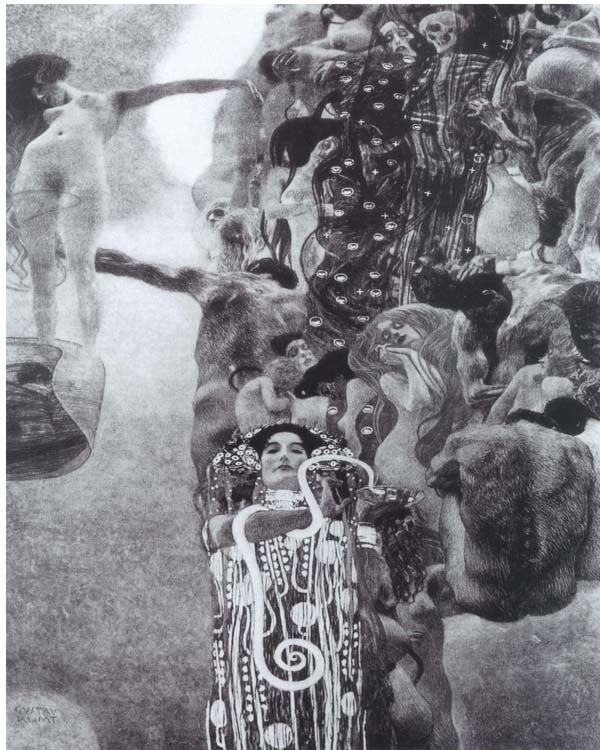
My next stop was the Secession House, so named because the painter Gustav Klimt and some of his friends decided in 1897 to secede from the Viennese art establishment. This had a lot to do with a situation in which Klimt had found himself a couple of years before. He had been commissioned to paint ceilings for Vienna University on various subjects, and had gone so flat out on it that the University had rejected what he did. Although personally I would die for this sort of thing on my ceiling, you can see why the learned gentlemen were disturbed:

20110703-091024.jpg

Apart from anything else, they took exception to the fact that he had painted a naked pregnant woman in the top right hand corner, next to death – in those days you weren’t supposed to paint naked pregnant women at all, let alone link the opposite ends of life (pregnancy and death) so clearly! People were very shocked, By the way, this image is in black and white because it is a photograph; the original, colour version of this (and his other paintings for the University ceiling) were burned by the Nazis (Adolf Hitler’s gang) on the very last day of World War II in 1945 (which puts them well into contention, as if they weren’t already, for the title of Stupidest People of the 20th Century). Only one piece survived in colour, which was this:

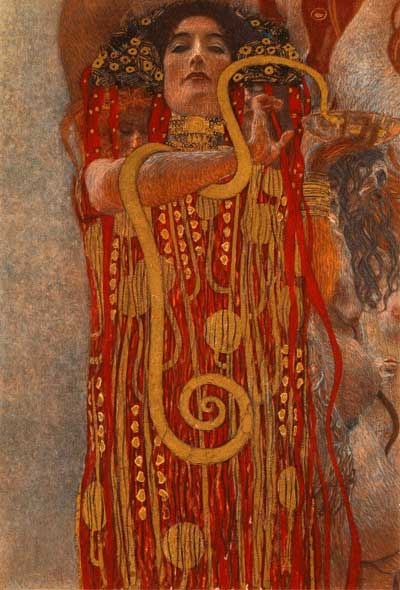
20110703-091922.jpg

This very self-confident and knowledgeable-looking woman represents Medicine; you can tell that because she is handling, almost without even trying, the snake which traditionally is associated with the medical arts.

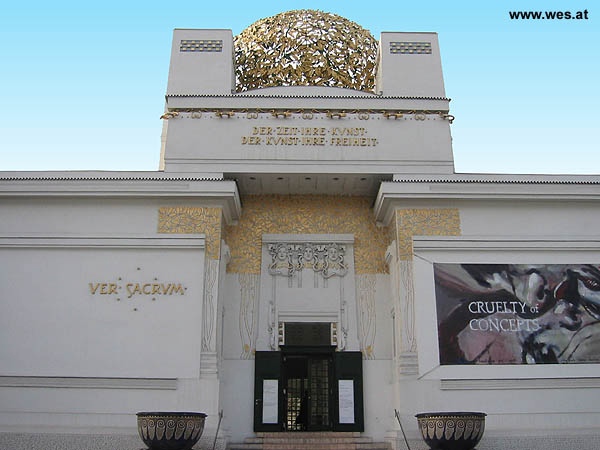
Anyway, Klimt and his friends broke away from the traditional artists, and, because some rich and powerful people agreed with them, built this building near the middle of Vienna:

20110703-092844.jpg

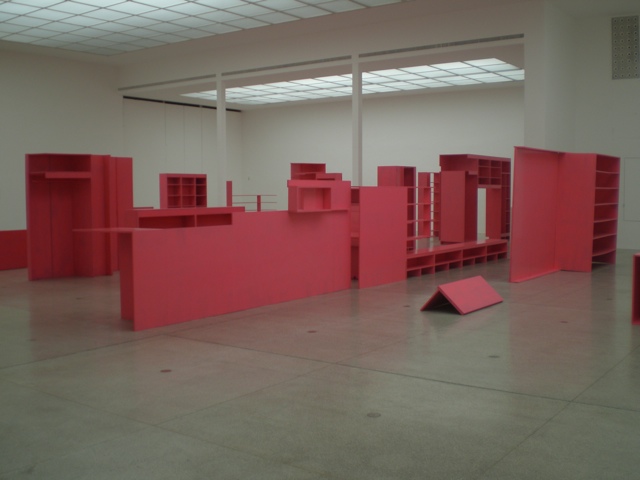
114 years after it was built, it still has displays of the latest art – though it seems that Klimt’s heirs aren’t quite up to his standard. On the ground floor, there was a bunch of domestic plywood fittings painted pink:

20110703-093328.jpg

Not surprisingly, no-one was in there looking at them. Nor was there anybody upstairs, where some old magazine pages had been ripped out and chucked haphazardly in display cases. They don’t make them like they used to in Vienna, I guess…

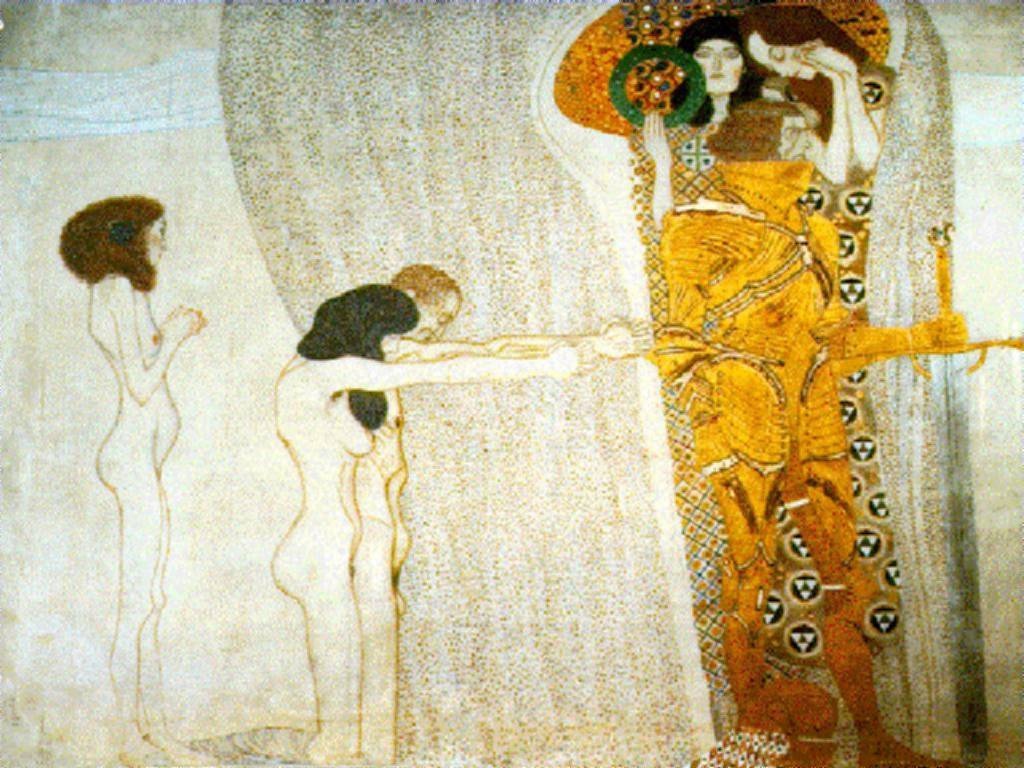
so just as well that they have an astonishing piece of Klimt in the basement: the Beethoven frieze. This starts with some naked people praying to their knight in shining armor to represent them in dealing with life’s challenges (while ambition and compassion hover over his head):

20110704-120636.jpg

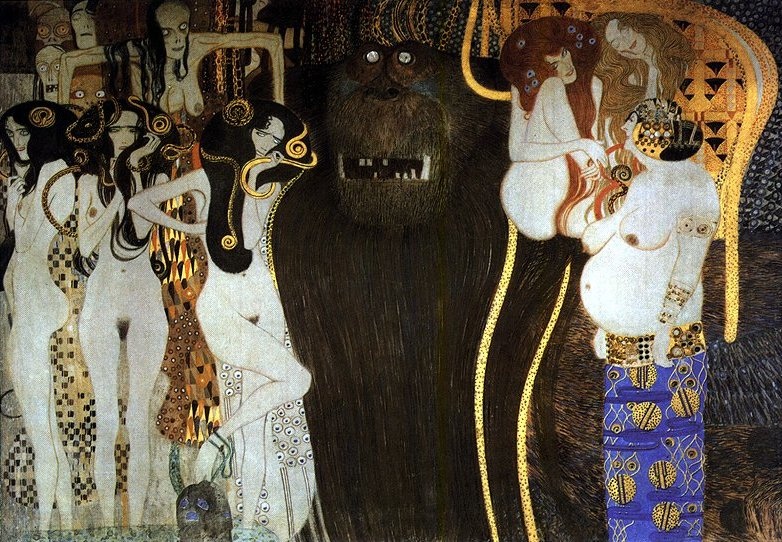
The challenges include some gorgons (with their crazy hair), a scary beast, lasciviousness, and gluttony, amongst others:

20110704-121554.jpg

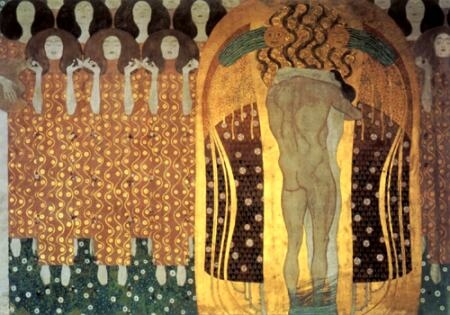
before the lovers finally reach their destination, a kiss, while a chorus of women sings Beethoven’s Ode to Joy:

20110704-121853.jpg

Of course that doesn’t even come close to describing it, but it will have to do as a summary…

Posted in road | Tagged , , , , , , | Leave a comment